
Why Milk Splits Into Paneer When Lemon Juice Hits It

Pour hot milk into a pan, add a spoonful of lemon juice, and within seconds the liquid separates into white clumps floating in pale greenish water. It feels almost violent, like something broke. What actually broke was a very delicate structure that milk spends its entire existence maintaining.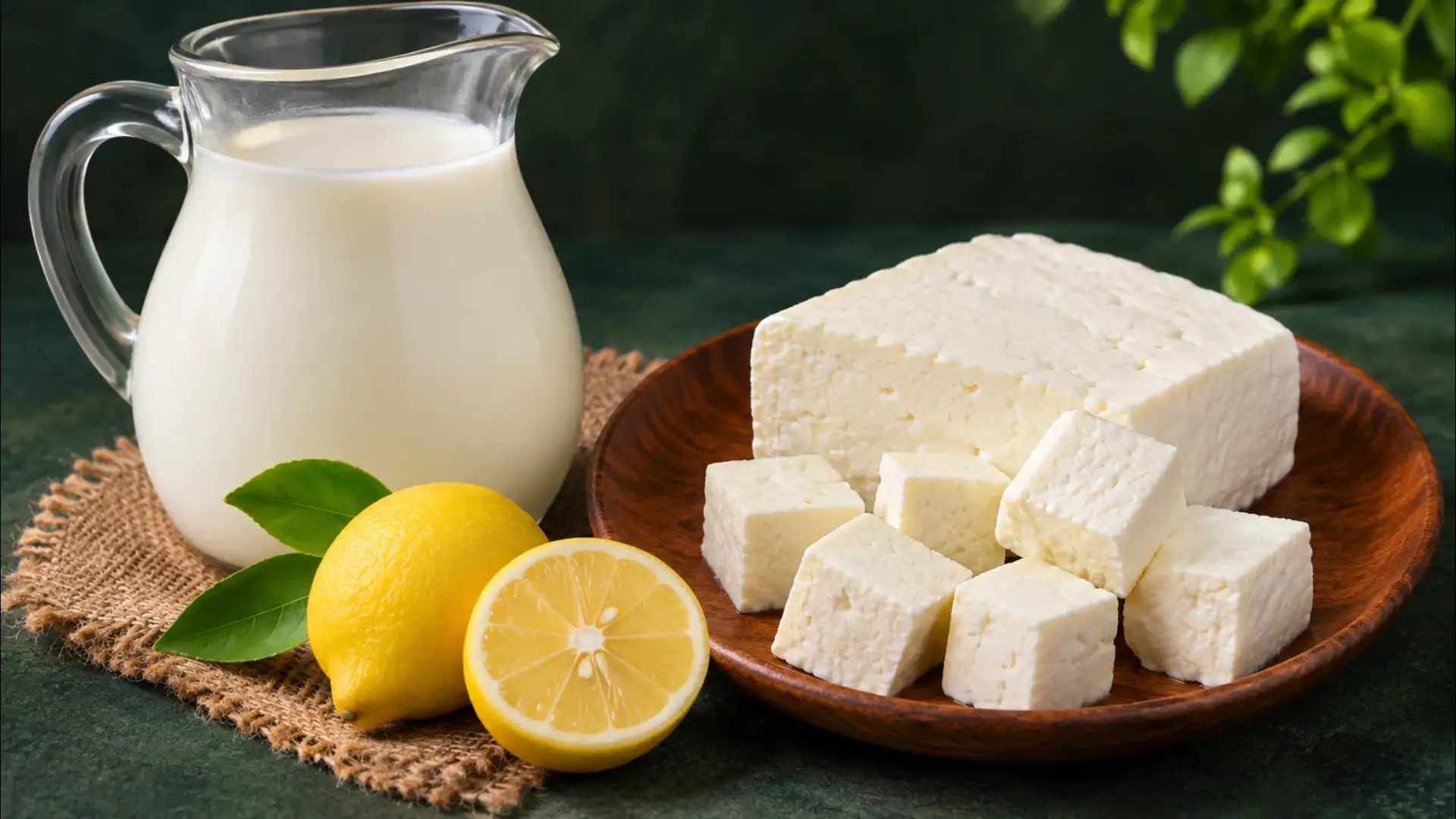
Fat droplets are also present, kept stable by the same protein coat. The whole system is in a careful balance, proteins, fat, and water held together by electrical forces rather than any physical bond.
The greenish liquid left behind is whey, water, lactose, and some water-soluble vitamins that did not join the protein clump. Nothing is wasted or destroyed. The milk has simply reorganised itself into two distinct parts.
Too much heat after the acid is added toughens the proteins and makes the paneer rubbery. The moment the milk splits clearly, the pot comes off the flame. Timing is the cook's only real variable here, the chemistry handles the rest.
Yoghurt works as well, because it contains lactic acid produced by bacteria during fermentation. Dahi-set paneer is slightly softer because the acid arrives more gradually, giving the proteins time to form a looser network rather than snapping together all at once.
The same principle produces every fresh cheese in the world, ricotta, queso fresco, fromage blanc. Paneer is simply the version that Indian cooking built its own grammar around, from saag to matar to the dry-roasted cubes that hold a char without falling apart. The lemon juice is not a trick. It is the mechanism the whole thing runs on.
What Milk Is Made Of
Milk is mostly water, but suspended in that water are tiny protein clusters called casein micelles. These clusters carry a slight negative electrical charge, which makes them repel each other the way two magnets pushed together resist meeting. That mutual repulsion keeps them evenly spread through the liquid, which is why fresh milk looks smooth and uniform rather than lumpy.Fat droplets are also present, kept stable by the same protein coat. The whole system is in a careful balance, proteins, fat, and water held together by electrical forces rather than any physical bond.
What Lemon Juice Does to That Structure
Lemon juice is acidic. When it enters the milk, it floods the liquid with hydrogen ions. Those ions attach to the casein proteins and neutralise their negative charge. Once the charge is gone, the proteins no longer push each other away. They begin to attract instead, clumping together rapidly into the white solid masses visible in the pot.The greenish liquid left behind is whey, water, lactose, and some water-soluble vitamins that did not join the protein clump. Nothing is wasted or destroyed. The milk has simply reorganised itself into two distinct parts.
Why Heat Matters
Cold milk curdles far more slowly and produces a weaker, grainier result. Heat loosens the protein structure, making the casein micelles more mobile and more ready to bond once the acid arrives. Most paneer recipes call for milk that is just below boiling for exactly this reason, the proteins are primed and the reaction is fast and clean.Too much heat after the acid is added toughens the proteins and makes the paneer rubbery. The moment the milk splits clearly, the pot comes off the flame. Timing is the cook's only real variable here, the chemistry handles the rest.
Why Lemon Works and Vinegar Works Too
Any acid will trigger the same reaction. Lemon juice, white vinegar, and citric acid powder all lower the pH of the milk enough to neutralise the casein charge. The choice between them is about flavour and convenience, not chemistry. Lemon adds a faint brightness. Vinegar is sharper. Citric acid is neutral. The protein behaviour is identical across all three.Yoghurt works as well, because it contains lactic acid produced by bacteria during fermentation. Dahi-set paneer is slightly softer because the acid arrives more gradually, giving the proteins time to form a looser network rather than snapping together all at once.
Why the Result Is Solid Enough to Cook
The casein network that forms is not just a loose pile of proteins. As the clumps press together and whey drains away, the proteins cross-link and form a continuous mesh. Pressing the drained curd under a weight compacts that mesh further, squeezing out remaining whey and creating the firm block that holds its shape in a karahi without dissolving.The same principle produces every fresh cheese in the world, ricotta, queso fresco, fromage blanc. Paneer is simply the version that Indian cooking built its own grammar around, from saag to matar to the dry-roasted cubes that hold a char without falling apart. The lemon juice is not a trick. It is the mechanism the whole thing runs on.