
How Vegetation Knows When to Rest: The Science Behind Plants Sleeping at Night

If you take a stroll through a garden or check on your houseplant collection long after the sun has set, you might notice something truly magical happening. Prayer plants fold their leaves straight up toward the ceiling as if in prayer, clover leaves droop down in neat clusters, and vibrant flower blossoms close their petals tightly against the cool evening air. To human eyes, it looks remarkably like the plant kingdom is bedding down for a good night of rest. This intriguing phenomenon is not just an optical illusion or a random physical coincidence. Exploring the science behind plants sleeping at night reveals a sophisticated combination of internal biological clocks, fluid hydraulics, and clever evolutionary survival tactics that help flora thrive in a changing world.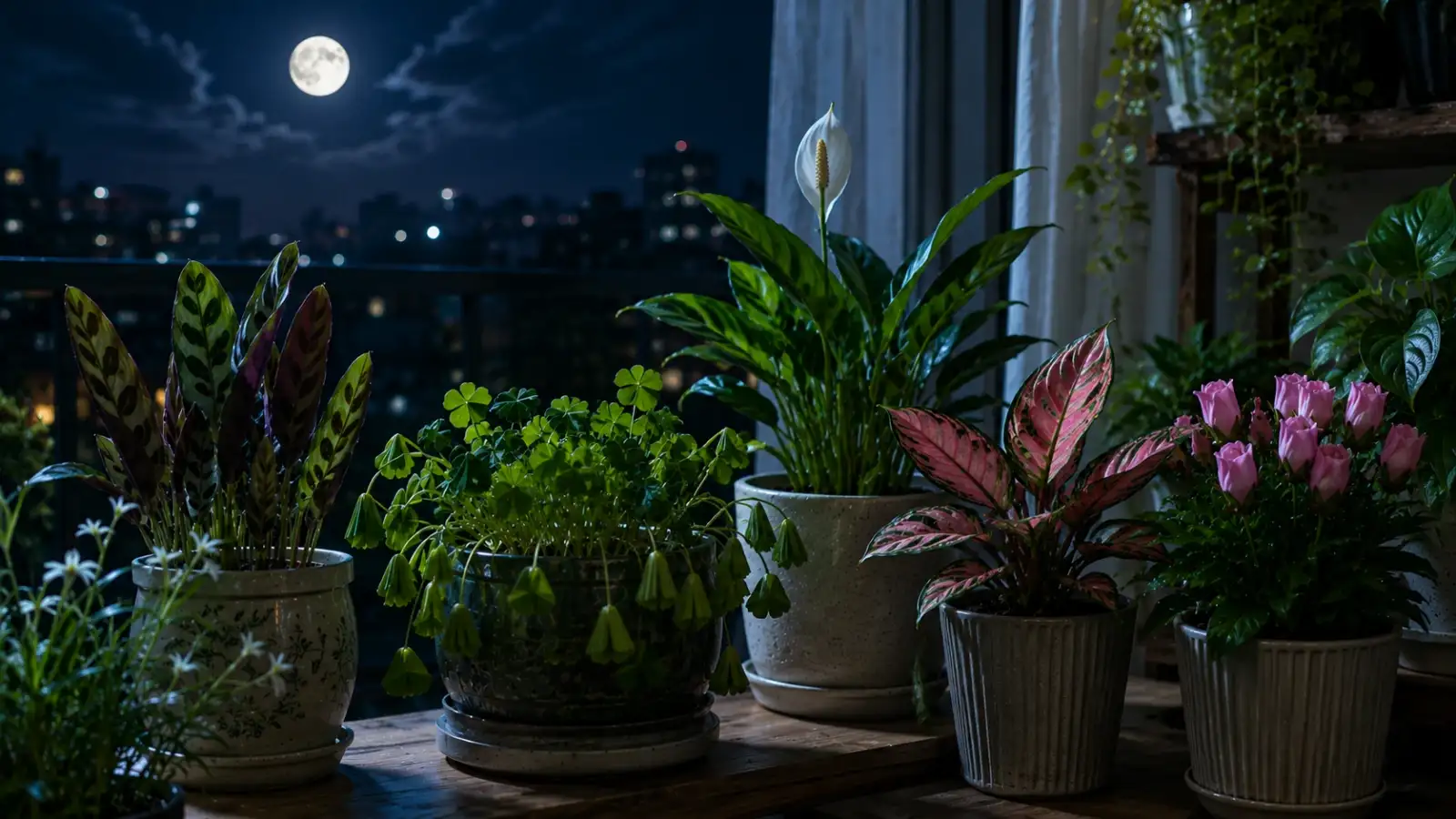
When daylight fades, internal chemical signals trigger a rapid movement of potassium and chloride ions out of specific cells in the pulvinus. Water naturally follows these shifting salts through osmosis. As water drains out, the cells on one side of the joint deflate like tiny water balloons, causing the leaf or petal to droop, fold, or close completely. When morning light returns, the plant pumps those same salts back in, drawing water back into the cells to inflate the joint and push the foliage open once again.
In classic botanical experiments, scientists placed nyctinastic flora into pitch-black rooms with continuous darkness and no temperature changes. Astonishingly, the leaves continued to fold up at night and open during the day right on schedule for several days. This proves that the science behind plants sleeping at night is driven by a deep internal mechanism governed by light-sensitive protein pigments called phytochromes, which measure the exact duration of day and night.
Furthermore, many leaf-eating insects use moonlight to navigate and feed on foliage. By folding leaves downward or closing them tightly together, vegetation makes itself less visually obvious to grazing pests while simultaneously hiding the softest, most nutritious underside of its leaves from hungry insects.
The mechanical engine of plant motion called nyctinasty
The scientific term for this rhythmic sleep movement is nyctinasty. While animals rely on muscles, nerves, and complex brains to move their limbs, green vegetation uses hydraulic pressure to change shape. At the base of leaves and flower petals sits a specialized joint-like structure called a pulvinus. This tiny organ acts like a microscopic hydraulic pump filled with water and specialized plant cells.When daylight fades, internal chemical signals trigger a rapid movement of potassium and chloride ions out of specific cells in the pulvinus. Water naturally follows these shifting salts through osmosis. As water drains out, the cells on one side of the joint deflate like tiny water balloons, causing the leaf or petal to droop, fold, or close completely. When morning light returns, the plant pumps those same salts back in, drawing water back into the cells to inflate the joint and push the foliage open once again.
You may also like
- DU college's student group expands sustainable soap initiative
- PM Kisan Yojana: If four brothers farm the same land, who gets the ₹6,000? Find out here..
- Train Cancellations: Railways cancel several trains from today until August 23
- Ministry of Tribal Affairs showcases India's Rich Tribal Textile Heritage through RISA: TIMELESS TRIBAL on the occasion of 12th National Handloom Day
- Once plagued by elephant raids, this Assam village now grows grass and fruits for wild herds; why Hatikhuli is becoming a unique destination for conservation tourism
Circadian rhythms and the internal biological clock
Plants do not simply react passively to the presence or absence of light. Just like humans and animals, green vegetation possesses a complex internal biological timing system known as a circadian rhythm. This built-in clock operates on an approximate twenty four hour cycle and prepares the plant for predictable environmental changes long before they happen.In classic botanical experiments, scientists placed nyctinastic flora into pitch-black rooms with continuous darkness and no temperature changes. Astonishingly, the leaves continued to fold up at night and open during the day right on schedule for several days. This proves that the science behind plants sleeping at night is driven by a deep internal mechanism governed by light-sensitive protein pigments called phytochromes, which measure the exact duration of day and night.
Conserving warmth and protecting delicate floral structures
Why did nature evolve this energetic, daily hydraulic movement? Evolutionary biologists have uncovered several crucial advantages to nocturnal folding. One primary benefit is temperature regulation and frost prevention. Unfolded, horizontal leaves lose thermal energy rapidly into the clear night sky through thermal radiation. By folding leaves vertically or closing petals into a tight bud, the plant drastically reduces its exposed surface area. This compact shape traps a pocket of warmer air around delicate growing tips, protecting sensitive internal structures from chilling night winds, heavy dew drops, and frost damage.Moisture defense and predator avoidance strategies
Closing up shop for the night also serves as a vital defense mechanism against physical hazards and hungry nocturnal pests. Open leaves act like flat catchments for heavy rainwater, which can weight down stems, snap fragile branches, or encourage the growth of harmful fungal spores. Folded leaves allow excess nighttime rain and heavy condensation to slide off safely onto the soil below.Furthermore, many leaf-eating insects use moonlight to navigate and feed on foliage. By folding leaves downward or closing them tightly together, vegetation makes itself less visually obvious to grazing pests while simultaneously hiding the softest, most nutritious underside of its leaves from hungry insects.
The fascinating living rhythms of the green world
Ultimately, understanding the science behind plants sleeping at night transforms how we view the natural world around us. Far from being passive objects fixed in the dirt, trees, flowers, and houseplants are dynamic, living organisms constantly responding to the cosmos. Taking time to observe these gentle nocturnal movements reminds us of the intricate, hidden intelligence that keeps our green planet thriving through every sunrise and sunset.





Loving Newspoint? Download the app now
