
The Shield That Protects Another's Faith


Most of us pray for our own safety, our families, and our beliefs. It takes a rare soul to lay down his life so that people of a different faith can pray in peace. That is the extraordinary act we remember in the 350th martyrdom year of Sri Guru Tegh Bahadur Ji , the Ninth Sikh Guru.
In 1675, in the heart of Delhi, the Guru gave his life so others could follow their conscience. The people he defended did not share his scriptures, rituals, or path. They only asked to live and worship without fear. His answer shows that real spirituality does not end where our own community ends. Sikh tradition honours him as Hind di Chadar , the shield of India. A shield takes the blow, so others don't have to.

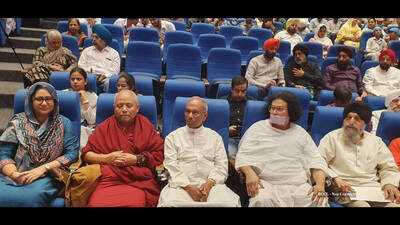
On 26 October 2026, this message drew people of many faiths together at the Constitution Club of India in New Delhi. The seminar, called Shristi Di Chadar and organised by the IHA Foundation , brought together Sikh granthis, Islamic scholars, Jain and Hindu saints, Christian priests and a Zoroastrian Parsi representative, along with academics, students and public figures. The gathering itself was the lesson: faiths that differ in rituals can still agree on dignity, compassion, and courage.
The Guru’s life asks a question that is as pressing today as it was in the seventeenth century: Is my faith only about me?
Many of us practise religion as a private bargain: we offer prayers and expect protection. Guru Tegh Bahadur Ji reminds us that faith matures when it turns outward. His own bani speaks of fearlessness, detachment, and equanimity: one who neither frightens others nor is frightened by anyone is truly wise. Such a person has gone beyond fear, and only someone like that can stand up for others.
At the seminar, leaders from different traditions spoke in one voice. The Chief Imam of India said that respecting every faith and protecting freedom of conscience are the foundations of peace and brotherhood. The Jain saint Acharya Lokesh Muni spoke of compassion and universal brotherhood. Goswami Sushil Ji Maharaj said that true spirituality lies in defending others' rights. Different vocabularies, the same truth.
What does this mean for an ordinary seeker, who will never face an emperor’s court? It means we do not have to wait for a historic moment to practise the Guru’s teaching. We practise it by refusing to laugh at someone’s belief, speaking up when a neighbour is treated unfairly, and teaching our children that another person’s prayer deserves the same respect as our own. As the organisers stressed, remembering the Guru must mean more than commemorating history. It must change how we live.
The young need this message most. In a noisy world of suspicion and division, they can learn that strength is not about overpowering others. It is the quiet courage to protect them.
Three and a half centuries later, the Guru’s sacrifice still asks us to widen the circle of our concern, so that no one is left to stand alone for their faith. When we protect another person’s right to believe, we honour the Guru and draw closer to the Divine that lives in all. Waheguru Ji Ka Khalsa, Waheguru Ji Ki Fateh.
In 1675, in the heart of Delhi, the Guru gave his life so others could follow their conscience. The people he defended did not share his scriptures, rituals, or path. They only asked to live and worship without fear. His answer shows that real spirituality does not end where our own community ends. Sikh tradition honours him as Hind di Chadar , the shield of India. A shield takes the blow, so others don't have to.
On 26 October 2026, this message drew people of many faiths together at the Constitution Club of India in New Delhi. The seminar, called Shristi Di Chadar and organised by the IHA Foundation , brought together Sikh granthis, Islamic scholars, Jain and Hindu saints, Christian priests and a Zoroastrian Parsi representative, along with academics, students and public figures. The gathering itself was the lesson: faiths that differ in rituals can still agree on dignity, compassion, and courage.
The Guru’s life asks a question that is as pressing today as it was in the seventeenth century: Is my faith only about me?
Many of us practise religion as a private bargain: we offer prayers and expect protection. Guru Tegh Bahadur Ji reminds us that faith matures when it turns outward. His own bani speaks of fearlessness, detachment, and equanimity: one who neither frightens others nor is frightened by anyone is truly wise. Such a person has gone beyond fear, and only someone like that can stand up for others.
At the seminar, leaders from different traditions spoke in one voice. The Chief Imam of India said that respecting every faith and protecting freedom of conscience are the foundations of peace and brotherhood. The Jain saint Acharya Lokesh Muni spoke of compassion and universal brotherhood. Goswami Sushil Ji Maharaj said that true spirituality lies in defending others' rights. Different vocabularies, the same truth.
What does this mean for an ordinary seeker, who will never face an emperor’s court? It means we do not have to wait for a historic moment to practise the Guru’s teaching. We practise it by refusing to laugh at someone’s belief, speaking up when a neighbour is treated unfairly, and teaching our children that another person’s prayer deserves the same respect as our own. As the organisers stressed, remembering the Guru must mean more than commemorating history. It must change how we live.
The young need this message most. In a noisy world of suspicion and division, they can learn that strength is not about overpowering others. It is the quiet courage to protect them.
Three and a half centuries later, the Guru’s sacrifice still asks us to widen the circle of our concern, so that no one is left to stand alone for their faith. When we protect another person’s right to believe, we honour the Guru and draw closer to the Divine that lives in all. Waheguru Ji Ka Khalsa, Waheguru Ji Ki Fateh.
Next Story