
Why Indians Eat with the Right Hand: The Tradition Explained

Pick up a meal anywhere in India, a steel thali in a Tamil home, a banana-leaf spread in Kerala, roti and dal in a Punjabi kitchen, and the right hand does the work. The left stays out of it. This is not an accident of habit. It is a practice with roots in how Indian tradition drew lines between the clean and the unclean, the sacred and the everyday.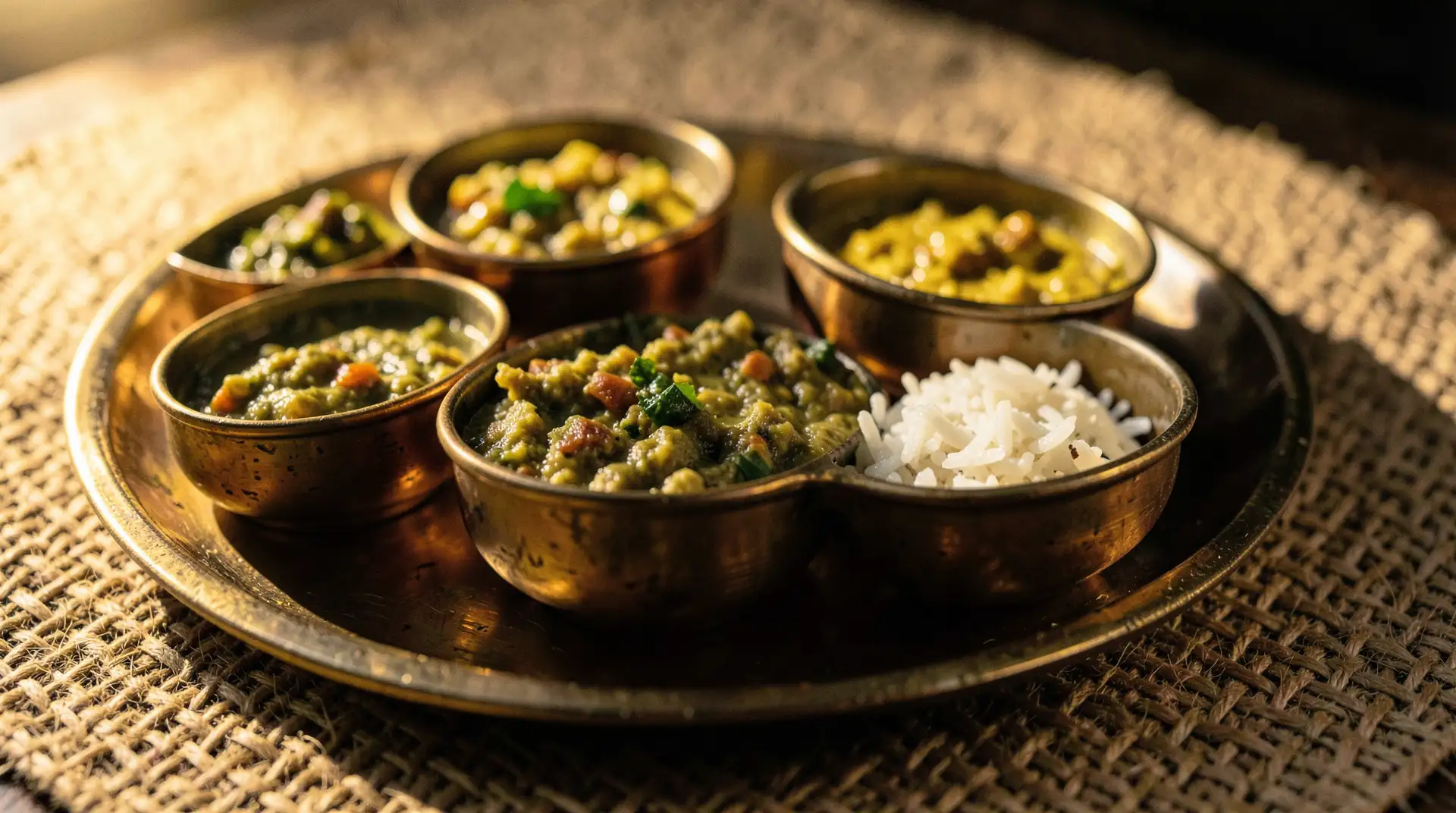
This division was practical before it was symbolic. In a world without running water or soap in every corner, keeping the two functions in separate hands reduced the risk of contamination at the table. The logic was physical first, and the ritual meaning grew around it.
A bride circles the sacred fire with her right side leading. A guest is welcomed with the right hand extended. Eating, understood as an act of receiving the gift of food, an act with its own ritual weight in traditions that treat the first morsel as prasad, naturally fell on the same side.
The specific reasoning each tradition gives differs, but the conclusion is the same. A practice that survives across faiths with different theologies is usually anchored in something more fundamental than doctrine, and here, the anchor is the body's own logic of clean and unclean.
Some Ayurvedic texts describe this contact as part of the process of digestion, the body beginning to orient itself toward the meal before the first bite. Whether or not one accepts the full Ayurvedic frame, the sensory argument is real: hands communicate something a spoon cannot.
The tradition was never about the hand itself. It was about intention and attention: bringing a kind of care to the act of eating that treated the meal as something more than fuel. That intention is what the right-hand habit was designed to carry, and it is what survives even when the strictness around it has softened.
The Body Divided into Two Roles
In Ayurvedic thought and in the older domestic codes that shaped Indian household life, the two hands were assigned separate functions. The right hand was kept for eating, for offering, for greeting, for giving and receiving. The left was reserved for hygiene, for tasks after using the toilet, for cleaning the body.This division was practical before it was symbolic. In a world without running water or soap in every corner, keeping the two functions in separate hands reduced the risk of contamination at the table. The logic was physical first, and the ritual meaning grew around it.
The Sacred Direction of the Right
Sanskrit texts and the ritual codes embedded in daily Hindu practice consistently associate the right side with auspiciousness. The word for right in Sanskrit, dakshina, also means south, the direction of the ancestors, and carries the sense of skill and correctness. Offerings to deities are made with the right hand.A bride circles the sacred fire with her right side leading. A guest is welcomed with the right hand extended. Eating, understood as an act of receiving the gift of food, an act with its own ritual weight in traditions that treat the first morsel as prasad, naturally fell on the same side.
You may also like
- How many students—and how many women—are at AMU? How does it compare to other universities?
- Why Some Wrinkles Stay Even After Botox
- Air Pollution Is Damaging Your Skin Too! Experts Reveal How Poor AQI Can Cause Premature Ageing
- Fight spiders: Transform your home with effective, chemical-free methods that keep spiders at bay
- AIIMS Rajkot Gets Advanced Cancer Treatment Facility Worth ₹39 Crore, 1.54 Crore People to Benefit
How the Tradition Reads Across Faiths
The right-hand rule in eating is not exclusive to Hindu practice. Muslim tradition holds a clear instruction: eat and drink with the right hand, for the left is associated with impurity. Sikh langar, the community meal served at the Gurdwara, is eaten with the right hand by convention. Jain dietary practice, which is meticulous about purity at every stage of a meal, follows the same division.The specific reasoning each tradition gives differs, but the conclusion is the same. A practice that survives across faiths with different theologies is usually anchored in something more fundamental than doctrine, and here, the anchor is the body's own logic of clean and unclean.
Eating by Hand as Sensory Intention
There is a less-discussed reason that practitioners of traditional Indian cooking and Ayurveda have long described: eating with the hand is not merely a delivery mechanism. The fingers carry nerve endings that register temperature, texture, and moisture. Touching food before it reaches the mouth gives the body a moment of sensory preparation, the warmth of fresh roti, the softness of well-cooked dal, the resistance of a piece of vegetable.Some Ayurvedic texts describe this contact as part of the process of digestion, the body beginning to orient itself toward the meal before the first bite. Whether or not one accepts the full Ayurvedic frame, the sensory argument is real: hands communicate something a spoon cannot.
When the Left Hand Enters the Frame
The rule has always had its practical exceptions. A person whose right hand is injured or absent eats as they must. Left-handed children in many modern Indian families are no longer corrected at the table the way they once were. In some communities, the left hand assists, steadying a cup, holding a piece of bread while the right tears it, without being considered a violation.The tradition was never about the hand itself. It was about intention and attention: bringing a kind of care to the act of eating that treated the meal as something more than fuel. That intention is what the right-hand habit was designed to carry, and it is what survives even when the strictness around it has softened.






Loving Newspoint? Download the app now
