
Why Lotus Flowers Appear So Often in Indian Art? Its Religious and Cultural Meaning Explained

The lotus is one of the most recognisable motifs in Indian art. It appears in temple carvings, paintings, sculptures, textiles, manuscripts, jewellery and contemporary artwork. Its popularity is not simply because the flower is visually striking. Across Indian traditions, the lotus has acquired layers of religious, philosophical and cultural meaning.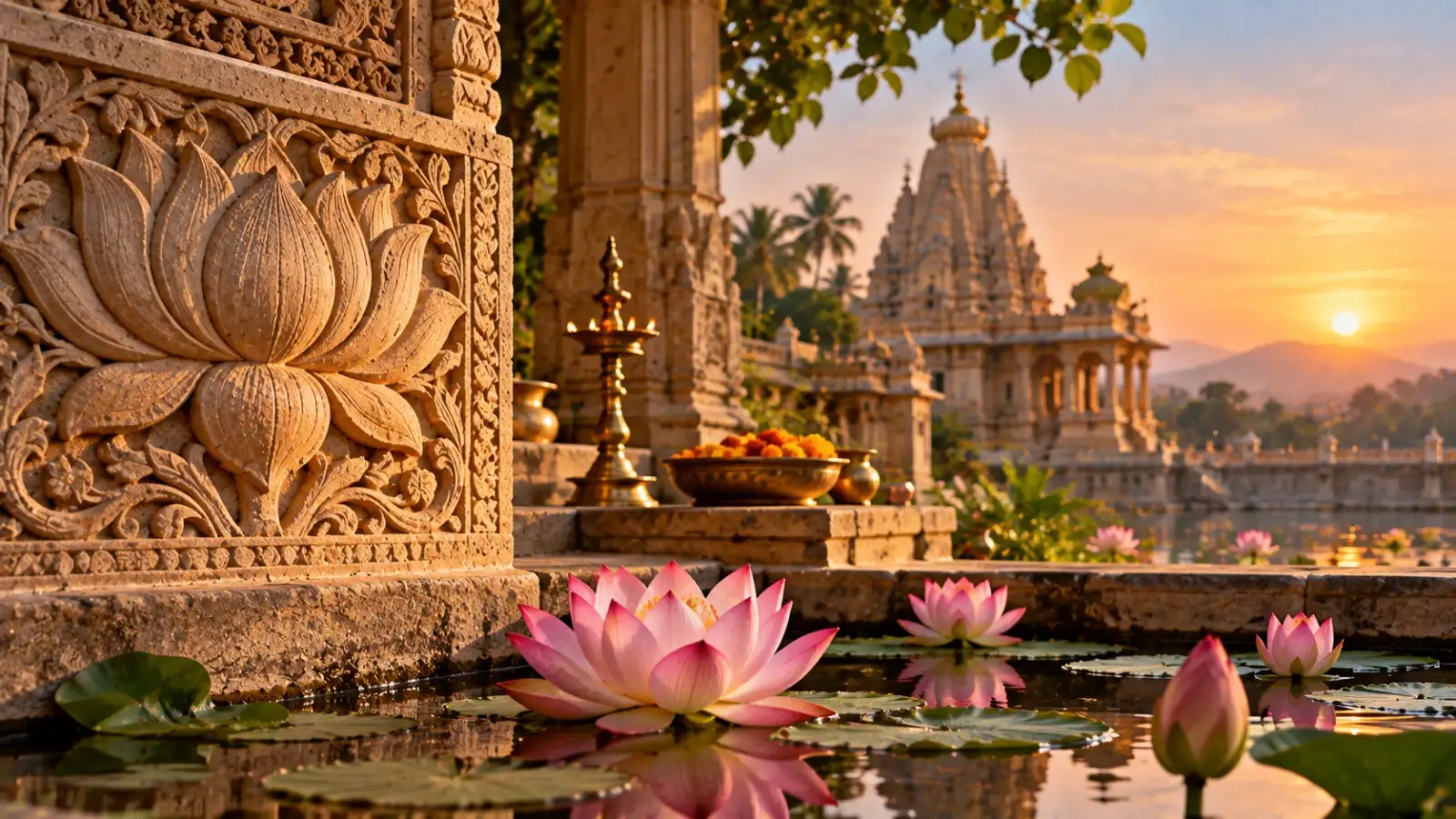
One reason it became such a powerful artistic symbol is the way the flower grows. A lotus rises from muddy water but opens above the surface with a relatively clean and graceful appearance. This natural process has long been associated with ideas of purity, spiritual growth and rising above worldly difficulties.
Buddhist art also makes extensive use of the lotus. It is associated with spiritual awakening and the journey from ignorance towards enlightenment. Images of the Buddha and other Buddhist figures are often shown seated or standing on lotus bases.
These religious associations helped establish the lotus as a familiar visual language that artists could use to communicate ideas without relying on written explanations.
Indian philosophical traditions have often used this contrast to represent the relationship between worldly life and spiritual development. The flower can suggest the possibility of remaining connected to the physical world without being completely overwhelmed by it.
Artists can express this idea simply by including a lotus beneath a figure or placing lotus motifs around a composition.
Temple ceilings may feature carved lotus patterns, while pillars, doorways and decorative borders can incorporate stylised petals. In some structures, the lotus appears as a repeating geometric motif rather than as a realistic flower.
This flexibility made it particularly useful to architects and craftsmen. The basic shape of the flower could be adapted to circular ceilings, borders, panels and symmetrical decorative designs.
Because of these associations, lotus motifs have appeared in decorative objects, textiles, jewellery and household designs for generations. The flower can communicate auspiciousness while also providing an elegant visual element.
Its meaning therefore extends beyond religious artwork into everyday forms of Indian craftsmanship.
In classical sculpture, the petals may be carefully carved to create depth and symmetry. In miniature paintings, lotus flowers can become part of gardens, ponds and palace scenes. Traditional textiles may reduce the flower to a repeating pattern, while folk artists often use bold and simplified forms.
This adaptability has helped the lotus survive across changing artistic styles.
A lotus might be used as a central design on fabric, repeated along a border or incorporated into a larger floral composition. In some crafts, its shape is highly stylised, making it difficult to distinguish from other decorative floral patterns without knowing the traditional visual vocabulary.
Its continued popularity comes partly from the fact that it can carry several meanings at once. It can represent beauty, spirituality, resilience, prosperity or transformation depending on the context.
At the same time, modern artists can detach the lotus from its traditional symbolism and use its shape purely as an artistic form.
Its ability to emerge from muddy water and bloom above the surface has made it an especially powerful metaphor for purity and transformation. Religious traditions gave the flower additional meanings, while generations of architects, sculptors, painters and craftspeople incorporated it into their visual vocabulary.
That is why the lotus can appear in settings as different as a temple ceiling, a classical sculpture, a silk textile or a contemporary artwork. It is not merely a popular flower in Indian art. It has become a visual symbol capable of expressing ideas that have remained important across centuries.
One reason it became such a powerful artistic symbol is the way the flower grows. A lotus rises from muddy water but opens above the surface with a relatively clean and graceful appearance. This natural process has long been associated with ideas of purity, spiritual growth and rising above worldly difficulties.
The Lotus Has Deep Religious Associations
The flower holds an important place in Hindu, Buddhist and Jain traditions. In Hindu art, deities such as Lakshmi and Saraswati are frequently depicted with lotus flowers or standing on lotus blossoms. The flower can therefore become part of the visual identity of a deity rather than simply serving as decoration.Buddhist art also makes extensive use of the lotus. It is associated with spiritual awakening and the journey from ignorance towards enlightenment. Images of the Buddha and other Buddhist figures are often shown seated or standing on lotus bases.
These religious associations helped establish the lotus as a familiar visual language that artists could use to communicate ideas without relying on written explanations.
Its Growth Became a Symbol of Transformation
The lotus's natural life cycle gives it another important meaning. Its roots remain beneath the water and mud, while its flower rises towards the light.Indian philosophical traditions have often used this contrast to represent the relationship between worldly life and spiritual development. The flower can suggest the possibility of remaining connected to the physical world without being completely overwhelmed by it.
Artists can express this idea simply by including a lotus beneath a figure or placing lotus motifs around a composition.
Lotus Motifs Became Part of Temple Architecture
The flower is not limited to paintings and sculptures. Lotus designs can be found throughout Indian architecture.Temple ceilings may feature carved lotus patterns, while pillars, doorways and decorative borders can incorporate stylised petals. In some structures, the lotus appears as a repeating geometric motif rather than as a realistic flower.
This flexibility made it particularly useful to architects and craftsmen. The basic shape of the flower could be adapted to circular ceilings, borders, panels and symmetrical decorative designs.
The Flower Represents Beauty and Prosperity
The lotus is also strongly associated with beauty, abundance and prosperity. This connection is especially visible in representations of Goddess Lakshmi, who is traditionally depicted with lotus flowers.Because of these associations, lotus motifs have appeared in decorative objects, textiles, jewellery and household designs for generations. The flower can communicate auspiciousness while also providing an elegant visual element.
Its meaning therefore extends beyond religious artwork into everyday forms of Indian craftsmanship.
Lotus Imagery Varies Across Different Art Traditions
There is no single way of depicting the lotus in Indian art. Artists have represented it realistically, symbolically and geometrically depending on the period and artistic tradition.In classical sculpture, the petals may be carefully carved to create depth and symmetry. In miniature paintings, lotus flowers can become part of gardens, ponds and palace scenes. Traditional textiles may reduce the flower to a repeating pattern, while folk artists often use bold and simplified forms.
This adaptability has helped the lotus survive across changing artistic styles.
The Lotus Appears in Traditional Textiles and Crafts
Indian artisans have used lotus designs in embroidery, weaving, block printing, pottery, metalwork and other crafts. The motif can be found in regional artistic traditions across the country, although its appearance and interpretation vary.A lotus might be used as a central design on fabric, repeated along a border or incorporated into a larger floral composition. In some crafts, its shape is highly stylised, making it difficult to distinguish from other decorative floral patterns without knowing the traditional visual vocabulary.
Why the Lotus Remains Relevant Today
The lotus has not remained confined to ancient temples or traditional paintings. Contemporary Indian artists continue to reinterpret the flower through painting, sculpture, installations, digital art and graphic design.Its continued popularity comes partly from the fact that it can carry several meanings at once. It can represent beauty, spirituality, resilience, prosperity or transformation depending on the context.
At the same time, modern artists can detach the lotus from its traditional symbolism and use its shape purely as an artistic form.
A Flower With Many Layers of Meaning
The lotus has become so prominent in Indian art because it combines natural beauty, religious significance and philosophical symbolism in a single image.Its ability to emerge from muddy water and bloom above the surface has made it an especially powerful metaphor for purity and transformation. Religious traditions gave the flower additional meanings, while generations of architects, sculptors, painters and craftspeople incorporated it into their visual vocabulary.
That is why the lotus can appear in settings as different as a temple ceiling, a classical sculpture, a silk textile or a contemporary artwork. It is not merely a popular flower in Indian art. It has become a visual symbol capable of expressing ideas that have remained important across centuries.
Next Story