
The Superstar & the Visionary: Why only Uttam Kumar could be Ray's Nayak


“I will go to the top, the top, the top.” It’s difficult to forget the dialogue from Oscar-winning director Satyajit Ray ’s film, Nayak . It is an equally unforgettable film. Because superstardom as a cultural phenomenon hadn’t been studied by Indian cinema till then. Hollywood had. Citizen Kane and Sunset Boulevard, two of the best films on superstardom, were both works of art that Ray and Uttam Kumar must have grown up watching.
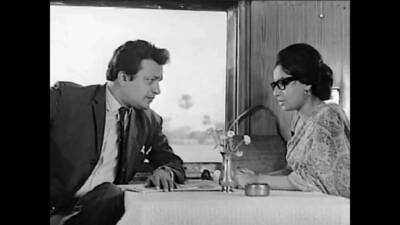
September 3rd was the birth centenary of India’s Mahanayak, Uttam Kumar. Our generation was too young to remember him alive. He died in 1980, aged 53. We got introduced to the megastar, or great hero (Mahanayak), through Doordarshan reruns of all his hit films — Harano Sur, Saptapadi, Deya Neya, Bhranti Bilas, Antony Firingee… or Ray’s cult classic about the nature of superstardom, Nayak.
The visionary Ray’s favourite hero was Soumitra Chatterjee. In their times, Uttam Kumar and Soumitra Chatterjee were well-known rivals. Ray wrote the film Nayak in Darjeeling, in 1965, and offered it to Uttam Kumar. The stories are well-known.
Chatterjee was upset and had asked Ray why Nayak went to Uttam Kumar. Ray had explained that it was because he was the living embodiment of Nayak’s central character — the megastar on and off the screen.
Nayak was extraordinary not because Satyajit Ray made a film about a superstar. More that he made one before India had fully experienced, or even developed a vocabulary for, the phenomenon of the superstar as a mass cultural force. Ray was ahead of his time.
Ray's Nayak studies superstardom as a cultural phenomenonIn India, popular culture had begun to understand that the modern star was no longer merely an actor who appeared in films. The star was becoming a cultural phenomenon in himself – an image, a commodity, a fantasy, an object of public desire and, eventually, a prisoner of his own mythology.
Hindi cinema’s great explosion of superstar culture was still to come. Rajesh Khanna would create an unprecedented mass hysteria in the late 1960s and early 1970s, when fans screamed, fainted, wrote letters in blood and treated the actor as something approaching a cultural deity. But Nayak was made in 1966.
Ray did not wait for the phenomenon to become obvious. He imagined it ahead of time. And then he found the one man who could make that imagination believable because, in Bengal, the phenomenon already existed. Uttam Kumar was not playing a superstar from scratch. He was bringing his own superstardom into the film.
Ray’s genius was to understand that the film would become infinitely more powerful if its central character was played by an actor whose public identity already carried the emotional weight that the fictional Arindam Mukherjee was supposed to carry.
If Ray had cast an ordinary successful actor and simply told us that he was a megastar, we would have watched a story about a famous actor. By casting Uttam Kumar, Ray made us watch a superstar examining his own life – on screen, and possibly off it too.
It was catharsis for Uttam Kumar. For Ray, it was a popular story of today foretold way ahead of its time. And for us, the audience, the beginning of understanding the cultural phenomenon that is superstardom. It’s all too common today. The concept of superstardom doesn’t awe us as it did in the 1960s. But Nayak stands the test of time.
And that is what makes the film extraordinary. Ray did not cast the biggest Bengali star of his time. He cast a man who already carried the burden, privilege and loneliness of being worshipped by millions. Uttam Kumar did not have to imagine what it meant to be Arindam Mukherjee, the superstar travelling by train to Delhi to receive the National Award. He knew what it meant to be recognised, desired, celebrated and, at the same time, strangely isolated by fame.
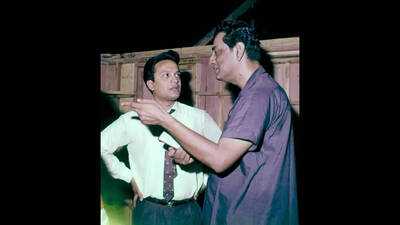
The actor and the character was all but oneThere is a delicious irony in the fact that Ray, who was suspicious of the machinery of popular culture, chose one of its biggest icons to examine it. Uttam Kumar was, on the surface, almost everything Ray’s more austere cinema appeared to stand apart from: glamour, romance, mass adulation, fan worship and the enormous emotional economy of the popular Bengali film.
Yet Nayak works precisely because Ray places this icon of popular cinema inside his own, very different cinematic universe. He takes the man millions thought they knew and asks what might be happening when no one is watching him.
The train journey—Rajdhani, from Howrah to New Delhi—becomes a moving confessional. The journalist, played by Sharmila Tagore, becomes the dissector. A dissector who is at once unimpressed by superstardom, even uncomfortable with the subject she’s interviewing, initially; but she has enough empathy to understand the man behind the myth by the end.
So, away from the crowds, away from the screaming fans and the adoring public, the superstar begins to confront himself. The dreams, memories, failures, compromises and insecurities, the demons that all surface during the journey. It reveals the distance between the public Uttam Kumar-like figure and the private man. The more successful Arindam appears to be, the more complicated his inner life becomes.
The audience already knew Uttam Kumar as the Mahanayak. They knew the face, the smile, the romantic hero, the enormous popularity. They brought all of that into the theatre. Ray then placed that image under interrogation.
The man who says, “I will go to the top, the top, the top,” is the man who was already there. But Ray was interested in what “the top” does to him. Not just a superstar’s meteoric rise but the fascinatingly destructive and fleeting nature of stardom.
It appears first as achievement and then slowly reveals itself as addiction. For both the Mahanayak and the character in Nayak, Arindam Mukherjee, the applause becomes a drug. The character and the actor blended in Nayak to become one.
Reel or real, the audience expects a particular man, the industry expects a particular star and the actor gradually discovers that he has less and less freedom to be anybody else. He becomes a puppet – not necessarily because someone is visibly pulling his strings, but because the demands of fame have become internalised, as Shankar Da (Arindam’s mentor and theatre director in Nayak) had warned him.
This is the paradox that Ray understood as an observer and chronicler of his times. Arindam commanded the room. He commanded producers, audiences and journalists. He walked into a railway compartment surrounded by people who knew exactly who he was. Yet he could not command his own demons.
And that contradiction is where Nayak becomes much darker than a conventional examination of celebrity. The memories that surface during the journey expose the compromises behind the success. There is the theatre actor who had insulted Arindam when he was a struggling young actor, dismissing him when he had no power.
Years later, when the positions are reversed and the once-successful actor comes to Arindam seeking work, the superstar rejects him. And enjoys every bit of the vicarious pleasure.
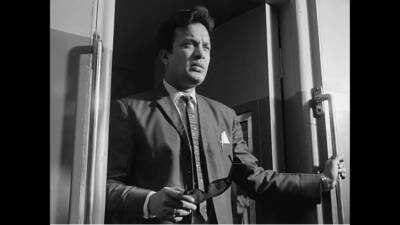
The dark side of celebrity cultureIt is an ugly moment. And that was the point. Was Arindam exercising power? Was he taking revenge? Or had success transformed him into precisely the kind of person he once resented?
Ray didn’t give us any answer. That refusal is central to Ray’s vision of the film .The superstar is neither hero nor villain. He is a man who has accumulated success and, with it, guilt, self-doubt and the uncomfortable knowledge that some of his choices cannot be undone.
Then there are actual drugs. By now we all know that part of the celebrity life all too well. For Arindam, it was sleeping pills. In the film, a little girl in the same compartment as the superstar asks him, innocently, why he needs medicine to sleep in the morning since he slept well at night. “Where is the harm in a little more sleep?” says the man and the actor.
These are all small moments but they display the devastating details in the mythology of the superstar. Then and now. Outside, there is glamour. Inside, there is restlessness. The public sees a man who has everything. The private man cannot sleep.
And then there is the public image — perhaps the most important character in the film after Arindam. Ray understood that once an actor becomes a superstar, there are effectively two people living inside him: the person and the image. The image belongs to the public. The person underneath is left to deal with the consequences.
In Nayak, the Mahanayak’s presence supplied the credibility that Ray needed. Uttam Kumar's face carried a history of adulation into every scene. His fame was not an abstraction. It was sitting in front of Ray's camera.
The result is a performance in which Uttam Kumar is simultaneously playing Arindam Mukherjee and allowing us to glimpse into his private life.
Ray was looking at the phenomenon from the outside. Uttam Kumar knew it from within. The director brought the intellectual foresight to understand that superstardom would become one of the defining forces of modern popular culture. Uttam Kumar brought the lived experience of being worshipped by an audience. One supplied the question; the other supplied the truth of all the possible answers – and more questions.
Ray foresaw something. He understood that cinema was no longer producing just actors. It was producing images powerful enough to live independently of the people who created them. He understood the intoxication of glamour, as an auteur.
What makes the film feel almost prophetic today is that the world has moved much closer to the one he imagined. Stardom is now an industry in itself. Public image can be manufactured, monitored and destroyed in real time. Actors, athletes, musicians, and influencers, live under constant scrutiny. The boundary between the person and the persona has almost disappeared.
But Ray was asking these questions in 1966. It’s been 60 years since the movie was released. That is the genius of Nayak. And Uttam Kumar.
September 3rd was the birth centenary of India’s Mahanayak, Uttam Kumar. Our generation was too young to remember him alive. He died in 1980, aged 53. We got introduced to the megastar, or great hero (Mahanayak), through Doordarshan reruns of all his hit films — Harano Sur, Saptapadi, Deya Neya, Bhranti Bilas, Antony Firingee… or Ray’s cult classic about the nature of superstardom, Nayak.
The visionary Ray’s favourite hero was Soumitra Chatterjee. In their times, Uttam Kumar and Soumitra Chatterjee were well-known rivals. Ray wrote the film Nayak in Darjeeling, in 1965, and offered it to Uttam Kumar. The stories are well-known.
Chatterjee was upset and had asked Ray why Nayak went to Uttam Kumar. Ray had explained that it was because he was the living embodiment of Nayak’s central character — the megastar on and off the screen.
Nayak was extraordinary not because Satyajit Ray made a film about a superstar. More that he made one before India had fully experienced, or even developed a vocabulary for, the phenomenon of the superstar as a mass cultural force. Ray was ahead of his time.
Ray's Nayak studies superstardom as a cultural phenomenonIn India, popular culture had begun to understand that the modern star was no longer merely an actor who appeared in films. The star was becoming a cultural phenomenon in himself – an image, a commodity, a fantasy, an object of public desire and, eventually, a prisoner of his own mythology.
Hindi cinema’s great explosion of superstar culture was still to come. Rajesh Khanna would create an unprecedented mass hysteria in the late 1960s and early 1970s, when fans screamed, fainted, wrote letters in blood and treated the actor as something approaching a cultural deity. But Nayak was made in 1966.
Ray did not wait for the phenomenon to become obvious. He imagined it ahead of time. And then he found the one man who could make that imagination believable because, in Bengal, the phenomenon already existed. Uttam Kumar was not playing a superstar from scratch. He was bringing his own superstardom into the film.
Ray’s genius was to understand that the film would become infinitely more powerful if its central character was played by an actor whose public identity already carried the emotional weight that the fictional Arindam Mukherjee was supposed to carry.
If Ray had cast an ordinary successful actor and simply told us that he was a megastar, we would have watched a story about a famous actor. By casting Uttam Kumar, Ray made us watch a superstar examining his own life – on screen, and possibly off it too.
It was catharsis for Uttam Kumar. For Ray, it was a popular story of today foretold way ahead of its time. And for us, the audience, the beginning of understanding the cultural phenomenon that is superstardom. It’s all too common today. The concept of superstardom doesn’t awe us as it did in the 1960s. But Nayak stands the test of time.
And that is what makes the film extraordinary. Ray did not cast the biggest Bengali star of his time. He cast a man who already carried the burden, privilege and loneliness of being worshipped by millions. Uttam Kumar did not have to imagine what it meant to be Arindam Mukherjee, the superstar travelling by train to Delhi to receive the National Award. He knew what it meant to be recognised, desired, celebrated and, at the same time, strangely isolated by fame.
The actor and the character was all but oneThere is a delicious irony in the fact that Ray, who was suspicious of the machinery of popular culture, chose one of its biggest icons to examine it. Uttam Kumar was, on the surface, almost everything Ray’s more austere cinema appeared to stand apart from: glamour, romance, mass adulation, fan worship and the enormous emotional economy of the popular Bengali film.
Yet Nayak works precisely because Ray places this icon of popular cinema inside his own, very different cinematic universe. He takes the man millions thought they knew and asks what might be happening when no one is watching him.
The train journey—Rajdhani, from Howrah to New Delhi—becomes a moving confessional. The journalist, played by Sharmila Tagore, becomes the dissector. A dissector who is at once unimpressed by superstardom, even uncomfortable with the subject she’s interviewing, initially; but she has enough empathy to understand the man behind the myth by the end.
So, away from the crowds, away from the screaming fans and the adoring public, the superstar begins to confront himself. The dreams, memories, failures, compromises and insecurities, the demons that all surface during the journey. It reveals the distance between the public Uttam Kumar-like figure and the private man. The more successful Arindam appears to be, the more complicated his inner life becomes.
The audience already knew Uttam Kumar as the Mahanayak. They knew the face, the smile, the romantic hero, the enormous popularity. They brought all of that into the theatre. Ray then placed that image under interrogation.
The man who says, “I will go to the top, the top, the top,” is the man who was already there. But Ray was interested in what “the top” does to him. Not just a superstar’s meteoric rise but the fascinatingly destructive and fleeting nature of stardom.
It appears first as achievement and then slowly reveals itself as addiction. For both the Mahanayak and the character in Nayak, Arindam Mukherjee, the applause becomes a drug. The character and the actor blended in Nayak to become one.
Reel or real, the audience expects a particular man, the industry expects a particular star and the actor gradually discovers that he has less and less freedom to be anybody else. He becomes a puppet – not necessarily because someone is visibly pulling his strings, but because the demands of fame have become internalised, as Shankar Da (Arindam’s mentor and theatre director in Nayak) had warned him.
This is the paradox that Ray understood as an observer and chronicler of his times. Arindam commanded the room. He commanded producers, audiences and journalists. He walked into a railway compartment surrounded by people who knew exactly who he was. Yet he could not command his own demons.
And that contradiction is where Nayak becomes much darker than a conventional examination of celebrity. The memories that surface during the journey expose the compromises behind the success. There is the theatre actor who had insulted Arindam when he was a struggling young actor, dismissing him when he had no power.
Years later, when the positions are reversed and the once-successful actor comes to Arindam seeking work, the superstar rejects him. And enjoys every bit of the vicarious pleasure.
The dark side of celebrity cultureIt is an ugly moment. And that was the point. Was Arindam exercising power? Was he taking revenge? Or had success transformed him into precisely the kind of person he once resented?
Ray didn’t give us any answer. That refusal is central to Ray’s vision of the film .The superstar is neither hero nor villain. He is a man who has accumulated success and, with it, guilt, self-doubt and the uncomfortable knowledge that some of his choices cannot be undone.
Then there are actual drugs. By now we all know that part of the celebrity life all too well. For Arindam, it was sleeping pills. In the film, a little girl in the same compartment as the superstar asks him, innocently, why he needs medicine to sleep in the morning since he slept well at night. “Where is the harm in a little more sleep?” says the man and the actor.
These are all small moments but they display the devastating details in the mythology of the superstar. Then and now. Outside, there is glamour. Inside, there is restlessness. The public sees a man who has everything. The private man cannot sleep.
And then there is the public image — perhaps the most important character in the film after Arindam. Ray understood that once an actor becomes a superstar, there are effectively two people living inside him: the person and the image. The image belongs to the public. The person underneath is left to deal with the consequences.
In Nayak, the Mahanayak’s presence supplied the credibility that Ray needed. Uttam Kumar's face carried a history of adulation into every scene. His fame was not an abstraction. It was sitting in front of Ray's camera.
The result is a performance in which Uttam Kumar is simultaneously playing Arindam Mukherjee and allowing us to glimpse into his private life.
Ray was looking at the phenomenon from the outside. Uttam Kumar knew it from within. The director brought the intellectual foresight to understand that superstardom would become one of the defining forces of modern popular culture. Uttam Kumar brought the lived experience of being worshipped by an audience. One supplied the question; the other supplied the truth of all the possible answers – and more questions.
Ray foresaw something. He understood that cinema was no longer producing just actors. It was producing images powerful enough to live independently of the people who created them. He understood the intoxication of glamour, as an auteur.
What makes the film feel almost prophetic today is that the world has moved much closer to the one he imagined. Stardom is now an industry in itself. Public image can be manufactured, monitored and destroyed in real time. Actors, athletes, musicians, and influencers, live under constant scrutiny. The boundary between the person and the persona has almost disappeared.
But Ray was asking these questions in 1966. It’s been 60 years since the movie was released. That is the genius of Nayak. And Uttam Kumar.
Next Story