
What Reading in Dim Light Actually Does to Your Eyes

Every household in India has heard some version of it: put that book down, you will ruin your eyes. The warning travelled from grandmothers to parents to children with the confidence of settled fact. The settled fact turns out to be wrong in one important way and right in another, and the distinction is worth knowing.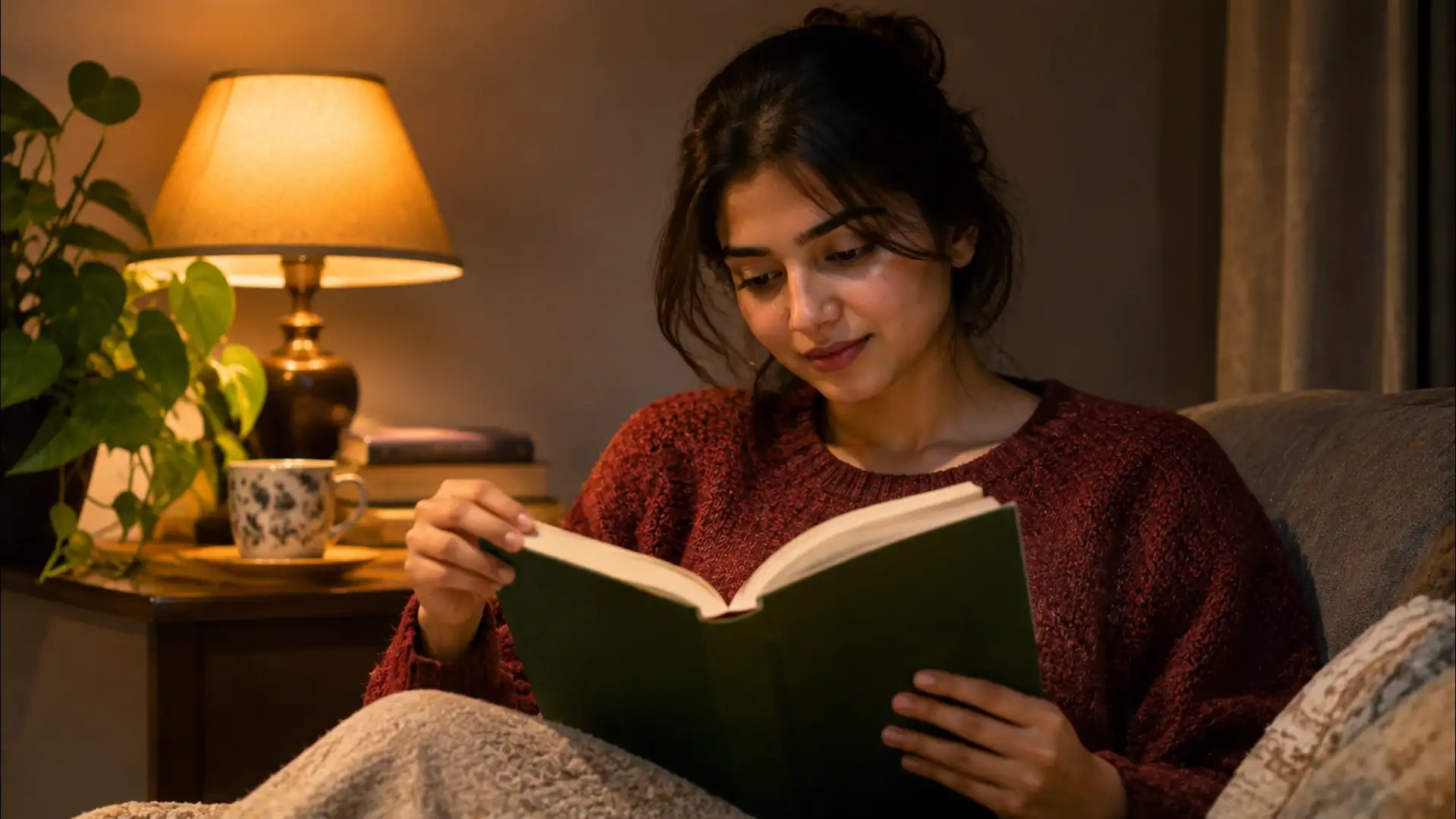
The old warning was not entirely wrong, dim light does make the eye work harder, and the fatigue is real. What it overstated was the consequence. The eye recovers completely. The habit worth building is not brighter light at all costs, but regular breaks and a room where the light is even enough that reading stops feeling like a task.
What the Eye Does in Low Light
When light drops, the pupil widens to let more of it in. The lens and the muscles around it work harder to keep the page in focus, a process called accommodation. These are normal, healthy responses. The eye is not being harmed, it is doing exactly what it was built to do. No part of this process damages the retina, the lens, or the optic nerve. The eye of someone who reads by candlelight is not structurally different from one that reads under a bright desk lamp.The Discomfort Is Real, the Damage Is Not
What dim-light reading does cause is eye strain, and eye strain is worth taking seriously even if it leaves no lasting mark. The ciliary muscles around the lens contract continuously to hold focus on a page that the eye is struggling to resolve clearly. Hold any muscle in tension long enough and it aches. The result is a familiar cluster: tired eyes, a dull ache behind them, occasional blurred vision when you look up, and sometimes a headache that settles at the temples or the base of the skull. These symptoms ease within an hour of rest. They do not accumulate into anything permanent.Where the Myopia Myth Comes From
The belief that dim light causes short-sightedness has been studied directly, and the evidence does not support it. Myopia develops when the eyeball grows slightly too long, so light focuses just in front of the retina rather than on it. What drives this growth is still being studied, but the strongest association researchers have found is with time spent indoors overall, not with light levels during close work. Children who spend more hours outside, regardless of what they do out there, tend to develop myopia at lower rates. The mechanism appears to involve bright outdoor light and the dopamine it triggers in the retina, which may slow the elongation of the eyeball. Reading in a dim room is close work indoors, so it shares one risk factor with myopia, but the dim part is not the driver.What Actually Reduces Eye Strain While Reading
The practical answer is not to flood the room with light but to reduce the contrast between the page and its surroundings. A single bright lamp in an otherwise dark room creates a harsh jump in brightness that the eye has to negotiate every time it glances away from the page. A softer, more even spread of light, enough to read comfortably without squinting, is easier to sustain. Looking away from the page every twenty minutes or so, at something across the room, gives the ciliary muscles a moment to release. Blinking deliberately helps too; people blink far less often when concentrating, and the dryness that follows adds to the strain.When to Take Eye Discomfort Seriously
Eye strain from reading is self-limiting. If discomfort persists after a night's sleep, or if one eye feels different from the other, or if headaches after reading are frequent, those are reasons to see an optometrist, not because dim light has caused damage, but because an underlying refractive error may be making all close work harder than it needs to be. The discomfort you feel reading in low light is the eye's honest signal that it is working harder than usual. Listening to that signal by resting is sensible. Believing it signals permanent harm is not.The old warning was not entirely wrong, dim light does make the eye work harder, and the fatigue is real. What it overstated was the consequence. The eye recovers completely. The habit worth building is not brighter light at all costs, but regular breaks and a room where the light is even enough that reading stops feeling like a task.






Loving Newspoint? Download the app now
