
The World's Best Places to See the Milky Way With the Naked Eye

For anyone who has grown up around bright streets and glowing city skylines, seeing the Milky Way properly can feel almost unreal. Instead of a handful of familiar stars, the sky becomes crowded with countless points of light, dark dust lanes and a pale, cloudy band stretching from horizon to horizon. The experience does not require an expensive telescope. It requires something increasingly rare: darkness. From the deserts of Namibia and Chile to the mountains of New Zealand, several destinations offer exceptionally clear skies where our galaxy can be seen with the naked eye.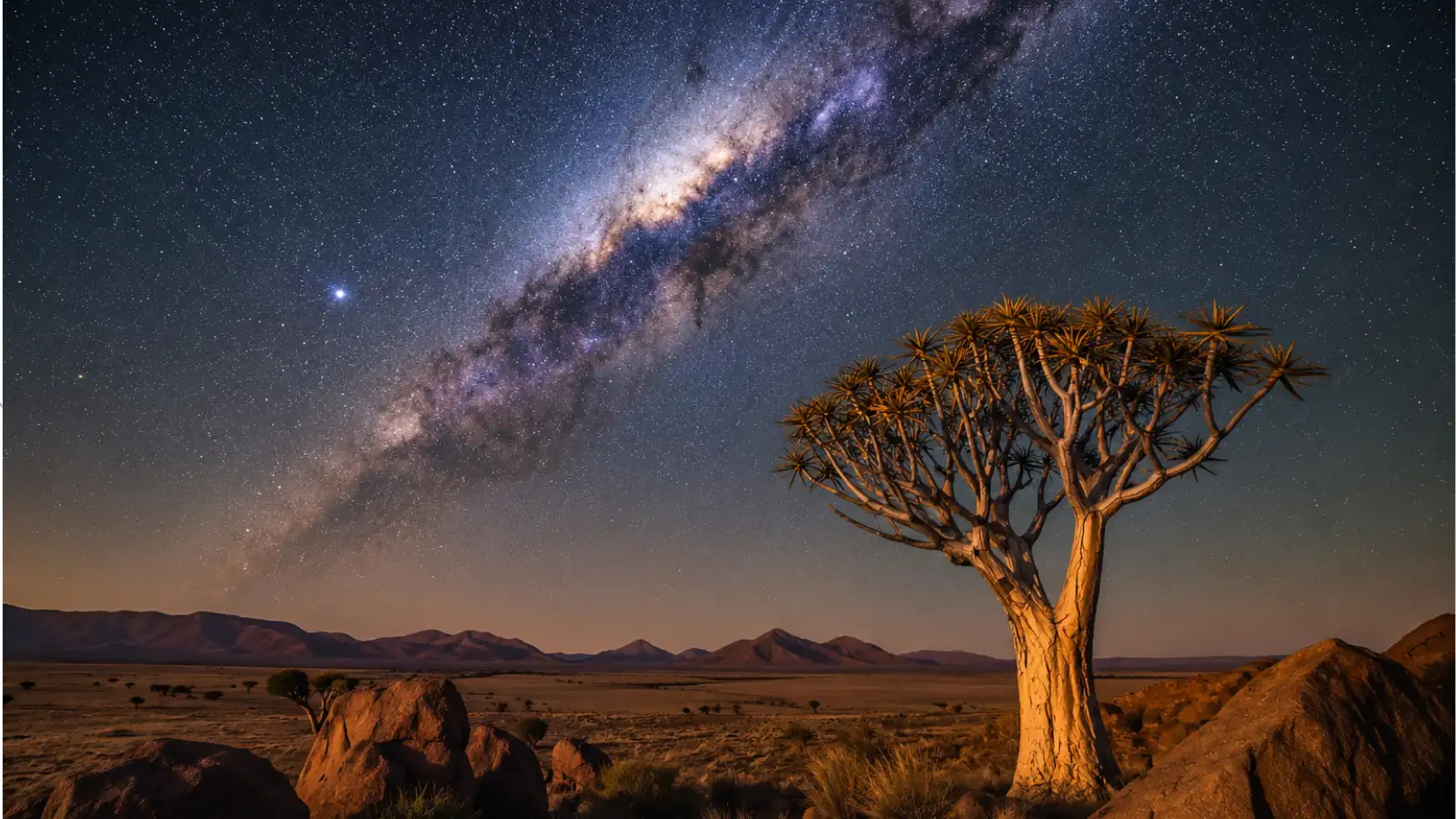
That is why travelling to a genuinely dark location can be transformative. Your eyes need roughly 20 to 30 minutes to become properly adapted to darkness, after which details that were initially invisible begin to emerge.
The surrounding desert adds another dimension. With almost no urban glow and an enormous horizon, the Milky Way appears to rise above the dunes like a luminous river.
The Atacama reportedly enjoys around 300 clear nights a year, making it particularly attractive for travellers planning a dedicated stargazing holiday.
The surprising part is that the Milky Way is not the only attraction. From the Southern Hemisphere, visitors can also see celestial features that are difficult or impossible to observe from much of Europe and North America.
The greatest luxury in these places is not a telescope. It is the darkness itself.
Why the Milky Way Is So Difficult to See
The Milky Way is always above us, but artificial light washes out many of its faintest stars. A global study published in Science Advances found that more than 80 per cent of the world's population lives under light-polluted skies, while the Milky Way is invisible to more than one-third of humanity.That is why travelling to a genuinely dark location can be transformative. Your eyes need roughly 20 to 30 minutes to become properly adapted to darkness, after which details that were initially invisible begin to emerge.
Namibia's Remarkable Night Sky
The NamibRand Nature Reserve in Namibia is one of the standout destinations for naked-eye astronomy. It became Africa's first International Dark Sky Reserve and has Gold Tier status, reflecting its exceptionally dark conditions. The reserve even offers accommodation designed around the night sky, including open-air "star gazer" rooms.The surrounding desert adds another dimension. With almost no urban glow and an enormous horizon, the Milky Way appears to rise above the dunes like a luminous river.
You may also like
- Struggling to Sleep at Night? 8 Simple Habits That May Help You Get Better Rest
- Smartphone has become a disease: Amish on parenting, books and Gen Z attention spans
- When grandparents tell stories, children gain more than memories: 3 science-backed benefits
- DU college's student group expands sustainable soap initiative
- PM Kisan Yojana: If four brothers farm the same land, who gets the ₹6,000? Find out here..
Chile's Atacama Desert
Chile's Atacama Desert is another extraordinary choice. The region's high altitude, extremely dry climate and remote location have made it a centre for professional astronomy. ESO's Paranal Observatory, at 2,635 metres above sea level, is regarded as one of the world's finest astronomical observing sites.The Atacama reportedly enjoys around 300 clear nights a year, making it particularly attractive for travellers planning a dedicated stargazing holiday.
New Zealand's Southern Skies
The Aoraki Mackenzie International Dark Sky Reserve covers 4,367 square kilometres of New Zealand's South Island and has exceptionally dark Bortle Class 2 skies. Its combination of mountains, glaciers, lakes and low light pollution makes it one of the world's great astronomical landscapes.The surprising part is that the Milky Way is not the only attraction. From the Southern Hemisphere, visitors can also see celestial features that are difficult or impossible to observe from much of Europe and North America.
A Simple Way to Improve Your Experience
Choose a moonless night, stay away from artificial lights and avoid looking at your phone. Give your eyes time to adjust and simply look upwards rather than trying to photograph everything.The greatest luxury in these places is not a telescope. It is the darkness itself.






Loving Newspoint? Download the app now
