
The World's Darkest Places for Incredible Stargazing

Darkness is becoming a travel attraction. In an age when city lights can make the night sky glow orange or grey, some of the world's most remote landscapes are being protected precisely because they remain dark. Dark-sky reserves and sanctuaries now stretch across deserts, mountains, islands and national parks. They offer travellers something increasingly unusual: a night in which the stars, rather than streetlights, dominate the horizon.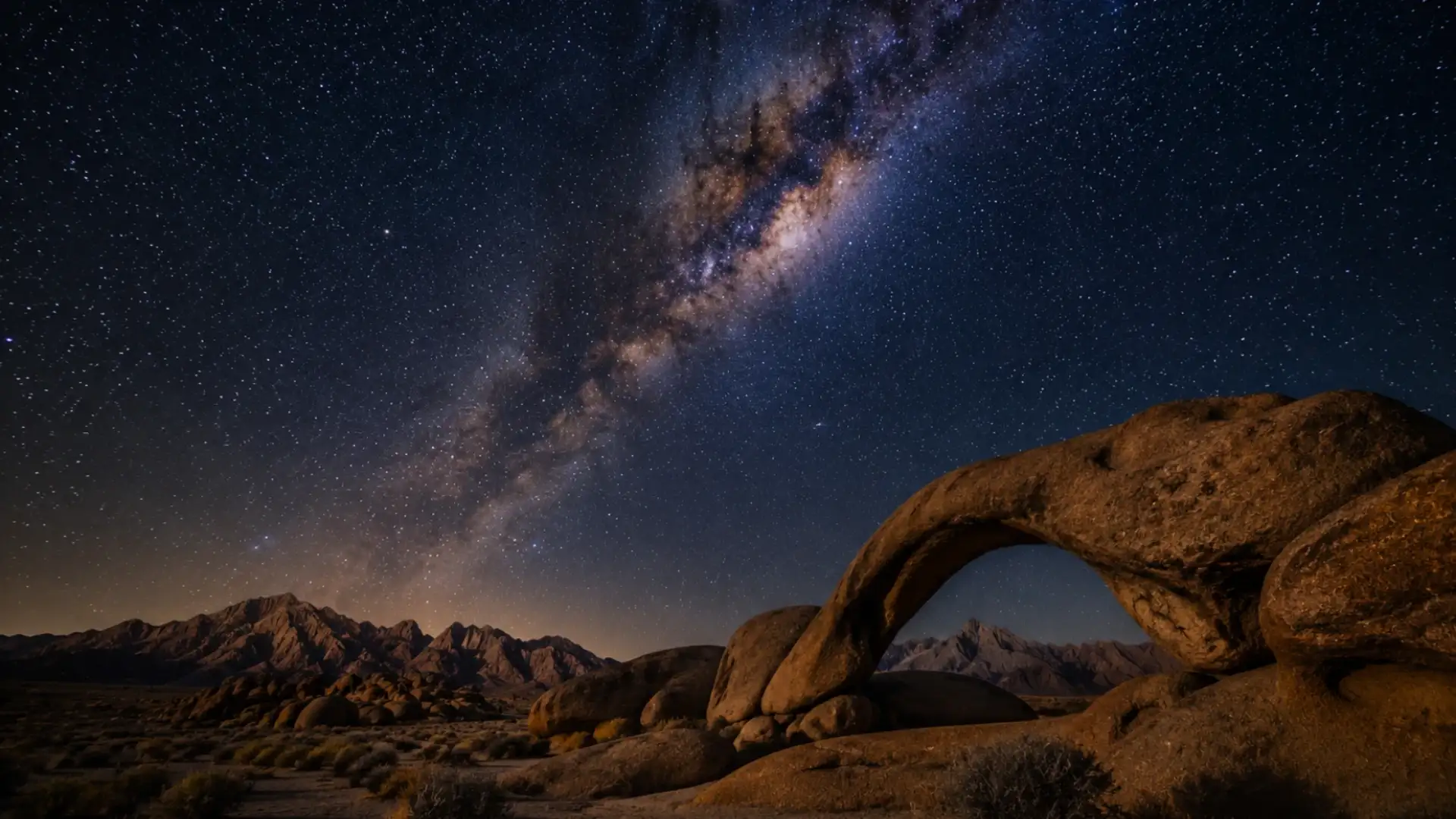
Distance from cities is important, but it is not the only factor. Local lighting design, geography, atmospheric conditions and conservation policies all influence the quality of the night sky.
The absence of surrounding cities means visitors can see far more than just the brightest stars. The Milky Way becomes a major feature of the landscape.
Its mountain scenery also makes the experience visually extraordinary. Stargazing here can involve reflections of the Milky Way in glacial lakes surrounded by snow-covered peaks.
The world's darkest places therefore offer more than spectacular photographs. They preserve a part of the natural world that modern life is rapidly erasing.
What Makes a Place Truly Dark?
DarkSky International recognises protected locations that meet standards designed to preserve natural darkness. Its global list includes dark-sky places across six continents, covering more than 160,000 square kilometres of protected land and night skies.Distance from cities is important, but it is not the only factor. Local lighting design, geography, atmospheric conditions and conservation policies all influence the quality of the night sky.
NamibRand, Namibia
NamibRand is one of the world's most impressive examples. The reserve has Gold Tier International Dark Sky status and was the first International Dark Sky Reserve in Africa. Its remote desert setting keeps artificial light to a minimum.The absence of surrounding cities means visitors can see far more than just the brightest stars. The Milky Way becomes a major feature of the landscape.
You may also like
- Struggling to Sleep at Night? 8 Simple Habits That May Help You Get Better Rest
- Smartphone has become a disease: Amish on parenting, books and Gen Z attention spans
- When grandparents tell stories, children gain more than memories: 3 science-backed benefits
- DU college's student group expands sustainable soap initiative
- PM Kisan Yojana: If four brothers farm the same land, who gets the ₹6,000? Find out here..
Aoraki Mackenzie, New Zealand
New Zealand's Aoraki Mackenzie reserve is another exceptional destination. Covering 4,367 square kilometres, it has Bortle Class 2 skies, described as virtually pristine.Its mountain scenery also makes the experience visually extraordinary. Stargazing here can involve reflections of the Milky Way in glacial lakes surrounded by snow-covered peaks.
Britain's Dark-Sky Landscapes
You do not necessarily have to travel to another continent. The UK has impressive dark-sky destinations, including Bannau Brycheiniog in Wales and the Cairngorms in Scotland. The latter's Tomintoul and Glenlivet area is recognised as an International Dark Sky Park.Why Dark Skies Deserve Protection
Dark skies are not simply useful for astronomy. Artificial light can alter nocturnal wildlife behaviour and disrupt ecosystems. It also wastes energy and changes our relationship with the natural environment.The world's darkest places therefore offer more than spectacular photographs. They preserve a part of the natural world that modern life is rapidly erasing.






Loving Newspoint? Download the app now
