
The World's Destinations Where Weather and Wildlife Set the Rules

Modern travel is built around convenience. We book flights, reserve hotels and create detailed itineraries months in advance. Yet some destinations refuse to follow our schedules. Their doors open only when the sea is calm, the birds have finished nesting or the weather becomes safe enough for visitors. In these places, nature is effectively the gatekeeper. Skellig Michael in Ireland is a perfect example. The ancient island monastery is open to visitors only during a defined season and when weather and sea conditions permit. Such restrictions are increasingly important as tourism grows in fragile natural environments.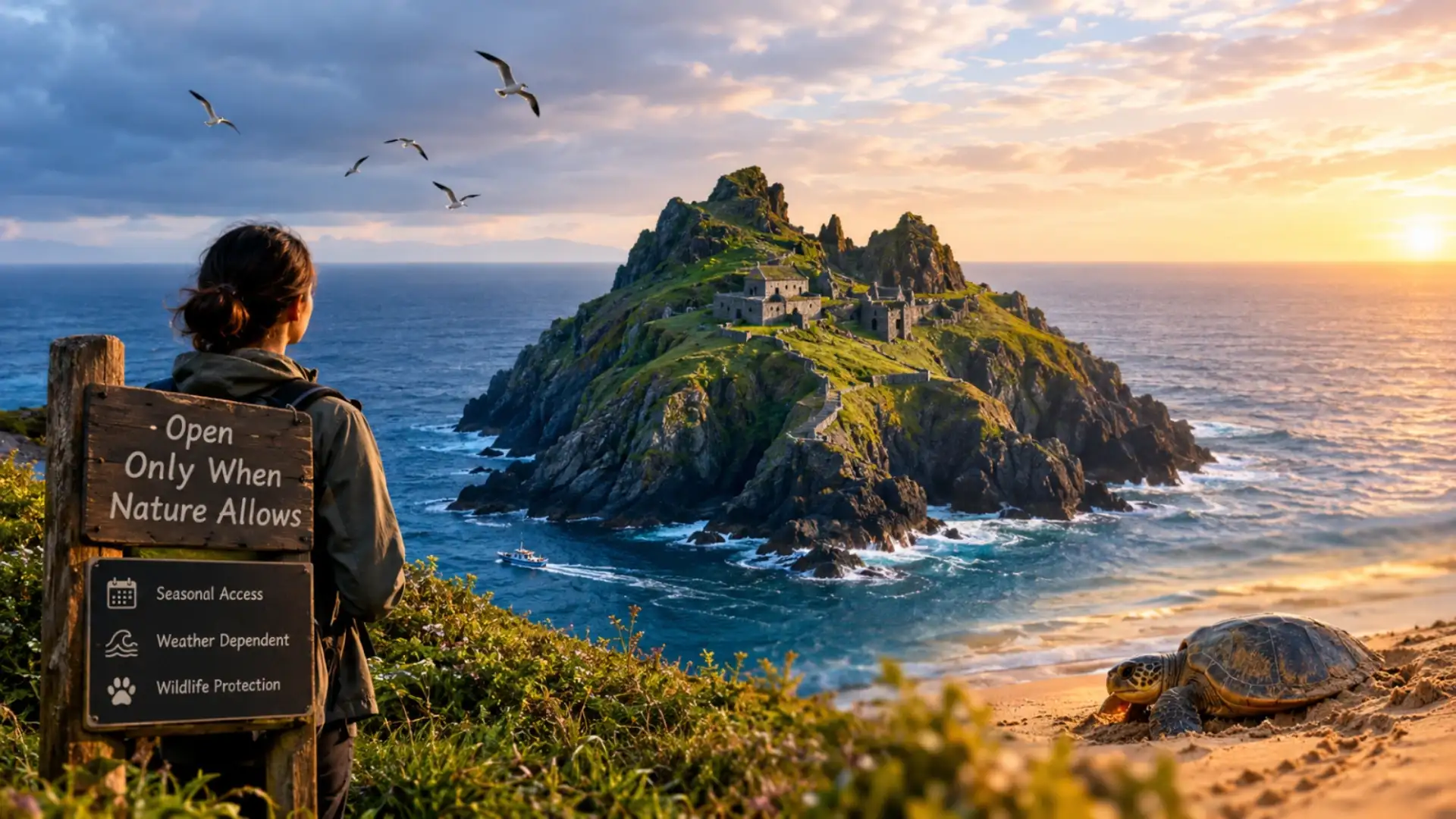
The island's isolation helped preserve its stone structures, but it also makes access difficult. UNESCO notes that the island is frequently inaccessible, particularly between October and May.
Visitor access is deliberately restricted for both safety and conservation.
The current management plan maintains a defined annual visitor season, generally running from around mid-May to the end of September, subject to weather and sea conditions.
In Odisha, Balighai Beach is associated with Olive Ridley turtle nesting, with turtles arriving during the winter nesting period.
At Velas Beach in Maharashtra, Olive Ridley turtles arrive to lay eggs, and the village's turtle festival coincides with the nesting and hatching season.
Visitors therefore experience these places according to a biological calendar rather than simply choosing a convenient weekend.
Skellig Michael provides a useful example. Visitor numbers are managed through permits and seasonal access, helping protect both the archaeological remains and the island's wildlife.
This approach is becoming increasingly relevant as popular destinations struggle with overcrowding.
The idea of closing a destination can seem inconvenient to travellers, but sometimes it is the only way to ensure that the destination remains available in the future.
They force travellers to slow down, check conditions and accept that the natural world has its own timetable.
Perhaps that is the most valuable lesson. Travel does not always have to be about controlling every detail. Sometimes the most memorable journeys begin when we accept that nature, rather than our calendar, gets the final say.
Skellig Michael and the Atlantic
Rising dramatically from the Atlantic Ocean off Ireland's County Kerry, Skellig Michael is home to an extraordinary early medieval monastic settlement.The island's isolation helped preserve its stone structures, but it also makes access difficult. UNESCO notes that the island is frequently inaccessible, particularly between October and May.
Visitor access is deliberately restricted for both safety and conservation.
The current management plan maintains a defined annual visitor season, generally running from around mid-May to the end of September, subject to weather and sea conditions.
Wildlife Can Set the Calendar Too
Nature can also determine when beaches and coastal areas become important destinations.In Odisha, Balighai Beach is associated with Olive Ridley turtle nesting, with turtles arriving during the winter nesting period.
At Velas Beach in Maharashtra, Olive Ridley turtles arrive to lay eggs, and the village's turtle festival coincides with the nesting and hatching season.
Visitors therefore experience these places according to a biological calendar rather than simply choosing a convenient weekend.
You may also like
- Are We Growing Old Before Our Time?
- He brought home 22 international medals for India and now drives a cab to support his family; “the system failed me”: At 47, Parag Patil is still chasing one impossible dream for his country
- Indian-origin couple donates $20 million to US university: Who are Anuradha and Vikas Sinha, and why is a college being named after them?
- I've always been curious about what makes people think and feel the way they do, says young author Sanjana Kanamarlapudi
- 5 Red Flags That Reveal He Is Not Serious About You
Why Restrictions Are Becoming More Important
Tourism can bring money and employment to remote communities, but too many visitors can damage fragile environments.Skellig Michael provides a useful example. Visitor numbers are managed through permits and seasonal access, helping protect both the archaeological remains and the island's wildlife.
This approach is becoming increasingly relevant as popular destinations struggle with overcrowding.
The idea of closing a destination can seem inconvenient to travellers, but sometimes it is the only way to ensure that the destination remains available in the future.
Letting Nature Have the Final Word
There is something refreshing about places that cannot be visited whenever we want.They force travellers to slow down, check conditions and accept that the natural world has its own timetable.
Perhaps that is the most valuable lesson. Travel does not always have to be about controlling every detail. Sometimes the most memorable journeys begin when we accept that nature, rather than our calendar, gets the final say.






Loving Newspoint? Download the app now
