
The World's Most Extraordinary Towns Living in the Shadow of Volcanoes

Volcanoes are usually associated with danger, evacuation zones and landscapes that seem hostile to human settlement. Yet people have repeatedly built communities on or around them. In some places, volcanic soil supports agriculture. In others, centuries of history have turned volcanic landscapes into homes, vineyards and tourist destinations. The relationship is complicated. Residents may benefit from fertile land and spectacular scenery while knowing that the mountain above them can become dangerous. Few places illustrate this relationship better than Sicily, where communities have grown around some of Europe's most active volcanic landscapes.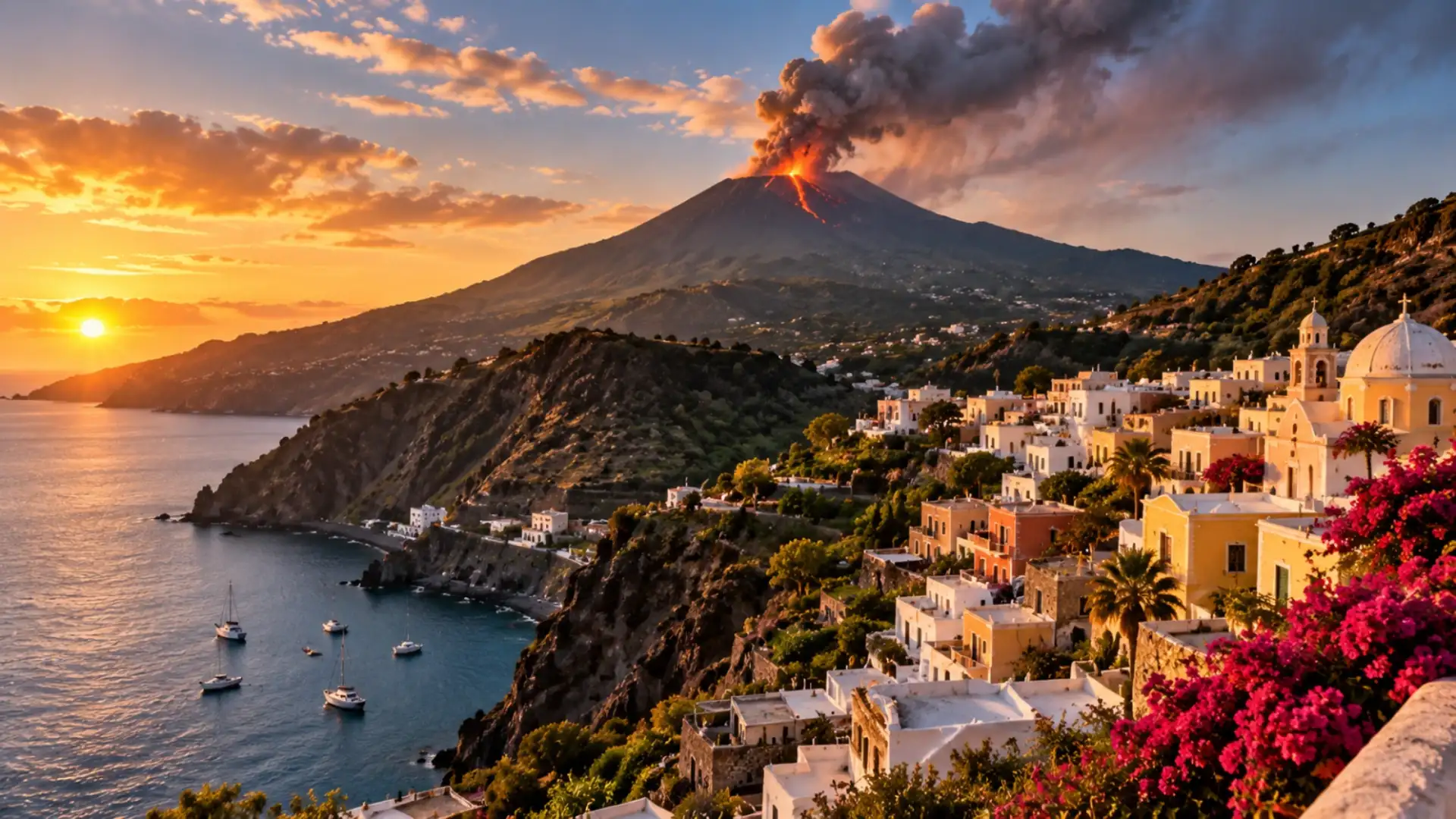
The volcano remains active, producing repeated small explosions that have earned it a reputation as one of the world's continuously active volcanoes .
Communities have developed along the lower slopes, where white houses contrast dramatically with black volcanic rock and dark beaches.
There are no conventional roads for cars. Mules are used in the narrow settlement, while some residents continue to collect water from wells.
It is an extraordinary reminder that living beside a volcano does not necessarily mean living in a modern, heavily engineered environment.
Communities around Etna have long adapted to the mountain's presence. Volcanic soils can be productive, supporting agriculture and vineyards across parts of the region.
This relationship is increasingly important as tourism grows around active volcanoes.
Volcanic towns show that humans rarely choose between nature and settlement in simple terms. Instead, they negotiate with nature.
The mountain provides fertile soil, dramatic landscapes and cultural identity, but it also demands respect. Living beside a volcano is ultimately an ongoing agreement with a landscape that can never be completely controlled.
Stromboli : A Town on a Living Volcano
Stromboli in the Aeolian Islands is one of the world's most striking examples. The island itself is the visible portion of a much larger underwater volcano.The volcano remains active, producing repeated small explosions that have earned it a reputation as one of the world's continuously active volcanoes .
Communities have developed along the lower slopes, where white houses contrast dramatically with black volcanic rock and dark beaches.
Ginostra and the Human Scale
Ginostra, on Stromboli, is particularly unusual. Italy's official tourism portal describes it as a car-free village with around 40 residents, accessible by sea.You may also like
- What if you checked into a hotel in 1985? AI recreates the forgotten world of vintage travel
- Are We Growing Old Before Our Time?
- He brought home 22 international medals for India and now drives a cab to support his family; “the system failed me”: At 47, Parag Patil is still chasing one impossible dream for his country
- Indian-origin couple donates $20 million to US university: Who are Anuradha and Vikas Sinha, and why is a college being named after them?
- I've always been curious about what makes people think and feel the way they do, says young author Sanjana Kanamarlapudi
There are no conventional roads for cars. Mules are used in the narrow settlement, while some residents continue to collect water from wells.
It is an extraordinary reminder that living beside a volcano does not necessarily mean living in a modern, heavily engineered environment.
Mount Etna and a Much Larger Landscape
Sicily's Mount Etna presents another side of volcanic life. It is one of the world's most active stratovolcanoes, with a documented history of eruptions stretching back thousands of years. UNESCO describes it as an important natural laboratory for studying geological and ecological processes.Communities around Etna have long adapted to the mountain's presence. Volcanic soils can be productive, supporting agriculture and vineyards across parts of the region.
Living With Risk
The attraction of volcanic landscapes comes with responsibility. Authorities monitor volcanic activity, restrict access when conditions become dangerous and maintain evacuation procedures.This relationship is increasingly important as tourism grows around active volcanoes.
Volcanic towns show that humans rarely choose between nature and settlement in simple terms. Instead, they negotiate with nature.
The mountain provides fertile soil, dramatic landscapes and cultural identity, but it also demands respect. Living beside a volcano is ultimately an ongoing agreement with a landscape that can never be completely controlled.






Loving Newspoint? Download the app now
