
8 Things You Should Never Store in Plastic Containers

Plastic containers are commonly used in kitchens because they are lightweight, affordable and convenient. From storing leftover food to organising household essentials, they often seem like an easy storage solution. However, not every type of plastic is suitable for storing every item.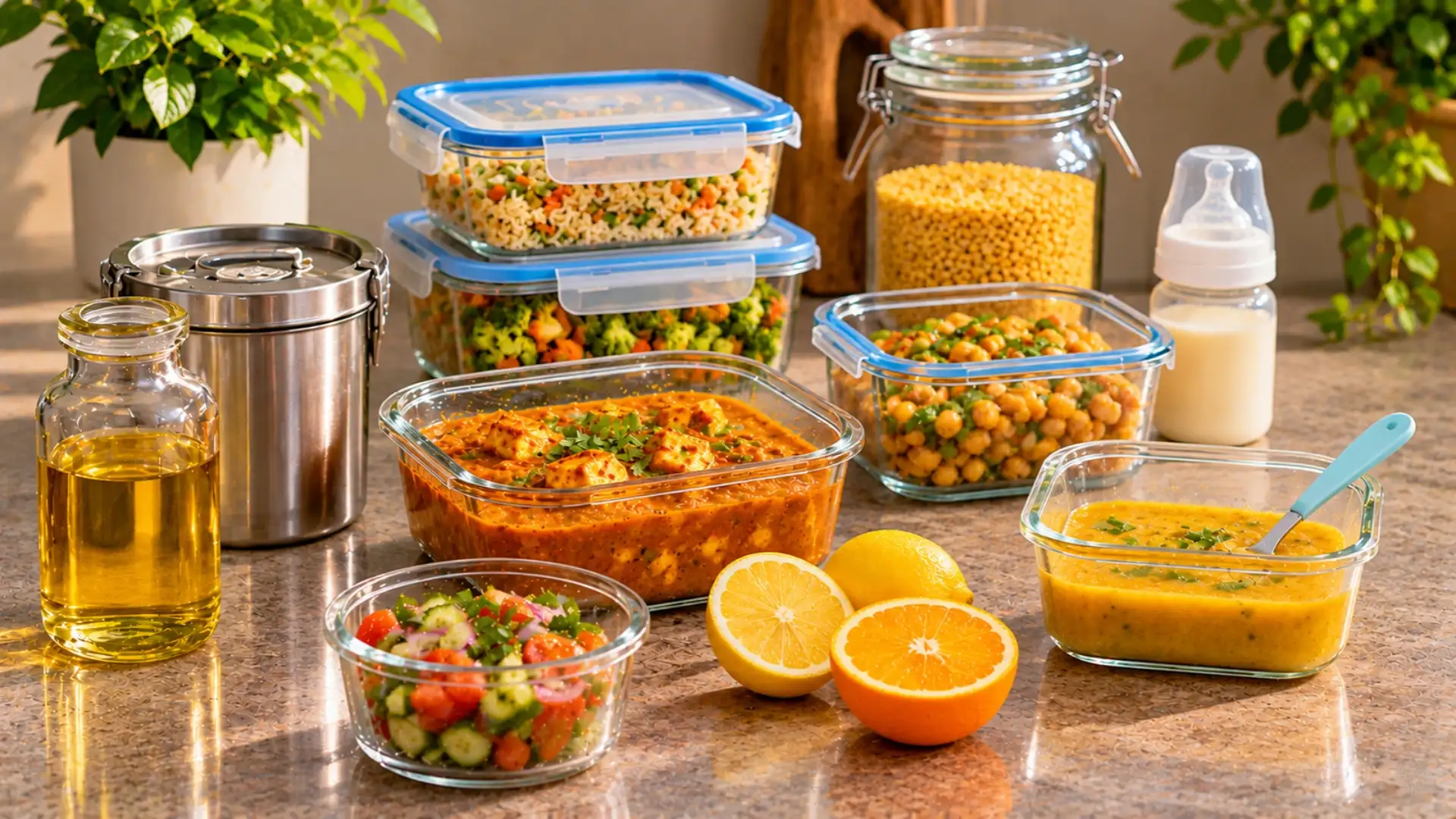
Certain foods, chemicals and household products may react with unsuitable plastics, while heat, scratches and repeated use can also affect container safety. Choosing the right storage material can help protect your belongings and maintain better hygiene.
Here are 8 things you should avoid storing in unsuitable plastic containers and the alternatives you can use instead.
Allow food to cool slightly before transferring it into a suitable food-grade container. For hot dishes, stainless steel or heat-resistant glass containers are generally better options.
Use stainless steel or heat-resistant glass containers designed for handling hot contents. Always allow the oil to cool before transferring it for storage.
Use food-grade containers specifically designed for acidic foods. Glass containers are also a practical choice for storing tomato-based sauces, pickles and citrus-heavy preparations.
Keep cleaning products in their original, clearly labelled containers. Never mix different cleaning chemicals, and store them away from food, children and pets.
For longer storage, use food-grade, freezer-safe containers or glass containers with secure lids. Label leftovers with the storage date and follow recommended refrigeration and freezing guidelines.
Choose containers specifically labelled as food-safe and suitable for baby food. Glass containers or products designed for infant feeding and storage are practical alternatives. Always follow the recommended storage and handling instructions.
Use sturdy organisers, protective cases or dedicated toolboxes instead. Keep sharp objects covered and store them in a secure location, especially if children are present at home.
For these items, use properly sealed waterproof storage boxes or moisture-resistant organisers. Add suitable desiccant packets where appropriate, and check stored items occasionally for signs of dampness.
Certain foods, chemicals and household products may react with unsuitable plastics, while heat, scratches and repeated use can also affect container safety. Choosing the right storage material can help protect your belongings and maintain better hygiene.
Here are 8 things you should avoid storing in unsuitable plastic containers and the alternatives you can use instead.
1. Hot Food Straight From the Stove
Pouring freshly cooked, steaming-hot food directly into a plastic container is not always a good idea. Heat can affect certain plastics and increase the possibility of unwanted substances migrating into food.Allow food to cool slightly before transferring it into a suitable food-grade container. For hot dishes, stainless steel or heat-resistant glass containers are generally better options.
2. Very Hot Cooking Oil
Hot cooking oil can reach temperatures much higher than boiling water. Pouring it directly into ordinary plastic containers may cause the material to soften, warp or become damaged.Use stainless steel or heat-resistant glass containers designed for handling hot contents. Always allow the oil to cool before transferring it for storage.
3. Highly Acidic Foods
Foods containing tomatoes, vinegar, citrus juice and other acidic ingredients may not be suitable for storage in every type of plastic. The combination of acidity, storage time and unsuitable materials can affect food quality and container safety.Use food-grade containers specifically designed for acidic foods. Glass containers are also a practical choice for storing tomato-based sauces, pickles and citrus-heavy preparations.
4. Strong Household Cleaning Chemicals
Bleach, toilet cleaners, drain cleaners and other strong cleaning products should not be transferred into ordinary plastic food containers. Some chemicals can react with unsuitable materials, while incorrect storage may increase the risk of spills or accidental exposure.Keep cleaning products in their original, clearly labelled containers. Never mix different cleaning chemicals, and store them away from food, children and pets.
5. Leftovers for Long-Term Storage
Plastic containers are convenient for storing leftovers, but not all of them are designed for prolonged food storage. Old, scratched or damaged containers may be harder to clean and may not be suitable for repeated use.For longer storage, use food-grade, freezer-safe containers or glass containers with secure lids. Label leftovers with the storage date and follow recommended refrigeration and freezing guidelines.
6. Baby Food and Milk in Unsuitable Containers
Baby food and milk require careful storage because of their sensitivity to contamination and temperature changes. Using damaged or non-food-grade plastic containers may create unnecessary hygiene concerns.You may also like
- In 1988, Tamil Nadu health worker R Siva began helping three people affected by leprosy rebuild their livelihoods; at 72, he says the rehabilitation effort has reached around 2,800 people over 38 years
- This Simple Wardrobe Habit Can Save You Time Every Morning
- Going on a Date? Do These 7 Things First
- Government Decision: Battery Storage to Become Mandatory for Solar Systems Larger Than 10 kW
- Planning a Pregnancy With Epilepsy: Steps to Take Before You Conceive
Choose containers specifically labelled as food-safe and suitable for baby food. Glass containers or products designed for infant feeding and storage are practical alternatives. Always follow the recommended storage and handling instructions.
7. Sharp or Pointed Household Items
Storing sharp objects such as knives, scissors, blades and metal tools in thin plastic containers can lead to scratches, punctures or accidental injuries. The container may also become damaged over time.Use sturdy organisers, protective cases or dedicated toolboxes instead. Keep sharp objects covered and store them in a secure location, especially if children are present at home.
8. Items That Need Protection From Moisture
Certain household essentials, including important documents, photographs and electronic accessories, can be damaged by moisture. Ordinary plastic containers may not provide an airtight or waterproof seal, even when they have lids.For these items, use properly sealed waterproof storage boxes or moisture-resistant organisers. Add suitable desiccant packets where appropriate, and check stored items occasionally for signs of dampness.
Final Thoughts
Plastic containers are useful for everyday storage, but choosing the right material for each item is important. Always check whether a container is food-grade, heat-resistant or suitable for the specific product you want to store. Avoid using scratched, cracked or warped containers, and never assume that every plastic box is safe for food or household chemicals. Simple storage choices can help protect your food, belongings and home.





Loving Newspoint? Download the app now
