
Tiny White Bugs in Plant Soil? Here's Why They're Actually Good for Your Houseplants

When watering your potted greenery, you might occasionally spot minuscule white or pale grey organisms bouncing across damp potting mix. These microscopic creatures are known as springtails, and they represent one of the most common subterranean species found in domestic environments.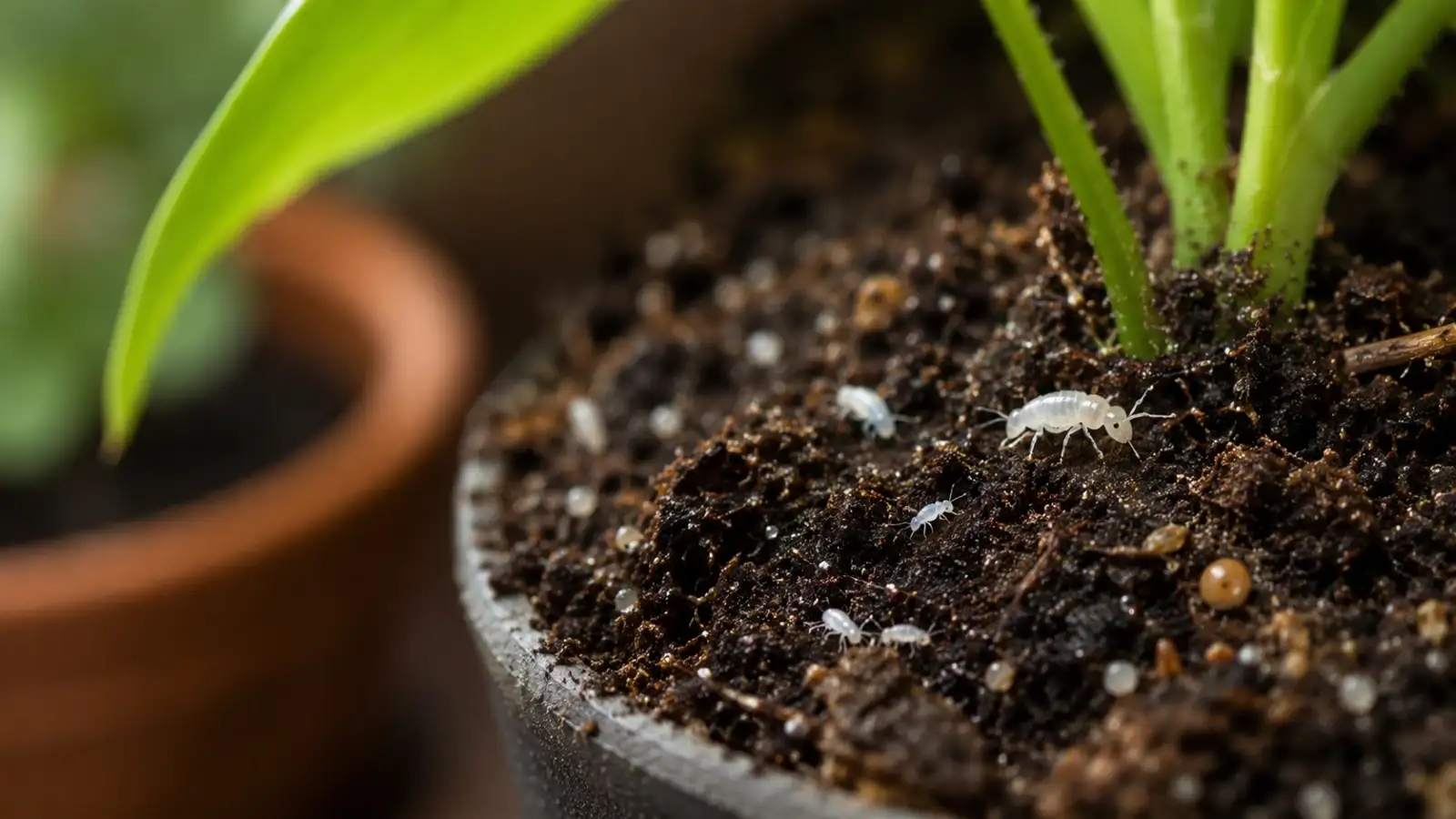
Equipped with a tiny spring-like appendage underneath their abdomens, springtails launch themselves through the air whenever they feel threatened or disturbed. Far from being destructive pests, these harmless scavengers feed primarily on decaying organic matter, stale mold and unwanted fungi. By consuming decaying plant bits, springtails act as a natural cleanup crew, preventing harmful root rot while converting waste into nutrient-rich humus.
Microscopic Soil Mites and Natural Compost Cycles
Alongside springtails, tiny soil mites form another major population living quietly beneath the surface of houseplant pots. These tiny arachnids are usually no larger than a pinpoint and move slowly through dark air pockets between soil particles. While discovering bugs in your living room can feel alarming, most soil mites are completely harmless detritivores or helpful predators. They spend their lives breaking down tough organic fragments, wood chips and fallen foliage into bioavailable nutrients that root hairs absorb easily. Certain predatory mite species even hunt destructive pests like fungus gnat larvae, maintaining a natural biological balance without requiring synthetic chemical sprays.
Beneficial Bacteria and Soil Fungi Processing Nutrients
Invisible to the naked eye, billions of beneficial bacteria and mycorrhizal fungi colonise every handful of healthy potting mix. These microscopic organisms establish complex symbiotic relationships directly with plant root systems. Specialized bacteria fix atmospheric elements and process raw organic matter, transforming locked nutrients like nitrogen into forms that nourish fresh leaf growth. Simultaneously, beneficial fungal threads intertwine with delicate root hairs, dramatically expanding the root system's reach and enhancing water absorption. This hidden microbial engine works continuously to keep your houseplant soil fertile and well-aerated over time.
Distinguishing Beneficial Organisms From Destructive Garden Pests
Plant owners frequently confuse harmless soil dwellers with damaging pests such as spider mites, thrips or mealybugs. The easiest way to identify beneficial organisms is to observe where they spend their time and how fast they move. Helpful species like springtails and soil mites remain almost exclusively within the damp potting medium or around bottom drainage holes, avoiding fresh upper foliage. Conversely, destructive pests target tender green leaves, sucking out vital sap and leaving telltale damage like silver patches, sticky sap residue or fine webbing. Learning to spot these differences prevents unnecessary pesticide treatments that could inadvertently destroy your pot's helpful internal ecosystem.
Maintaining a Balanced Subterranean Ecosystem in Indoor Pots
Creating a thriving home environment for your indoor plants involves nurturing a healthy, balanced soil ecosystem. Overwatering is the single biggest trigger for sudden population explosions of moisture-loving soil bugs. Allowing the top few centimetres of potting mix to dry out thoroughly between waterings keeps creature numbers at an ideal level while preventing stagnant root conditions. Using high quality, well-draining soil mixes rich in organic matter ensures your underground companions have plenty of natural material to process. Embracing these tiny underground helpers allows you to cultivate a resilient indoor garden supported by nature's original recycling network.
Equipped with a tiny spring-like appendage underneath their abdomens, springtails launch themselves through the air whenever they feel threatened or disturbed. Far from being destructive pests, these harmless scavengers feed primarily on decaying organic matter, stale mold and unwanted fungi. By consuming decaying plant bits, springtails act as a natural cleanup crew, preventing harmful root rot while converting waste into nutrient-rich humus.
Microscopic Soil Mites and Natural Compost Cycles
Alongside springtails, tiny soil mites form another major population living quietly beneath the surface of houseplant pots. These tiny arachnids are usually no larger than a pinpoint and move slowly through dark air pockets between soil particles. While discovering bugs in your living room can feel alarming, most soil mites are completely harmless detritivores or helpful predators. They spend their lives breaking down tough organic fragments, wood chips and fallen foliage into bioavailable nutrients that root hairs absorb easily. Certain predatory mite species even hunt destructive pests like fungus gnat larvae, maintaining a natural biological balance without requiring synthetic chemical sprays.
Beneficial Bacteria and Soil Fungi Processing Nutrients
You may also like
- Peanuts With or Without Skin: Which Is Healthier and What Is the Best Way to Eat Them?
- 'This is my tiny house, though it looks straight out of a postcard, I live here': Woman reveals the issues she is facing living in a 'picture-perfect' house
- Why do Kodagu brides wear their saree backwards? The fascinating story behind their iconic drape
- Your child seems distracted while studying? These overlooked vision problems could be making reading and learning harder
- Why Zurich deserves more than a layover
Invisible to the naked eye, billions of beneficial bacteria and mycorrhizal fungi colonise every handful of healthy potting mix. These microscopic organisms establish complex symbiotic relationships directly with plant root systems. Specialized bacteria fix atmospheric elements and process raw organic matter, transforming locked nutrients like nitrogen into forms that nourish fresh leaf growth. Simultaneously, beneficial fungal threads intertwine with delicate root hairs, dramatically expanding the root system's reach and enhancing water absorption. This hidden microbial engine works continuously to keep your houseplant soil fertile and well-aerated over time.
Distinguishing Beneficial Organisms From Destructive Garden Pests
Plant owners frequently confuse harmless soil dwellers with damaging pests such as spider mites, thrips or mealybugs. The easiest way to identify beneficial organisms is to observe where they spend their time and how fast they move. Helpful species like springtails and soil mites remain almost exclusively within the damp potting medium or around bottom drainage holes, avoiding fresh upper foliage. Conversely, destructive pests target tender green leaves, sucking out vital sap and leaving telltale damage like silver patches, sticky sap residue or fine webbing. Learning to spot these differences prevents unnecessary pesticide treatments that could inadvertently destroy your pot's helpful internal ecosystem.
Maintaining a Balanced Subterranean Ecosystem in Indoor Pots
Creating a thriving home environment for your indoor plants involves nurturing a healthy, balanced soil ecosystem. Overwatering is the single biggest trigger for sudden population explosions of moisture-loving soil bugs. Allowing the top few centimetres of potting mix to dry out thoroughly between waterings keeps creature numbers at an ideal level while preventing stagnant root conditions. Using high quality, well-draining soil mixes rich in organic matter ensures your underground companions have plenty of natural material to process. Embracing these tiny underground helpers allows you to cultivate a resilient indoor garden supported by nature's original recycling network.






Loving Newspoint? Download the app now
