
The Best Indian Places to Visit for Regional Cuisine

India is one of the world's most exciting countries for food lovers because there is no single style of Indian cuisine. Food changes dramatically from one state and region to another, shaped by local ingredients, climate, history, religion and centuries of culinary traditions.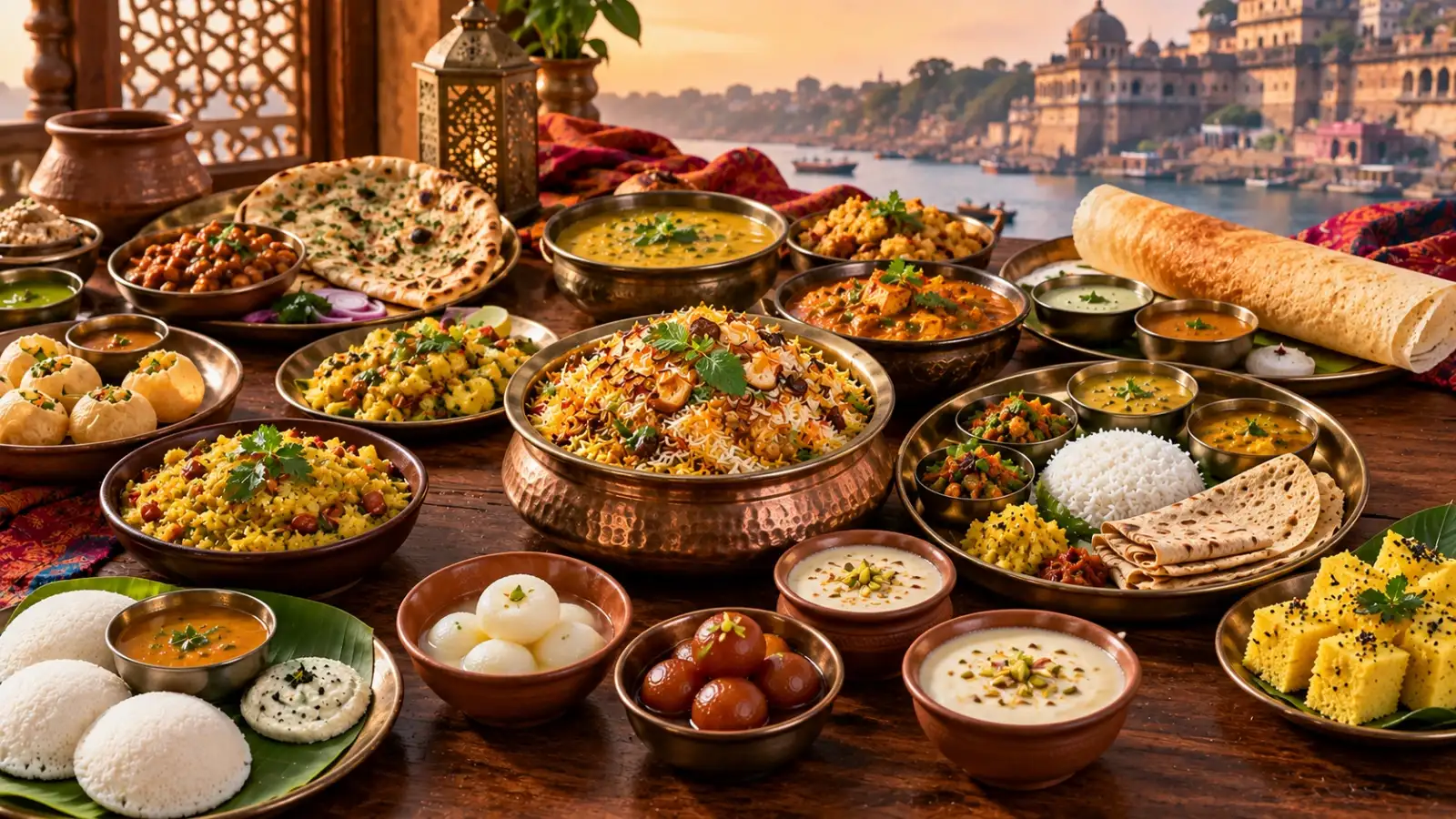
A trip to India can therefore become a journey through completely different flavours. Rajasthan is known for dishes that developed around the region's dry climate, while Kerala makes abundant use of coconut, spices and seafood. Bengal is famous for fish and sweets, Hyderabad for biryani and Lucknow for its refined Awadhi cooking.
The best way to understand this diversity is to travel beyond familiar restaurant menus and experience regional cuisine where it originated. These ten Indian destinations offer a delicious starting point for anyone planning a food-focused holiday.
Kebabs are among the biggest attractions. Galouti kebab is particularly famous for its exceptionally soft texture, while kakori kebab offers another traditional preparation.
Biryani, nihari, korma and breads such as sheermal also feature prominently in the city's food culture.
Lucknow is best explored slowly. Rather than visiting one restaurant and stopping there, try different dishes across the old city and pay attention to the subtle use of spices.
Machher jhol, a light fish curry, is a classic example, while dishes such as shorshe ilish showcase the distinctive flavour of mustard.
Bengali cuisine also has a remarkable tradition of sweets. Rasgulla, sandesh and mishti doi are among the best-known examples.
Street food adds another dimension. Puchka, kathi rolls and jhal muri provide quick and inexpensive ways to explore Kolkata's flavours while moving around the city.
Hyderabadi biryani is the dish most visitors want to try. Traditionally prepared with fragrant rice, meat, spices and other ingredients, it has become one of India's most famous regional dishes.
But Hyderabad offers much more than biryani. Haleem, kebabs, mirchi ka salan and various breads and sweets are also part of the city's culinary identity.
During Ramadan, food areas around the old city can become particularly lively, with seasonal specialities adding even more variety.
Amritsari kulcha is one of the city's most famous foods. This crisp stuffed bread is commonly served with chickpeas and accompaniments.
Other dishes worth seeking out include chole, dal, paneer preparations and Amritsari fish. A tall glass of lassi can provide a cooling accompaniment to a spicy meal.
The area around the Golden Temple also has a strong food culture, including the famous community kitchen that serves free meals to visitors regardless of background.
Dal baati churma is perhaps the most recognisable Rajasthani dish. It combines baked wheat balls with lentils and a sweet crumbly preparation.
Gatte ki sabzi, ker sangri and pyaaz ki kachori offer other ways to explore the region's cooking.
Jaipur is also an excellent place to try Rajasthani thalis, which allow visitors to sample several dishes in one meal.
Kerala fish curry is a popular choice, with preparations varying across different parts of the state. Appam, a soft fermented rice pancake with crisp edges, is another staple that is often served with vegetable or meat-based curries.
Travellers should also look for puttu, kadala curry and traditional Kerala meals served on banana leaves.
The city's multicultural history has influenced its food, making Kochi particularly interesting for travellers who enjoy discovering how different culinary traditions meet.
A traditional South Indian breakfast might include idli, dosa, vada and sambar served with several chutneys.
For lunch, try a Tamil-style meal served on a banana leaf. It can include rice alongside vegetables, lentils, rasam, curd and other preparations.
Chettinad cuisine, although originating from the Chettinad region rather than Chennai itself, is also widely available in the city. Its bold spice combinations make it particularly popular with adventurous eaters.
Dhokla, khaman, thepla and fafda are among the foods visitors should look for. Gujarati thalis offer a broader introduction, with numerous small dishes served together.
Street food is also an important part of the city's culinary culture. Dabeli, for example, is a popular snack made with a spiced potato filling served inside a bun with chutneys and other toppings.
The variety demonstrates how diverse vegetarian Indian cuisine can be.
Fish curry and rice are central to everyday Goan food, while dishes such as pork vindaloo demonstrate the influence of Portuguese cooking.
Xacuti, recheado fish and sorpotel offer further examples of the region's distinctive cuisine. Coconut, vinegar, chillies and local spices appear frequently.
Goa is particularly rewarding for food lovers because you can combine regional dishes with the state's beaches, villages and historic areas.
Poha is a common breakfast choice, while snacks such as kachori, bhutte ka kees, dahi bada and garadu provide plenty of options throughout the day.
Indore's food culture is not simply about individual dishes. The experience of walking through a busy food market and trying several small portions is a major part of its appeal.
For example, Rajasthan's food developed around its dry environment, Kerala's cuisine reflects its tropical landscape and access to seafood, while Bengali cooking is closely connected with fish, rice and mustard.
Food also carries stories of migration and cultural exchange. Hyderabad's cuisine reflects several historical influences, while Goa's food demonstrates how Indian and Portuguese traditions became intertwined.
This makes a food-focused holiday about much more than eating. Each meal can provide another way of understanding the place you are visiting.
Try dishes in their traditional form before seeking modern variations. If you are unfamiliar with strong spices, start with small portions and gradually explore more intense flavours.
Food hygiene is also important. Choose busy establishments where food is prepared fresh and ingredients have a high turnover. Drink safe water and be cautious with raw foods if you are not accustomed to local conditions.
Most importantly, do not rush. A regional food journey is best enjoyed one meal at a time.
Lucknow offers delicate Awadhi cooking, Kolkata celebrates Bengali flavours, Hyderabad brings rich Deccan traditions and Kerala showcases coconut, seafood and spices. Rajasthan, Punjab, Tamil Nadu, Gujarat, Goa and Madhya Pradesh each add something completely different.
If you want to understand India beyond its monuments and landscapes, follow its food. A plate of local cuisine can tell you about the climate, history, communities and traditions of a region in a way that few other experiences can.
For food lovers, the real challenge may not be deciding where to go, but deciding which destination to taste first.
A trip to India can therefore become a journey through completely different flavours. Rajasthan is known for dishes that developed around the region's dry climate, while Kerala makes abundant use of coconut, spices and seafood. Bengal is famous for fish and sweets, Hyderabad for biryani and Lucknow for its refined Awadhi cooking.
The best way to understand this diversity is to travel beyond familiar restaurant menus and experience regional cuisine where it originated. These ten Indian destinations offer a delicious starting point for anyone planning a food-focused holiday.
1. Lucknow: Discover the Rich Flavours of Awadhi Cuisine
Lucknow is one of India's finest destinations for travellers interested in traditional North Indian food. The city's cuisine is strongly associated with Awadhi cooking, which developed under the influence of the Nawabs of Awadh.Kebabs are among the biggest attractions. Galouti kebab is particularly famous for its exceptionally soft texture, while kakori kebab offers another traditional preparation.
Biryani, nihari, korma and breads such as sheermal also feature prominently in the city's food culture.
Lucknow is best explored slowly. Rather than visiting one restaurant and stopping there, try different dishes across the old city and pay attention to the subtle use of spices.
2. Kolkata: A Food Journey Through Bengali Cuisine
Kolkata is an excellent destination for discovering Bengali cuisine. Fish and rice are central to many traditional meals, reflecting Bengal's geography and long relationship with its rivers and wetlands.Machher jhol, a light fish curry, is a classic example, while dishes such as shorshe ilish showcase the distinctive flavour of mustard.
Bengali cuisine also has a remarkable tradition of sweets. Rasgulla, sandesh and mishti doi are among the best-known examples.
Street food adds another dimension. Puchka, kathi rolls and jhal muri provide quick and inexpensive ways to explore Kolkata's flavours while moving around the city.
3. Hyderabad: The Home of Biryani and Deccan Flavours
Hyderabad is a natural choice for anyone planning a food trip around India. The city's cuisine reflects influences from the Deccan, Persian traditions and the former Nizam courts.Hyderabadi biryani is the dish most visitors want to try. Traditionally prepared with fragrant rice, meat, spices and other ingredients, it has become one of India's most famous regional dishes.
But Hyderabad offers much more than biryani. Haleem, kebabs, mirchi ka salan and various breads and sweets are also part of the city's culinary identity.
During Ramadan, food areas around the old city can become particularly lively, with seasonal specialities adding even more variety.
4. Amritsar: Punjabi Food at Its Heart
Amritsar is a great destination for travellers who enjoy rich and hearty food. Punjab's cuisine is known for breads, dairy products, legumes and generous use of spices.Amritsari kulcha is one of the city's most famous foods. This crisp stuffed bread is commonly served with chickpeas and accompaniments.
Other dishes worth seeking out include chole, dal, paneer preparations and Amritsari fish. A tall glass of lassi can provide a cooling accompaniment to a spicy meal.
The area around the Golden Temple also has a strong food culture, including the famous community kitchen that serves free meals to visitors regardless of background.
5. Jaipur: Explore the Flavours of Rajasthan
Rajasthan's food developed in a challenging desert environment where fresh water and certain vegetables could be limited. This helped create a cuisine that makes clever use of ingredients that store well.Dal baati churma is perhaps the most recognisable Rajasthani dish. It combines baked wheat balls with lentils and a sweet crumbly preparation.
Gatte ki sabzi, ker sangri and pyaaz ki kachori offer other ways to explore the region's cooking.
Jaipur is also an excellent place to try Rajasthani thalis, which allow visitors to sample several dishes in one meal.
6. Kochi: Discover the Coastal Flavours of Kerala
Kochi provides an excellent introduction to Kerala cuisine. The coastal location means seafood features prominently, while coconut, curry leaves and spices are common across many traditional dishes.Kerala fish curry is a popular choice, with preparations varying across different parts of the state. Appam, a soft fermented rice pancake with crisp edges, is another staple that is often served with vegetable or meat-based curries.
Travellers should also look for puttu, kadala curry and traditional Kerala meals served on banana leaves.
The city's multicultural history has influenced its food, making Kochi particularly interesting for travellers who enjoy discovering how different culinary traditions meet.
7. Chennai: A Gateway to Tamil Cuisine
Chennai is one of the best places to begin exploring Tamil cuisine. Rice forms the basis of many traditional meals, while lentils, tamarind, curry leaves and spices contribute distinctive flavours.A traditional South Indian breakfast might include idli, dosa, vada and sambar served with several chutneys.
For lunch, try a Tamil-style meal served on a banana leaf. It can include rice alongside vegetables, lentils, rasam, curd and other preparations.
Chettinad cuisine, although originating from the Chettinad region rather than Chennai itself, is also widely available in the city. Its bold spice combinations make it particularly popular with adventurous eaters.
8. Ahmedabad: A Vegetarian Food Lover's Destination
Ahmedabad is an excellent destination for people who want to explore India's vegetarian regional cuisine. Gujarati food often combines sweet, sour, salty and spicy elements in the same meal.Dhokla, khaman, thepla and fafda are among the foods visitors should look for. Gujarati thalis offer a broader introduction, with numerous small dishes served together.
Street food is also an important part of the city's culinary culture. Dabeli, for example, is a popular snack made with a spiced potato filling served inside a bun with chutneys and other toppings.
The variety demonstrates how diverse vegetarian Indian cuisine can be.
9. Goa: Portuguese Influences and Coastal Cooking
Goa's cuisine is unlike that of most other Indian states because of its combination of local traditions and Portuguese influence.Fish curry and rice are central to everyday Goan food, while dishes such as pork vindaloo demonstrate the influence of Portuguese cooking.
Xacuti, recheado fish and sorpotel offer further examples of the region's distinctive cuisine. Coconut, vinegar, chillies and local spices appear frequently.
Goa is particularly rewarding for food lovers because you can combine regional dishes with the state's beaches, villages and historic areas.
10. Indore: A City Built for Food Lovers
Indore has developed a strong reputation as one of India's great street food destinations. The city is particularly famous for its evening food scene, with Sarafa Bazaar becoming a popular gathering point after the jewellery market closes for the day.Poha is a common breakfast choice, while snacks such as kachori, bhutte ka kees, dahi bada and garadu provide plenty of options throughout the day.
Indore's food culture is not simply about individual dishes. The experience of walking through a busy food market and trying several small portions is a major part of its appeal.
Why Regional Cuisine Is Worth Travelling For
Regional cuisine can reveal details about a place that sightseeing alone cannot provide. Ingredients often reflect the local landscape, while cooking methods can reveal centuries of tradition.For example, Rajasthan's food developed around its dry environment, Kerala's cuisine reflects its tropical landscape and access to seafood, while Bengali cooking is closely connected with fish, rice and mustard.
You may also like
- Ganesh Chaturthi Rangoli Ideas: 7 Beautiful Designs to Give Your Home a Festive Makeover
- Jennifer Garner's garden isn't just for show: The vegetables, herbs, and hands-on hobby that have become part of the actor's life
- Kendall Jenner turned heads in the simplest golden dress at Venice Film Festival
- Clicking or Popping Hips During Pregnancy: Causes & Tips
- Create a Resume Using AI and Succeed in Job Interviews
Food also carries stories of migration and cultural exchange. Hyderabad's cuisine reflects several historical influences, while Goa's food demonstrates how Indian and Portuguese traditions became intertwined.
This makes a food-focused holiday about much more than eating. Each meal can provide another way of understanding the place you are visiting.
How to Plan a Food-Focused Trip in India
Do some research before travelling, but leave room for recommendations from locals. Some of the best regional dishes may be found at small restaurants, markets or family-run establishments rather than places designed specifically for tourists.Try dishes in their traditional form before seeking modern variations. If you are unfamiliar with strong spices, start with small portions and gradually explore more intense flavours.
Food hygiene is also important. Choose busy establishments where food is prepared fresh and ingredients have a high turnover. Drink safe water and be cautious with raw foods if you are not accustomed to local conditions.
Most importantly, do not rush. A regional food journey is best enjoyed one meal at a time.
A Culinary Journey Across India
India's regional cuisine is so diverse that food alone can become a reason to travel from one state to another.Lucknow offers delicate Awadhi cooking, Kolkata celebrates Bengali flavours, Hyderabad brings rich Deccan traditions and Kerala showcases coconut, seafood and spices. Rajasthan, Punjab, Tamil Nadu, Gujarat, Goa and Madhya Pradesh each add something completely different.
If you want to understand India beyond its monuments and landscapes, follow its food. A plate of local cuisine can tell you about the climate, history, communities and traditions of a region in a way that few other experiences can.
For food lovers, the real challenge may not be deciding where to go, but deciding which destination to taste first.






Loving Newspoint? Download the app now
