
10 Indian Cities Every Street Food Lover Should Visit

India is a country where a journey can be planned around food just as easily as around monuments, beaches or mountains. In many cities, some of the most memorable dishes are not served in expensive restaurants but at small stalls, market lanes and roadside counters.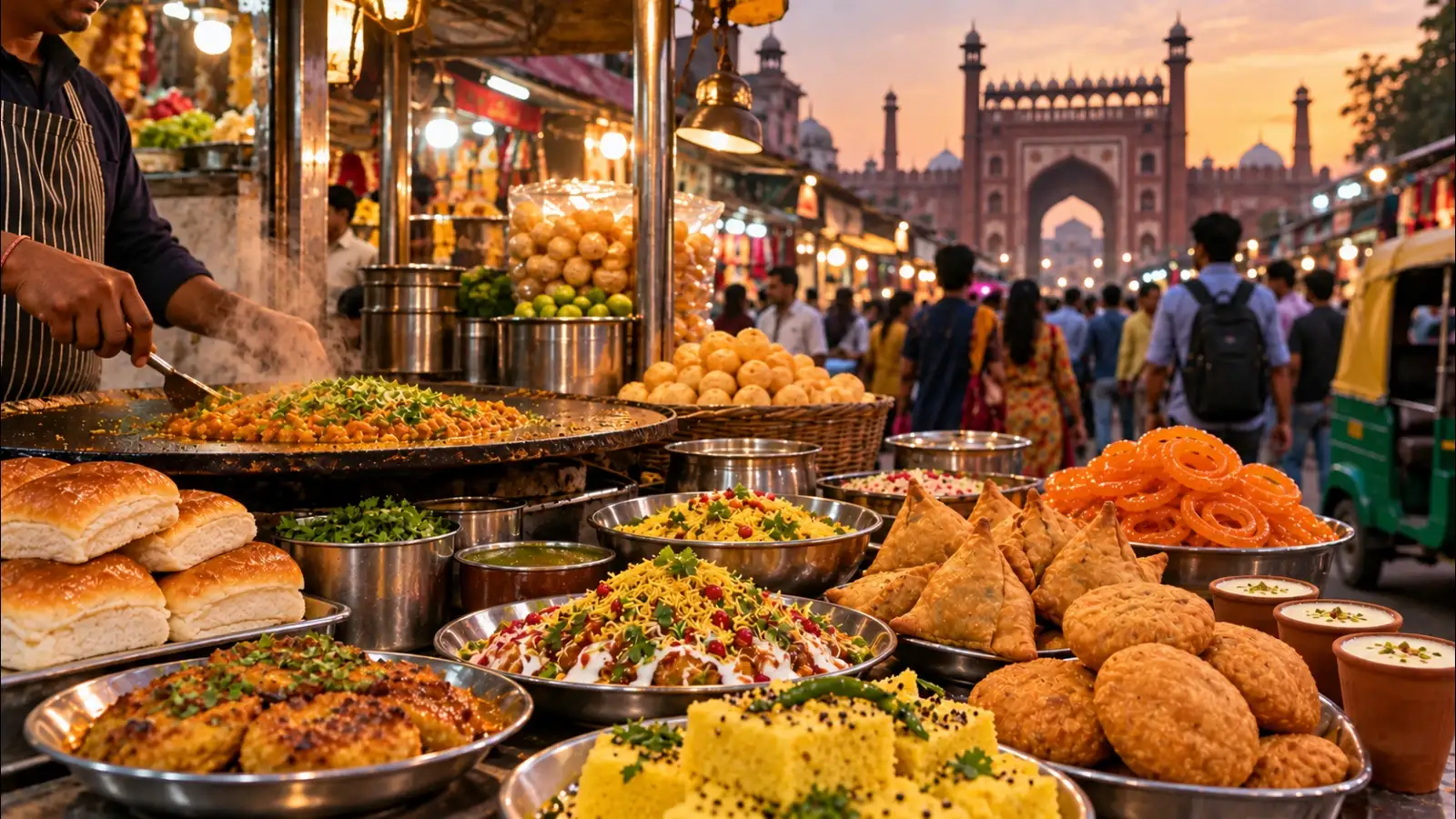
Indian street food changes dramatically from one region to another. A plate of chaat in Delhi has a very different character from vada pav in Mumbai, while Kolkata's puchka, Lucknow's kebabs and Indore's poha each reflect the history and eating habits of their cities. India's official tourism website also highlights Delhi, Amritsar, Indore and Lucknow among its major street food destinations.
For travellers who believe that understanding a place also means tasting it, these ten cities offer plenty of reasons to travel hungry.
Chandni Chowk is a natural starting point. Paranthas, jalebi, dahi bhalla, aloo tikki and other snacks can all be found around the historic market area. The city's street food also includes Mughlai-influenced kebabs and rich meat dishes, giving visitors a wide choice of flavours.
What makes Delhi interesting is the sheer variety. You can have a stuffed parantha for breakfast, chaat in the afternoon and kebabs later in the evening without leaving the same broad part of the city.
Vada pav is perhaps the most recognisable example. A spiced potato fritter is placed inside a bread roll and usually served with chutneys and spicy accompaniments. Pav bhaji is another favourite, combining buttery bread rolls with a thick vegetable preparation.
Mumbai's street food culture extends well beyond these two dishes, with bhel puri and other snacks appearing across neighbourhoods and busy public areas.
A food-focused visit to Mumbai is particularly enjoyable because eating can easily become part of exploring the city itself.
Puchka is one of the city's most popular snacks. Crispy shells are filled with spiced potato and tangy flavoured water, creating a snack that is best eaten immediately.
Kathi rolls are another Kolkata classic, while jhal muri offers a lighter option made with puffed rice and a mixture of spices and other ingredients. Kolkata's street food is deeply connected with everyday city life, and food stalls can be found around markets and busy neighbourhoods.
For visitors, the best approach is to try several small portions rather than filling up at the first stop.
Galouti kebabs are particularly famous for their soft texture and carefully balanced spices. Nihari, biryani, kulcha and various forms of chaat add even more variety.
The streets around the old parts of Lucknow provide opportunities to experience these flavours in an informal setting. The city's official tourism guide also highlights Tunday kebabs, nihari, biryani, chaat and several traditional sweets among its food attractions.
Lucknow is a destination where a food walk can easily become one of the main highlights of the entire trip.
Poha, sabudana khichdi, dahi bada, khopra patties and kachori are among the foods worth seeking out. The city also has its own distinctive sweet and drink traditions.
Indore's official tourism information describes Sarafa Bazaar as a major destination for sampling local street food, with dishes ranging from savoury snacks to jaleba and malpua.
The atmosphere is part of the experience. Rather than simply ordering one dish, spend an evening moving between different stalls and trying small portions.
Amritsari kulcha is an obvious choice. The crisp stuffed bread is usually served with chickpeas, chutney and accompaniments. Amritsari fish is another popular speciality, while lassi provides a rich and refreshing drink.
The city's food culture extends around the Golden Temple area and historic markets, allowing visitors to combine sightseeing with frequent food stops. Incredible India also lists Amritsar among India's major street food cities.
Come hungry because small snacks have a habit of becoming full meals here.
Khaman, dhokla, fafda, jalebi and dabeli are among the foods visitors can look for. Dabeli combines a spiced potato filling with a soft bun and a mixture of chutneys and toppings.
One of the pleasures of exploring Ahmedabad is discovering how much variety can be created without relying on meat. The combination of sweet and savoury flavours is also a distinctive part of Gujarati food culture.
The area around Charminar is particularly associated with food, with busy streets filled with shops and stalls.
For travellers, Hyderabad provides an opportunity to explore a cuisine shaped by several cultural influences. The flavours can be bold, rich and heavily spiced, making the city particularly appealing to adventurous eaters.
Mirchi vada, samosa, chaat and traditional sweets add to the selection. Rajasthan's dry climate and historical reliance on ingredients that could be stored for longer also influenced many of its traditional foods.
A food walk through Jaipur can easily be combined with visits to markets and historic areas, making it a convenient destination for travellers who want food and sightseeing together.
Different parts of the city offer dosas with varied fillings, sundal, bajji, parotta and other regional snacks. Fresh chutneys, sambar, curry leaves and spices give many dishes a distinct South Indian character.
Chennai is particularly rewarding for breakfast and evening food walks. The city's food culture also demonstrates how much variety can exist within dishes that may appear simple at first.
A busy breakfast stall tells you something about a city's morning routine. An evening market can show how people spend their leisure time, while a decades-old recipe may reveal connections between communities and generations.
Recent travel coverage continues to highlight the role of street food in understanding India's cities, particularly in places such as Delhi, Mumbai, Kolkata and Indore.
The variety is also remarkable. Across these destinations, travellers can move from crispy snacks and stuffed breads to kebabs, sweets, spicy mixtures and regional drinks.
Be careful with raw ingredients and water-based items if you are not accustomed to the local conditions. Carry hand sanitiser and drink sealed or reliably filtered water when necessary.
It is also sensible not to try everything in one sitting. A food trail works better when you sample small portions and give yourself time between stops.
Delhi offers historic food lanes, Mumbai delivers fast and energetic snacks, Kolkata brings distinctive Bengali flavours, Lucknow celebrates Awadhi cooking and Indore turns evening food into an experience of its own. Amritsar, Ahmedabad, Hyderabad, Jaipur and Chennai add still more regional character.
If you are planning your next holiday around food, consider choosing a destination where the streets themselves become part of the itinerary. You may arrive expecting one memorable dish and leave with an entirely new appreciation for the city's culture.
Indian street food changes dramatically from one region to another. A plate of chaat in Delhi has a very different character from vada pav in Mumbai, while Kolkata's puchka, Lucknow's kebabs and Indore's poha each reflect the history and eating habits of their cities. India's official tourism website also highlights Delhi, Amritsar, Indore and Lucknow among its major street food destinations.
For travellers who believe that understanding a place also means tasting it, these ten cities offer plenty of reasons to travel hungry.
1. Delhi: A Street Food Journey Through Old and New
Delhi is one of the easiest places to begin a street food tour in India. Old Delhi is particularly famous for its busy food lanes, where traditional recipes have been enjoyed for generations.Chandni Chowk is a natural starting point. Paranthas, jalebi, dahi bhalla, aloo tikki and other snacks can all be found around the historic market area. The city's street food also includes Mughlai-influenced kebabs and rich meat dishes, giving visitors a wide choice of flavours.
What makes Delhi interesting is the sheer variety. You can have a stuffed parantha for breakfast, chaat in the afternoon and kebabs later in the evening without leaving the same broad part of the city.
2. Mumbai: Vada Pav, Pav Bhaji and Fast-Paced Flavours
Mumbai's street food matches the energy of the city. Food is quick, affordable and designed to be eaten between work, travel and everyday activities.Vada pav is perhaps the most recognisable example. A spiced potato fritter is placed inside a bread roll and usually served with chutneys and spicy accompaniments. Pav bhaji is another favourite, combining buttery bread rolls with a thick vegetable preparation.
Mumbai's street food culture extends well beyond these two dishes, with bhel puri and other snacks appearing across neighbourhoods and busy public areas.
A food-focused visit to Mumbai is particularly enjoyable because eating can easily become part of exploring the city itself.
3. Kolkata: Puchka, Kathi Rolls and Jhal Muri
Kolkata has a street food identity of its own, with flavours that often balance spice, tang and texture.Puchka is one of the city's most popular snacks. Crispy shells are filled with spiced potato and tangy flavoured water, creating a snack that is best eaten immediately.
Kathi rolls are another Kolkata classic, while jhal muri offers a lighter option made with puffed rice and a mixture of spices and other ingredients. Kolkata's street food is deeply connected with everyday city life, and food stalls can be found around markets and busy neighbourhoods.
For visitors, the best approach is to try several small portions rather than filling up at the first stop.
4. Lucknow: The Home of Awadhi Street Food
Lucknow is a destination for anyone who enjoys kebabs and rich North Indian flavours. The city's food culture has strong links with Awadhi cuisine, which developed around the kitchens of the former Awadh region.Galouti kebabs are particularly famous for their soft texture and carefully balanced spices. Nihari, biryani, kulcha and various forms of chaat add even more variety.
The streets around the old parts of Lucknow provide opportunities to experience these flavours in an informal setting. The city's official tourism guide also highlights Tunday kebabs, nihari, biryani, chaat and several traditional sweets among its food attractions.
Lucknow is a destination where a food walk can easily become one of the main highlights of the entire trip.
5. Indore: A City That Comes Alive Around Food
Indore has developed a strong reputation among Indian food lovers, particularly for its evening food culture. Sarafa Bazaar is one of the city's best-known food areas, becoming particularly lively after regular daytime business winds down.Poha, sabudana khichdi, dahi bada, khopra patties and kachori are among the foods worth seeking out. The city also has its own distinctive sweet and drink traditions.
Indore's official tourism information describes Sarafa Bazaar as a major destination for sampling local street food, with dishes ranging from savoury snacks to jaleba and malpua.
The atmosphere is part of the experience. Rather than simply ordering one dish, spend an evening moving between different stalls and trying small portions.
6. Amritsar: Punjabi Food at Its Most Indulgent
Amritsar is an excellent destination for travellers who enjoy hearty food. The city's street food and casual eateries reflect Punjab's love of breads, dairy, spices and generous portions.Amritsari kulcha is an obvious choice. The crisp stuffed bread is usually served with chickpeas, chutney and accompaniments. Amritsari fish is another popular speciality, while lassi provides a rich and refreshing drink.
The city's food culture extends around the Golden Temple area and historic markets, allowing visitors to combine sightseeing with frequent food stops. Incredible India also lists Amritsar among India's major street food cities.
Come hungry because small snacks have a habit of becoming full meals here.
7. Ahmedabad: Gujarati Snacks With Plenty of Variety
Ahmedabad is a strong choice for vegetarian street food. Gujarati cuisine offers a wide range of snacks that can be light, steamed, fried, sweet or savoury.Khaman, dhokla, fafda, jalebi and dabeli are among the foods visitors can look for. Dabeli combines a spiced potato filling with a soft bun and a mixture of chutneys and toppings.
One of the pleasures of exploring Ahmedabad is discovering how much variety can be created without relying on meat. The combination of sweet and savoury flavours is also a distinctive part of Gujarati food culture.
8. Hyderabad: Spicy Street Food With a Deeper Culinary History
Hyderabad is famous internationally for biryani, but its food story does not end there. The city's street food includes kebabs, haleem during its traditional season and various snacks influenced by the Deccan's culinary history.The area around Charminar is particularly associated with food, with busy streets filled with shops and stalls.
For travellers, Hyderabad provides an opportunity to explore a cuisine shaped by several cultural influences. The flavours can be bold, rich and heavily spiced, making the city particularly appealing to adventurous eaters.
9. Jaipur: Kachori, Chaat and Rajasthani Flavours
Jaipur offers a street food experience that matches the colourful character of Rajasthan. Pyaaz kachori is one of the city's most recognisable snacks, with a crisp shell surrounding a spiced onion filling.Mirchi vada, samosa, chaat and traditional sweets add to the selection. Rajasthan's dry climate and historical reliance on ingredients that could be stored for longer also influenced many of its traditional foods.
A food walk through Jaipur can easily be combined with visits to markets and historic areas, making it a convenient destination for travellers who want food and sightseeing together.
10. Chennai: South Indian Street Food Beyond Breakfast
Chennai is an excellent destination for travellers who want to explore South Indian street food. Idli, dosa and vada are obvious choices, but the city's food culture includes much more.Different parts of the city offer dosas with varied fillings, sundal, bajji, parotta and other regional snacks. Fresh chutneys, sambar, curry leaves and spices give many dishes a distinct South Indian character.
Chennai is particularly rewarding for breakfast and evening food walks. The city's food culture also demonstrates how much variety can exist within dishes that may appear simple at first.
Why Street Food Makes a Great Way to Explore India
Street food is more than something to eat between sightseeing stops. It can reveal how people live, work and socialise.You may also like
- Jennifer Garner's garden isn't just for show: The vegetables, herbs, and hands-on hobby that have become part of the actor's life
- Kendall Jenner turned heads in the simplest golden dress at Venice Film Festival
- Clicking or Popping Hips During Pregnancy: Causes & Tips
- Create a Resume Using AI and Succeed in Job Interviews
- ATM Rules Changed: Public sector bank reduces free transaction limit; check new charges before withdrawing cash..
A busy breakfast stall tells you something about a city's morning routine. An evening market can show how people spend their leisure time, while a decades-old recipe may reveal connections between communities and generations.
Recent travel coverage continues to highlight the role of street food in understanding India's cities, particularly in places such as Delhi, Mumbai, Kolkata and Indore.
The variety is also remarkable. Across these destinations, travellers can move from crispy snacks and stuffed breads to kebabs, sweets, spicy mixtures and regional drinks.
How to Explore Indian Street Food Safely
Street food is best enjoyed with a little common sense. Choose stalls that have a steady stream of customers, as high turnover generally means ingredients are being used regularly. Look for vendors who keep cooking areas reasonably clean and serve hot food fresh from the pan or griddle.Be careful with raw ingredients and water-based items if you are not accustomed to the local conditions. Carry hand sanitiser and drink sealed or reliably filtered water when necessary.
It is also sensible not to try everything in one sitting. A food trail works better when you sample small portions and give yourself time between stops.
Let Food Shape Your Next Indian Trip
India has no shortage of famous monuments and scenic destinations, but its streets can tell an equally fascinating story.Delhi offers historic food lanes, Mumbai delivers fast and energetic snacks, Kolkata brings distinctive Bengali flavours, Lucknow celebrates Awadhi cooking and Indore turns evening food into an experience of its own. Amritsar, Ahmedabad, Hyderabad, Jaipur and Chennai add still more regional character.
If you are planning your next holiday around food, consider choosing a destination where the streets themselves become part of the itinerary. You may arrive expecting one memorable dish and leave with an entirely new appreciation for the city's culture.






Loving Newspoint? Download the app now
