
A Guide to Exploring the Traditional Architecture of Chettinad and Its Magnificent Mansions

Chettinad, a historic region in Tamil Nadu, is renowned for its grand mansions, distinctive architectural details and rich cultural heritage. The traditional homes of this region reflect the lifestyle, craftsmanship and artistic influences of the prosperous Nattukottai Chettiar community. Built with spacious courtyards, carved wooden doors, decorative pillars and colourful flooring, these houses are among the most impressive examples of traditional residential architecture in southern India. Exploring Chettinad offers an opportunity to understand how local building traditions combined with international influences to create remarkable homes. From Athangudi tiles to elaborate entrance halls, every architectural feature has a story.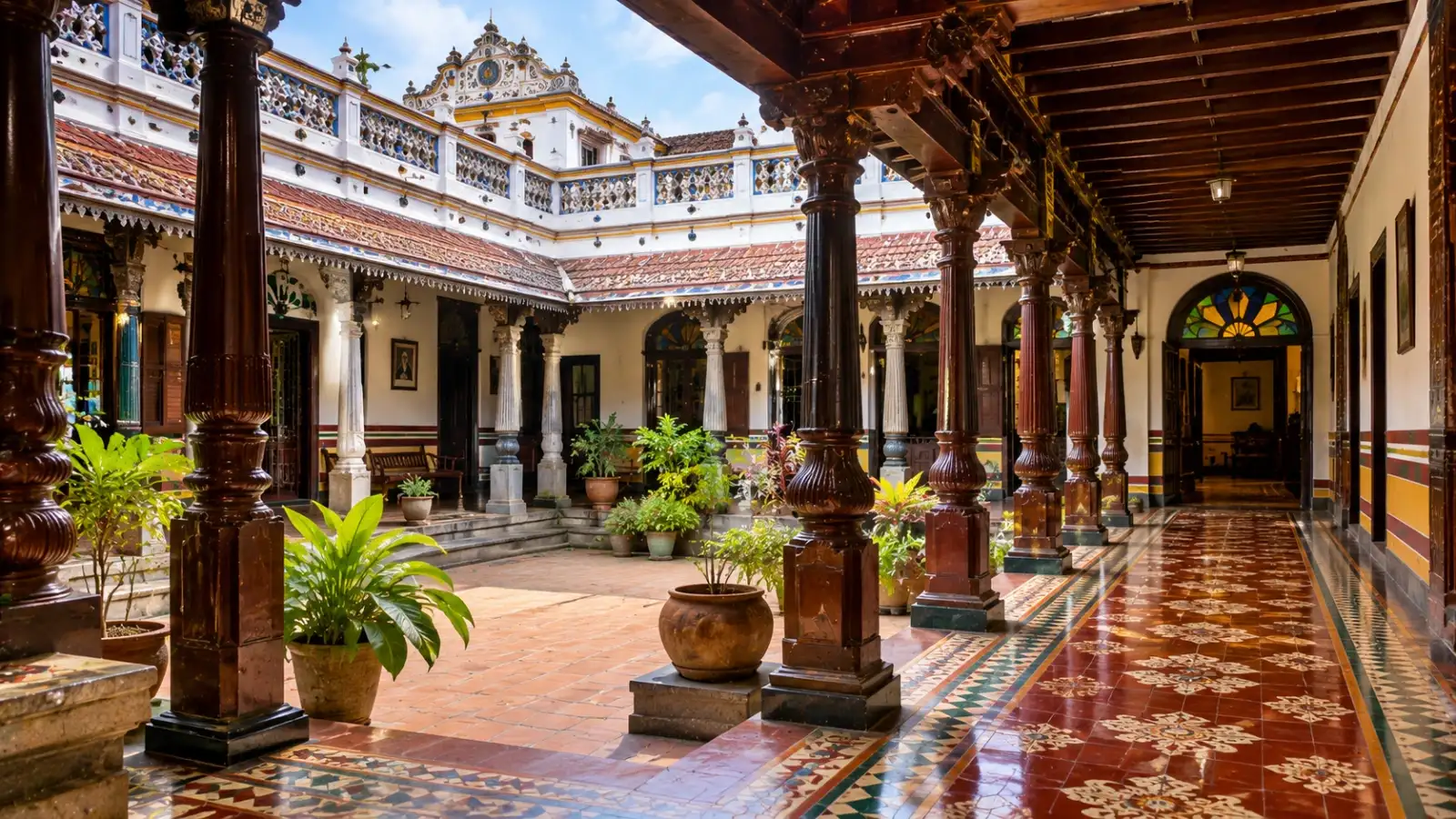
1. Explore the Grand Chettinad Mansions
The traditional mansions are the most recognisable feature of Chettinad architecture . Many were built during the 19th and early 20th centuries by wealthy Chettiar families who had strong trading connections across Southeast Asia.
These houses are known for their impressive scale, long corridors, spacious rooms and carefully planned layouts. Some feature multiple courtyards and separate sections for family activities, guests and ceremonial gatherings.
Kanadukathan is one of the best-known villages for exploring these architectural treasures. Its streets contain several striking heritage mansions that showcase the region's traditional building style.
2. Admire the Central Courtyards
The central courtyard, traditionally called the mutram, is an important element of Chettinad homes. It provides an open space within the house, allowing natural light and ventilation to reach the surrounding rooms.
These courtyards were also used for family gatherings, religious ceremonies and everyday activities. Larger mansions sometimes contain multiple courtyards, each serving a different purpose.
The arrangement reflects how traditional architecture adapted to the region's climate while supporting the social and cultural life of extended families.
3. Discover the Beauty of Athangudi Tiles
Athangudi tiles are among the most distinctive decorative features associated with Chettinad homes. These handmade cement tiles are produced in the village of Athangudi and are recognised for their colourful geometric patterns and polished surfaces.
Traditional designs often include floral motifs, repeating shapes and contrasting borders. The tiles were commonly used in courtyards, halls and interior rooms, adding character to the floors.
Visitors interested in local craftsmanship can explore Athangudi to learn about the traditional tile-making process and see artisans at work, depending on workshop access.
4. Appreciate Intricately Carved Wooden Doors
The entrances of traditional Chettinad mansions often feature large wooden doors decorated with detailed carvings. Teak and other durable woods were used to create elaborate panels, floral patterns and ornamental designs.
Some doors also include decorative metal fittings and impressive frames. Their size and craftsmanship reflect the importance of hospitality and the status of the families who built these houses.
Pay attention to the entranceways when exploring heritage streets, as they often provide some of the finest examples of traditional woodwork in the region.
5. Look at the Decorative Pillars and Verandahs
Pillars are another important architectural feature of Chettinad mansions. Wooden and stone columns support long verandahs, spacious halls and internal corridors.
Some houses feature intricately carved pillars, while others display polished surfaces and decorative capitals. The verandahs, known as thinnais, traditionally served as welcoming spaces where visitors could sit and interact with household members.
These features demonstrate how Chettinad architecture combined structural design with practical social spaces.
6. Notice the European and Southeast Asian Influences
Chettinad architecture reflects the region's historical trading connections. Wealthy Chettiar merchants travelled and conducted business in different parts of Southeast Asia, bringing back ideas, materials and decorative influences.
This is visible in the use of imported tiles, European-style furniture, glasswork, chandeliers and decorative elements alongside traditional Tamil architectural features.
The result is a distinctive architectural style that combines regional craftsmanship with international influences without losing its local identity.
7. Explore the Traditional Construction Materials
Chettinad houses were constructed using a combination of locally available and imported materials. Lime plaster, brick, timber, stone and traditional roofing materials played important roles in their construction.
A notable feature is the use of lime-based finishes, which helped create smooth walls and decorative surfaces. Some traditional buildings also incorporated materials sourced through the Chettiar community's trading networks.
These construction choices reflect the practical knowledge and craftsmanship that shaped the region's residential architecture.
8. Visit the Heritage Villages of Chettinad
The best way to understand Chettinad architecture is to explore its traditional villages. Each settlement offers a different perspective on the region's historic homes, streets and community life.
Some places worth visiting include:
Tips for Exploring Chettinad Architecture
1. Explore the Grand Chettinad Mansions
The traditional mansions are the most recognisable feature of Chettinad architecture . Many were built during the 19th and early 20th centuries by wealthy Chettiar families who had strong trading connections across Southeast Asia.
These houses are known for their impressive scale, long corridors, spacious rooms and carefully planned layouts. Some feature multiple courtyards and separate sections for family activities, guests and ceremonial gatherings.
Kanadukathan is one of the best-known villages for exploring these architectural treasures. Its streets contain several striking heritage mansions that showcase the region's traditional building style.
2. Admire the Central Courtyards
The central courtyard, traditionally called the mutram, is an important element of Chettinad homes. It provides an open space within the house, allowing natural light and ventilation to reach the surrounding rooms.
These courtyards were also used for family gatherings, religious ceremonies and everyday activities. Larger mansions sometimes contain multiple courtyards, each serving a different purpose.
The arrangement reflects how traditional architecture adapted to the region's climate while supporting the social and cultural life of extended families.
3. Discover the Beauty of Athangudi Tiles
Athangudi tiles are among the most distinctive decorative features associated with Chettinad homes. These handmade cement tiles are produced in the village of Athangudi and are recognised for their colourful geometric patterns and polished surfaces.
Traditional designs often include floral motifs, repeating shapes and contrasting borders. The tiles were commonly used in courtyards, halls and interior rooms, adding character to the floors.
Visitors interested in local craftsmanship can explore Athangudi to learn about the traditional tile-making process and see artisans at work, depending on workshop access.
4. Appreciate Intricately Carved Wooden Doors
The entrances of traditional Chettinad mansions often feature large wooden doors decorated with detailed carvings. Teak and other durable woods were used to create elaborate panels, floral patterns and ornamental designs.
Some doors also include decorative metal fittings and impressive frames. Their size and craftsmanship reflect the importance of hospitality and the status of the families who built these houses.
Pay attention to the entranceways when exploring heritage streets, as they often provide some of the finest examples of traditional woodwork in the region.
5. Look at the Decorative Pillars and Verandahs
Pillars are another important architectural feature of Chettinad mansions. Wooden and stone columns support long verandahs, spacious halls and internal corridors.
Some houses feature intricately carved pillars, while others display polished surfaces and decorative capitals. The verandahs, known as thinnais, traditionally served as welcoming spaces where visitors could sit and interact with household members.
These features demonstrate how Chettinad architecture combined structural design with practical social spaces.
6. Notice the European and Southeast Asian Influences
Chettinad architecture reflects the region's historical trading connections. Wealthy Chettiar merchants travelled and conducted business in different parts of Southeast Asia, bringing back ideas, materials and decorative influences.
This is visible in the use of imported tiles, European-style furniture, glasswork, chandeliers and decorative elements alongside traditional Tamil architectural features.
The result is a distinctive architectural style that combines regional craftsmanship with international influences without losing its local identity.
7. Explore the Traditional Construction Materials
Chettinad houses were constructed using a combination of locally available and imported materials. Lime plaster, brick, timber, stone and traditional roofing materials played important roles in their construction.
A notable feature is the use of lime-based finishes, which helped create smooth walls and decorative surfaces. Some traditional buildings also incorporated materials sourced through the Chettiar community's trading networks.
These construction choices reflect the practical knowledge and craftsmanship that shaped the region's residential architecture.
You may also like
- Itching Without a Rash: Internal Causes Worth Investigating
- PPF Withdrawal Rules: Can you withdraw money before 15-year maturity during an emergency? Check eligibility, limits and required forms.
- Brezza over bride! Delhi cop calls off wedding after not getting car of his choice
- Why couldn't Ravana take the Shivalinga to Lanka? What is the story behind the nine severed heads being offered?
- When will the new exam schedule for MP Police Constable recruitment be released? Here is what the Board has to say
8. Visit the Heritage Villages of Chettinad
The best way to understand Chettinad architecture is to explore its traditional villages. Each settlement offers a different perspective on the region's historic homes, streets and community life.
Some places worth visiting include:
- Kanadukathan: Known for its impressive mansions and heritage streets.
- Karaikudi: An important town and a convenient base for exploring the Chettinad region.
- Athangudi: Famous for its handmade decorative tiles.
- Pallathur: Known for its traditional houses and distinctive architectural character.
- Kothamangalam: Another settlement where visitors can discover the region's traditional built heritage.
Tips for Exploring Chettinad Architecture
- Choose cooler hours: Early mornings and late afternoons are more comfortable for walking through heritage villages.
- Respect private property: Many traditional mansions are still family homes, so seek permission before entering.
- Hire a local guide: A knowledgeable guide can explain architectural details, family traditions and the history of the buildings.
- Look beyond the facades: Courtyards, flooring, pillars, ceilings and wooden doors reveal the craftsmanship of these houses.
- Support local artisans: Explore traditional tile-making and craft workshops where visitor access is available.
- Protect heritage structures: Avoid touching delicate carvings or damaging historic surfaces while taking photographs.






Loving Newspoint? Download the app now
