
5 Ancient Food Preservation Methods That Keep Food Fresh Without a Fridge

Long before the invention of electric fridges, families around the globe relied on clever techniques to keep their ingredients safe, tasty and full of vital nutrients. Modern reliance on cold storage has made many of these time-tested skills feel like a lost craft, yet learning them offers a wonderful way to reduce electricity usage and minimise household waste. Rediscovering these traditional methods can transform basic pantry staples into rich culinary delights whilst giving you complete control over what goes into your meals.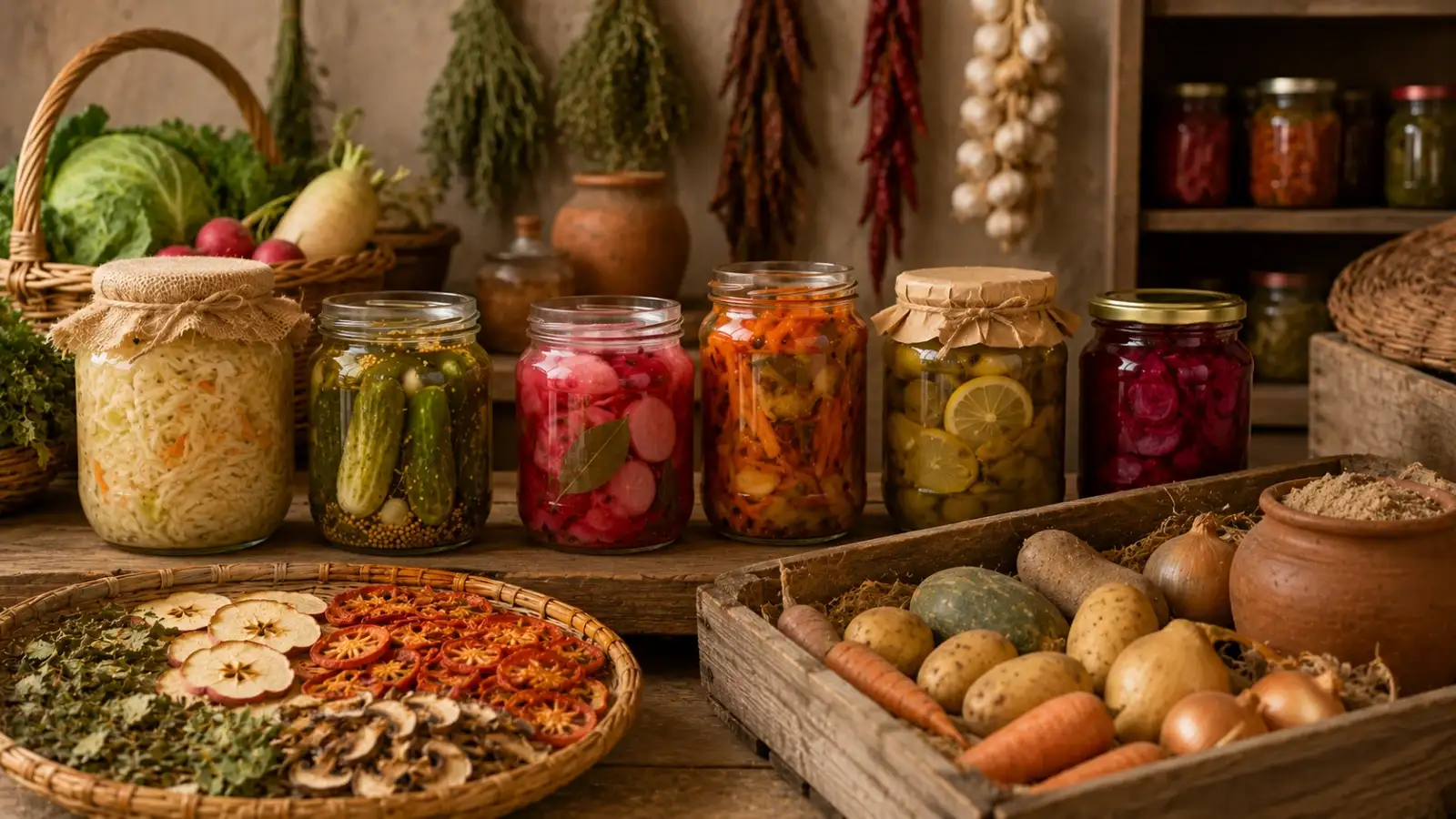
Lactic Acid Fermentation for Vegetables
Fermentation is one of the oldest natural food preservation methods known to humanity. Instead of relying on artificial chemicals, this approach uses beneficial bacteria to convert natural sugars into lactic acid. This natural acidity creates an environment where harmful microbes simply cannot survive, protecting your produce for months on end. Crunchy cabbage turned into sauerkraut, crisp spiced radishes and traditional fermented pickles all thrive at room temperature when kept submerged in a simple saltwater brine. The added bonus is that this simple transformation introduces gut-friendly probiotics into your daily diet.
Drying and Dehydration under Natural Light
Removing moisture is another essential strategy in ancient food preservation techniques . Without water, mold and spoilage bacteria cannot multiply, allowing fruits, vegetables and herbs to remain stable for impressive lengths of time. Thinly sliced apples, fresh tomatoes, mushrooms and garden herbs can all be dried naturally in warm, breezy spots or under mild sunlight. Once thoroughly dehydrated, these items take up very little space in your cupboard and can easily be reconstituted in warm water, soups or stews whenever you are ready to cook.
Traditional Curing and Salting Solutions
Salt has served as a reliable preservative for centuries due to its ability to draw out moisture through osmosis. Thick coatings of coarse sea salt applied directly to fresh produce or cuts of meat pull out excess liquids and inhibit microbial activity. Strong salt brines can also be used to store root vegetables, olives and lemons safely without any need for electric cooling. Proper salting not only guards against decay but also concentrates deep savory flavours that enhance simple everyday recipes.
Tangy Vinegar Pickling Methods
Submerging fresh garden produce in an acidic liquid provides an immediate barrier against spoilage. Vinegar contains acetic acid, which effectively prevents unwanted bacteria from taking hold on ingredients like onions, beetroot, cucumbers and peppers. By combining high quality vinegar with aromatic spices and a touch of salt, you can build up shelf-stable pantries filled with colourful jars that last through cold seasons.
Cool Storage and Root Cellars
Sometimes the simplest sustainable food storage tips involve taking advantage of the natural temperature under the earth. Underground root cellars, shaded terracotta pots filled with moist sand, and unheated dark larders maintain stable, cool temperatures throughout the year. Hard vegetables such as potatoes, carrots, onions, winter squashes and whole apples retain their crispness for months in these conditions without consuming a single watt of power. Embracing these low-tech strategies allows you to build a self-sufficient kitchen that honours timeless culinary heritage.
Lactic Acid Fermentation for Vegetables
Fermentation is one of the oldest natural food preservation methods known to humanity. Instead of relying on artificial chemicals, this approach uses beneficial bacteria to convert natural sugars into lactic acid. This natural acidity creates an environment where harmful microbes simply cannot survive, protecting your produce for months on end. Crunchy cabbage turned into sauerkraut, crisp spiced radishes and traditional fermented pickles all thrive at room temperature when kept submerged in a simple saltwater brine. The added bonus is that this simple transformation introduces gut-friendly probiotics into your daily diet.
Drying and Dehydration under Natural Light
Removing moisture is another essential strategy in ancient food preservation techniques . Without water, mold and spoilage bacteria cannot multiply, allowing fruits, vegetables and herbs to remain stable for impressive lengths of time. Thinly sliced apples, fresh tomatoes, mushrooms and garden herbs can all be dried naturally in warm, breezy spots or under mild sunlight. Once thoroughly dehydrated, these items take up very little space in your cupboard and can easily be reconstituted in warm water, soups or stews whenever you are ready to cook.
You may also like
- Peanuts With or Without Skin: Which Is Healthier and What Is the Best Way to Eat Them?
- 'This is my tiny house, though it looks straight out of a postcard, I live here': Woman reveals the issues she is facing living in a 'picture-perfect' house
- Why do Kodagu brides wear their saree backwards? The fascinating story behind their iconic drape
- Your child seems distracted while studying? These overlooked vision problems could be making reading and learning harder
- Why Zurich deserves more than a layover
Traditional Curing and Salting Solutions
Salt has served as a reliable preservative for centuries due to its ability to draw out moisture through osmosis. Thick coatings of coarse sea salt applied directly to fresh produce or cuts of meat pull out excess liquids and inhibit microbial activity. Strong salt brines can also be used to store root vegetables, olives and lemons safely without any need for electric cooling. Proper salting not only guards against decay but also concentrates deep savory flavours that enhance simple everyday recipes.
Tangy Vinegar Pickling Methods
Submerging fresh garden produce in an acidic liquid provides an immediate barrier against spoilage. Vinegar contains acetic acid, which effectively prevents unwanted bacteria from taking hold on ingredients like onions, beetroot, cucumbers and peppers. By combining high quality vinegar with aromatic spices and a touch of salt, you can build up shelf-stable pantries filled with colourful jars that last through cold seasons.
Cool Storage and Root Cellars
Sometimes the simplest sustainable food storage tips involve taking advantage of the natural temperature under the earth. Underground root cellars, shaded terracotta pots filled with moist sand, and unheated dark larders maintain stable, cool temperatures throughout the year. Hard vegetables such as potatoes, carrots, onions, winter squashes and whole apples retain their crispness for months in these conditions without consuming a single watt of power. Embracing these low-tech strategies allows you to build a self-sufficient kitchen that honours timeless culinary heritage.






Loving Newspoint? Download the app now
