
8 Traditional Indian Art Forms That Use Rice, Flowers and Natural Materials

India has a rich tradition of creating art using materials found in everyday surroundings. Long before synthetic colours and modern decorative products became common, communities used rice flour, flower petals, leaves, soil, natural pigments and other locally available resources to create beautiful designs. These art forms are closely connected with festivals, religious ceremonies, seasonal celebrations and household traditions. From colourful flower arrangements in Kerala to intricate floor patterns in South India, each practice reflects regional creativity and cultural identity. Here are eight traditional Indian art forms that transform simple natural materials into meaningful works of art.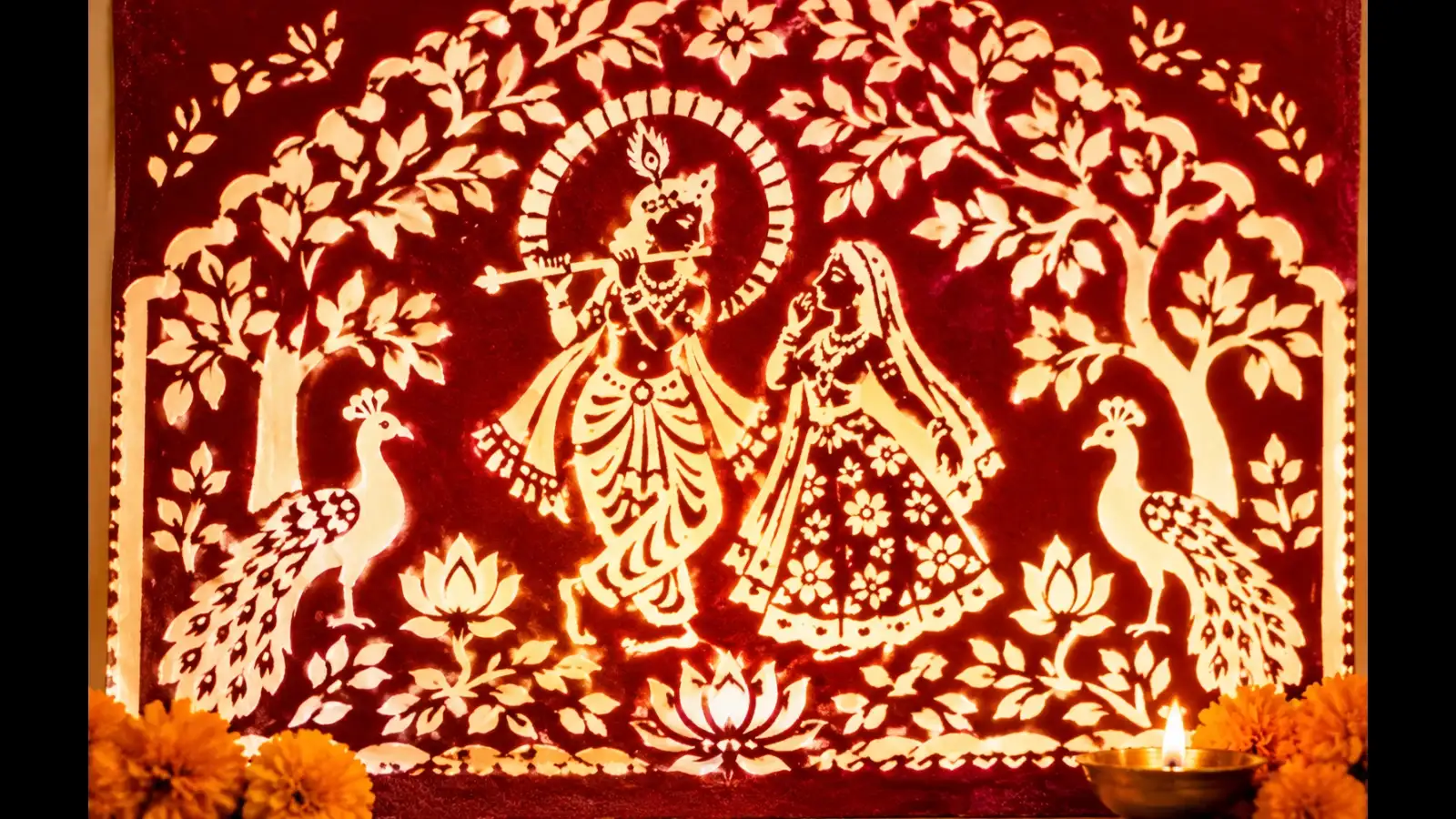
Artists arrange dots in specific patterns and connect them with curved or geometric lines to create symmetrical designs. Some families add coloured powders and flower petals during festivals and special occasions.
Traditionally, rice flour was also considered a way to offer food to small creatures such as ants, reflecting the connection between household customs and nature.
Different flowers are selected for their colours and textures, creating layered designs that often become more elaborate as the festival progresses. Marigolds, chrysanthemums and other locally available flowers are commonly used.
Families and communities often create Pookalam together, making it an important part of Onam celebrations and social gatherings.
Traditionally, artists prepare a base using a mixture of cow dung and mud, then create patterns with white chalk or lime-based materials. Designs often include geometric shapes, flowers, animals and religious symbols.
The art form reflects the creativity of rural communities and their use of locally available materials for household decoration.
Artists create flowing patterns featuring flowers, leaves, footprints, circular motifs and symbolic figures. The designs are often placed near household entrances and spaces used for worship.
Alpana is especially associated with Lakshmi Puja and other auspicious occasions, although patterns and practices vary between communities.
The designs include dots, lines, geometric patterns and religious motifs. Artists traditionally decorate entrances, floors and special spaces used during ceremonies.
Aipan is commonly associated with festivals, weddings and important family occasions. Its combination of a red base and white patterns gives it a distinctive appearance.
Historically, some Sanjhi compositions were also made using coloured powders, including natural pigments. The designs often depict scenes from the life of Lord Krishna, along with flowers, trees and decorative patterns.
Although paper is central to many forms of Sanjhi today, its connection with natural colours and devotional art makes it an important part of India's traditional artistic heritage.
Artists use their fingers to draw flowing lines, floral patterns, footprints and symbolic motifs. The designs are often associated with religious observances, harvest celebrations and household rituals.
Unlike some other floor art traditions that rely on dry powders, Jhoti often has a distinctive painted appearance because of its liquid rice paste.
The designs are usually created using rice flour, coloured powders, turmeric and other locally available materials. Common patterns include geometric shapes, floral motifs and symbolic figures.
These decorations are often prepared in courtyards or near places of worship, adding a traditional artistic touch to festivals and family celebrations.
Traditional Indian art forms demonstrate how simple materials such as rice flour, flowers, mud and natural colours can become beautiful expressions of creativity and cultural identity. From Kerala's Pookalam to Tamil Nadu's Kolam and Uttarakhand's Aipan, each tradition carries its own regional character and meaning. These practices continue to connect generations through festivals, rituals and community participation. Preserving them helps keep India's diverse folk-art heritage alive.
1. Kolam, Tamil Nadu
Kolam is a traditional floor art form widely practised in Tamil Nadu and other parts of South India. It is usually created outside the entrance of homes using rice flour or finely ground white powder.Artists arrange dots in specific patterns and connect them with curved or geometric lines to create symmetrical designs. Some families add coloured powders and flower petals during festivals and special occasions.
Traditionally, rice flour was also considered a way to offer food to small creatures such as ants, reflecting the connection between household customs and nature.
2. Pookalam, Kerala
Pookalam is a beautiful floral art form associated with Onam celebrations in Kerala. It involves arranging fresh flower petals in circular and geometric patterns on the ground.Different flowers are selected for their colours and textures, creating layered designs that often become more elaborate as the festival progresses. Marigolds, chrysanthemums and other locally available flowers are commonly used.
Families and communities often create Pookalam together, making it an important part of Onam celebrations and social gatherings.
3. Mandana Art, Rajasthan and Madhya Pradesh
Mandana is a traditional decorative art form found in parts of Rajasthan and Madhya Pradesh. It is commonly created on floors and walls during festivals, weddings and other auspicious occasions.Traditionally, artists prepare a base using a mixture of cow dung and mud, then create patterns with white chalk or lime-based materials. Designs often include geometric shapes, flowers, animals and religious symbols.
The art form reflects the creativity of rural communities and their use of locally available materials for household decoration.
4. Alpana, West Bengal
Alpana is a traditional floor art form associated with Bengal, particularly during religious ceremonies and festivals. Its designs are commonly made using a liquid mixture of ground rice and water.Artists create flowing patterns featuring flowers, leaves, footprints, circular motifs and symbolic figures. The designs are often placed near household entrances and spaces used for worship.
Alpana is especially associated with Lakshmi Puja and other auspicious occasions, although patterns and practices vary between communities.
5. Aipan, Uttarakhand
Aipan is a traditional ritual art form from Uttarakhand, especially associated with the Kumaon region. It is generally created on a red background using white rice paste.The designs include dots, lines, geometric patterns and religious motifs. Artists traditionally decorate entrances, floors and special spaces used during ceremonies.
Aipan is commonly associated with festivals, weddings and important family occasions. Its combination of a red base and white patterns gives it a distinctive appearance.
6. Sanjhi Art, Uttar Pradesh
Sanjhi is a traditional stencil-based art form associated with the Braj region of Uttar Pradesh, particularly the temples of Mathura and Vrindavan. It traditionally involves cutting intricate designs into paper stencils and creating devotional compositions.Historically, some Sanjhi compositions were also made using coloured powders, including natural pigments. The designs often depict scenes from the life of Lord Krishna, along with flowers, trees and decorative patterns.
Although paper is central to many forms of Sanjhi today, its connection with natural colours and devotional art makes it an important part of India's traditional artistic heritage.
7. Jhoti or Chita, Odisha
Jhoti, also known as Chita in some regions, is a traditional floor and wall art form practised in Odisha. It is commonly created using a paste made from ground rice and water.Artists use their fingers to draw flowing lines, floral patterns, footprints and symbolic motifs. The designs are often associated with religious observances, harvest celebrations and household rituals.
Unlike some other floor art traditions that rely on dry powders, Jhoti often has a distinctive painted appearance because of its liquid rice paste.
8. Chowk Purna, Uttar Pradesh
Chowk Purna is a traditional floor decoration practised in parts of Uttar Pradesh, particularly during religious ceremonies and auspicious occasions.The designs are usually created using rice flour, coloured powders, turmeric and other locally available materials. Common patterns include geometric shapes, floral motifs and symbolic figures.
These decorations are often prepared in courtyards or near places of worship, adding a traditional artistic touch to festivals and family celebrations.
Why Natural Materials Are Important in Traditional Indian Art
Natural materials have always played an important role in Indian folk art because they are locally available, affordable and closely connected with regional lifestyles.- Rice flour: Used in Kolam, Alpana, Aipan and several other floor art traditions.
- Flowers: Essential to Pookalam and many festive decorations.
- Soil and mud: Used in traditional wall and floor preparation.
- Natural pigments: Provide colour in several regional art practices.
- Leaves and plant materials: Used in decorative arrangements and seasonal celebrations.
Traditional Indian art forms demonstrate how simple materials such as rice flour, flowers, mud and natural colours can become beautiful expressions of creativity and cultural identity. From Kerala's Pookalam to Tamil Nadu's Kolam and Uttarakhand's Aipan, each tradition carries its own regional character and meaning. These practices continue to connect generations through festivals, rituals and community participation. Preserving them helps keep India's diverse folk-art heritage alive.
Next Story