
How Traditional Indian Food Wrapping Methods Used Leaves and Natural Materials Before Plastic

Long before plastic containers, aluminium foil and disposable packaging became common, Indian households relied on leaves and other natural materials to wrap, carry and serve food. These traditional methods were closely connected to local plants, regional cooking practices and everyday lifestyles. Banana leaves, sal leaves, lotus leaves and dried leaf plates were used in different parts of the country to hold meals, snacks and festive offerings. People also used materials such as bamboo, clay and stitched leaf containers for storage and transportation. Many of these practices continue today, offering an interesting glimpse into India's food culture and traditional resourcefulness.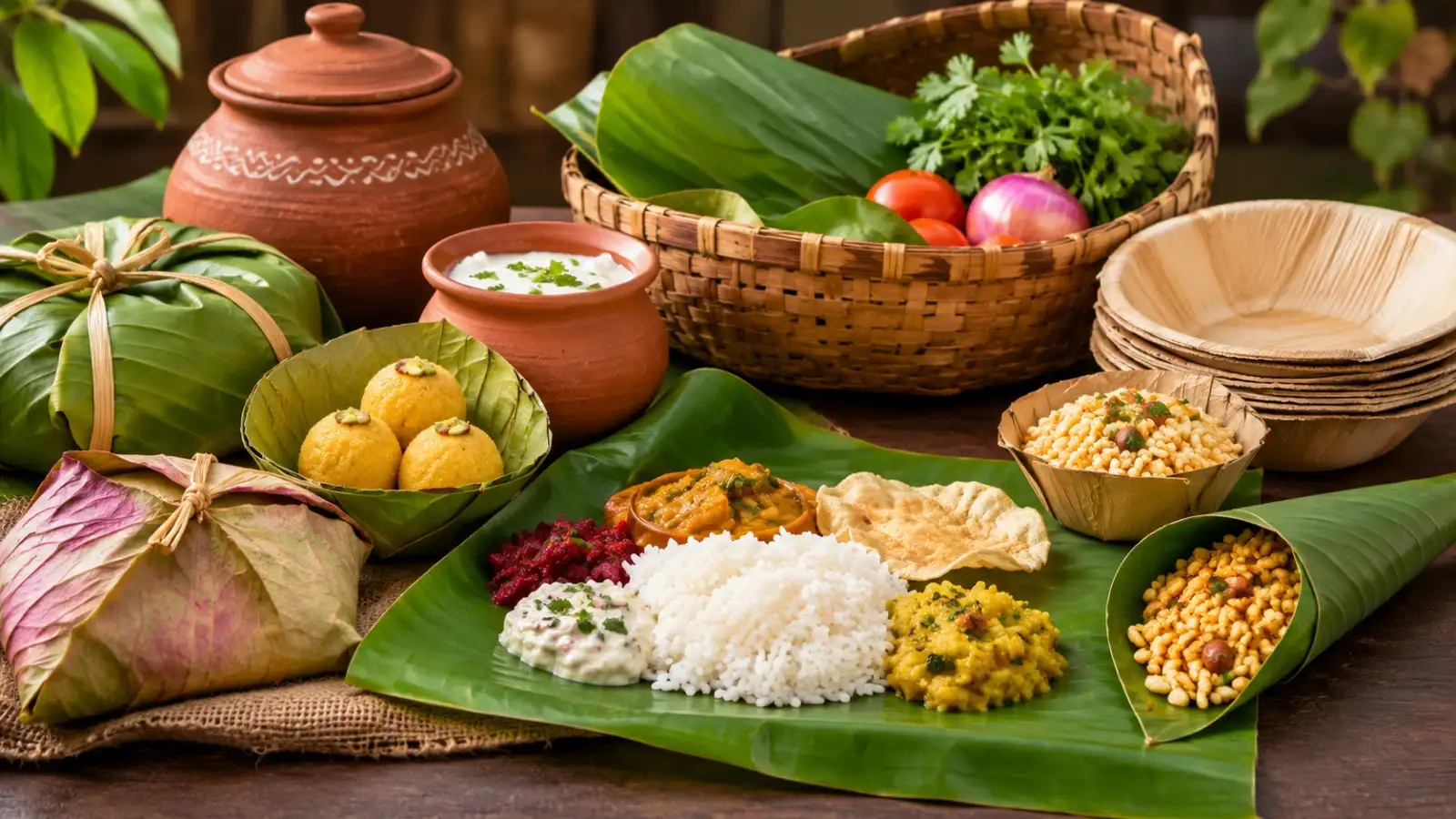
1. Banana Leaves for Wrapping and Serving Food
Banana leaves have been used for generations in several parts of India, particularly in southern and eastern regions. Their broad, flexible surface makes them suitable for wrapping cooked food and serving complete meals.
In many households, rice, vegetable preparations, snacks and traditional sweets are placed on banana leaves. The leaves can also be folded around food to create simple parcels. Their natural surface makes them useful for handling warm dishes, while their size allows several food items to be served together.
2. Sal Leaves for Traditional Plates and Food Parcels
Sal leaves have traditionally been used in parts of eastern and central India to make plates and small bowls. These are commonly known as pattal and dona.
The leaves are stitched together using thin sticks or small wooden pins to create sturdy containers. They are used during community meals, religious gatherings, festivals and local celebrations. Their lightweight structure also makes them convenient for serving snacks and sweets.
3. Lotus Leaves for Wrapping Traditional Foods
Lotus leaves have a special place in several regional food traditions. Their large, naturally curved surfaces make them suitable for wrapping rice-based preparations and other dishes.
In some eastern Indian cuisines, lotus leaves are used to wrap ingredients before steaming or cooking. The leaves help hold the food together and can impart a subtle earthy aroma. Their use also reflects the close relationship between local ingredients and traditional cooking techniques.
4. Palash Leaves for Eco-Friendly Food Containers
Palash leaves, also known as flame-of-the-forest leaves, have traditionally been used to prepare disposable plates and bowls in several Indian communities.
Their leaves are joined together to form simple containers suitable for serving dry snacks, cooked food and festive meals. This practice is particularly associated with rural areas where locally available leaves were turned into useful household products.
5. Bamboo Baskets for Carrying Food
Bamboo has been an important material in traditional Indian household crafts. Its strength and flexibility make it suitable for weaving baskets used to carry vegetables, fruits, snacks and other food items.
In different regions, bamboo baskets have been designed in various shapes and sizes. Some are used for transporting food to markets, while others help organise ingredients at home. Larger woven containers can also be lined with leaves or cloth to hold particular food items.
6. Dried Leaves for Storing and Transporting Snacks
Dried leaves have also played a role in traditional food packaging. Depending on local availability, leaves were folded, layered or tied together to hold dry snacks, roasted grains and small portions of food.
This approach was especially useful in areas where people needed simple packaging materials for local markets and travel. Different communities developed their own methods of folding and securing leaves without requiring modern packaging products.
7. Clay Pots for Storing and Carrying Food
Clay pots have been used across India for centuries to store water, curd, pickles and other food preparations. Unlike leaves, which were mainly used for wrapping and serving, earthen containers provided a more durable storage option.
Unglazed clay pots can help keep their contents relatively cool through evaporation when used appropriately. Small clay containers were also used for serving traditional sweets, curd and drinks in local markets.
8. Cloth Wrapping for Homemade Food
Clean cotton cloth was another practical way to carry homemade food. Chapatis, parathas and dry snacks were often wrapped in cloth to keep them together during journeys or while travelling to work and school.
The fabric could be washed and reused, making it a convenient household alternative to disposable packaging. Depending on the food, people sometimes placed a leaf inside the cloth to provide an additional layer.
9. Areca Palm Leaves for Plates and Serving Trays
Areca palm leaves and sheaths have been used in several parts of India to make plates, bowls and serving trays. The naturally fallen sheaths can be cleaned, shaped and pressed into useful food containers.
These products are particularly popular in parts of southern India. They are used at weddings, festivals, community gatherings and food stalls as an alternative to conventional disposable tableware.
10. Traditional Leaf Cones for Snacks and Street Food
Small leaf bowls and cones have long been used by street vendors to serve snacks such as puffed rice mixtures, roasted grains and other local treats.
These containers are easy to hold and can be made using locally available leaves. In many places, they are still used at fairs, markets and religious gatherings. Their simple design shows how everyday food traditions adapted natural materials for convenient serving.
Why Traditional Natural Food Wrapping Methods Still Matter
Traditional food packaging offers more than a connection to India's culinary history. It also highlights how communities used locally available materials for everyday needs. Many leaf-based plates and containers can be composted under suitable conditions, unlike conventional plastic packaging.
However, natural materials are not automatically safe or sustainable in every situation. Leaves must be correctly identified, cleaned and handled hygienically. Their environmental impact also depends on how they are collected, processed and disposed of.
These traditional practices continue to inspire modern alternatives to single-use plastic. From banana-leaf meals to areca palm plates , India's natural food packaging traditions remain an important part of its cultural and culinary heritage.
1. Banana Leaves for Wrapping and Serving Food
Banana leaves have been used for generations in several parts of India, particularly in southern and eastern regions. Their broad, flexible surface makes them suitable for wrapping cooked food and serving complete meals.
In many households, rice, vegetable preparations, snacks and traditional sweets are placed on banana leaves. The leaves can also be folded around food to create simple parcels. Their natural surface makes them useful for handling warm dishes, while their size allows several food items to be served together.
2. Sal Leaves for Traditional Plates and Food Parcels
Sal leaves have traditionally been used in parts of eastern and central India to make plates and small bowls. These are commonly known as pattal and dona.
The leaves are stitched together using thin sticks or small wooden pins to create sturdy containers. They are used during community meals, religious gatherings, festivals and local celebrations. Their lightweight structure also makes them convenient for serving snacks and sweets.
3. Lotus Leaves for Wrapping Traditional Foods
Lotus leaves have a special place in several regional food traditions. Their large, naturally curved surfaces make them suitable for wrapping rice-based preparations and other dishes.
In some eastern Indian cuisines, lotus leaves are used to wrap ingredients before steaming or cooking. The leaves help hold the food together and can impart a subtle earthy aroma. Their use also reflects the close relationship between local ingredients and traditional cooking techniques.
4. Palash Leaves for Eco-Friendly Food Containers
Palash leaves, also known as flame-of-the-forest leaves, have traditionally been used to prepare disposable plates and bowls in several Indian communities.
Their leaves are joined together to form simple containers suitable for serving dry snacks, cooked food and festive meals. This practice is particularly associated with rural areas where locally available leaves were turned into useful household products.
5. Bamboo Baskets for Carrying Food
Bamboo has been an important material in traditional Indian household crafts. Its strength and flexibility make it suitable for weaving baskets used to carry vegetables, fruits, snacks and other food items.
In different regions, bamboo baskets have been designed in various shapes and sizes. Some are used for transporting food to markets, while others help organise ingredients at home. Larger woven containers can also be lined with leaves or cloth to hold particular food items.
6. Dried Leaves for Storing and Transporting Snacks
Dried leaves have also played a role in traditional food packaging. Depending on local availability, leaves were folded, layered or tied together to hold dry snacks, roasted grains and small portions of food.
This approach was especially useful in areas where people needed simple packaging materials for local markets and travel. Different communities developed their own methods of folding and securing leaves without requiring modern packaging products.
7. Clay Pots for Storing and Carrying Food
Clay pots have been used across India for centuries to store water, curd, pickles and other food preparations. Unlike leaves, which were mainly used for wrapping and serving, earthen containers provided a more durable storage option.
Unglazed clay pots can help keep their contents relatively cool through evaporation when used appropriately. Small clay containers were also used for serving traditional sweets, curd and drinks in local markets.
8. Cloth Wrapping for Homemade Food
Clean cotton cloth was another practical way to carry homemade food. Chapatis, parathas and dry snacks were often wrapped in cloth to keep them together during journeys or while travelling to work and school.
The fabric could be washed and reused, making it a convenient household alternative to disposable packaging. Depending on the food, people sometimes placed a leaf inside the cloth to provide an additional layer.
9. Areca Palm Leaves for Plates and Serving Trays
Areca palm leaves and sheaths have been used in several parts of India to make plates, bowls and serving trays. The naturally fallen sheaths can be cleaned, shaped and pressed into useful food containers.
These products are particularly popular in parts of southern India. They are used at weddings, festivals, community gatherings and food stalls as an alternative to conventional disposable tableware.
10. Traditional Leaf Cones for Snacks and Street Food
You may also like
- Why Global Post-Study Work Visa Changes Catch Students Off Guard
- Now, farmers producing milk and vegetables will also be eligible for KCC loans; credit cards will be distributed through organized camps..
- Why Vande Bharat Sleeper TDR Claims Catch Passengers Off Guard
- The disappearing art of having your own taste in the age of algorithms
- An opportunity to earn 50,000 per month in Delhi by sending photos of traffic rule violators—find out how the 'Prahari' app works..
Small leaf bowls and cones have long been used by street vendors to serve snacks such as puffed rice mixtures, roasted grains and other local treats.
These containers are easy to hold and can be made using locally available leaves. In many places, they are still used at fairs, markets and religious gatherings. Their simple design shows how everyday food traditions adapted natural materials for convenient serving.
Why Traditional Natural Food Wrapping Methods Still Matter
Traditional food packaging offers more than a connection to India's culinary history. It also highlights how communities used locally available materials for everyday needs. Many leaf-based plates and containers can be composted under suitable conditions, unlike conventional plastic packaging.
However, natural materials are not automatically safe or sustainable in every situation. Leaves must be correctly identified, cleaned and handled hygienically. Their environmental impact also depends on how they are collected, processed and disposed of.
These traditional practices continue to inspire modern alternatives to single-use plastic. From banana-leaf meals to areca palm plates , India's natural food packaging traditions remain an important part of its cultural and culinary heritage.






Loving Newspoint? Download the app now
