
8 Traditional Indian Jewellery Styles With Fascinating Stories Behind Their Origins

Indian jewellery is much more than an accessory worn to complete an outfit. For centuries, it has reflected regional identities, royal traditions, craftsmanship, religious beliefs and changing fashion trends. From elaborate gold ornaments worn in South Indian temples to colourful tribal jewellery from Rajasthan and Gujarat, every style has a story connected to the place where it developed. Many traditional designs have survived generations, with artisans continuing techniques passed down through families. Exploring these jewellery styles offers an interesting glimpse into India's artistic heritage and the cultural significance attached to ornaments.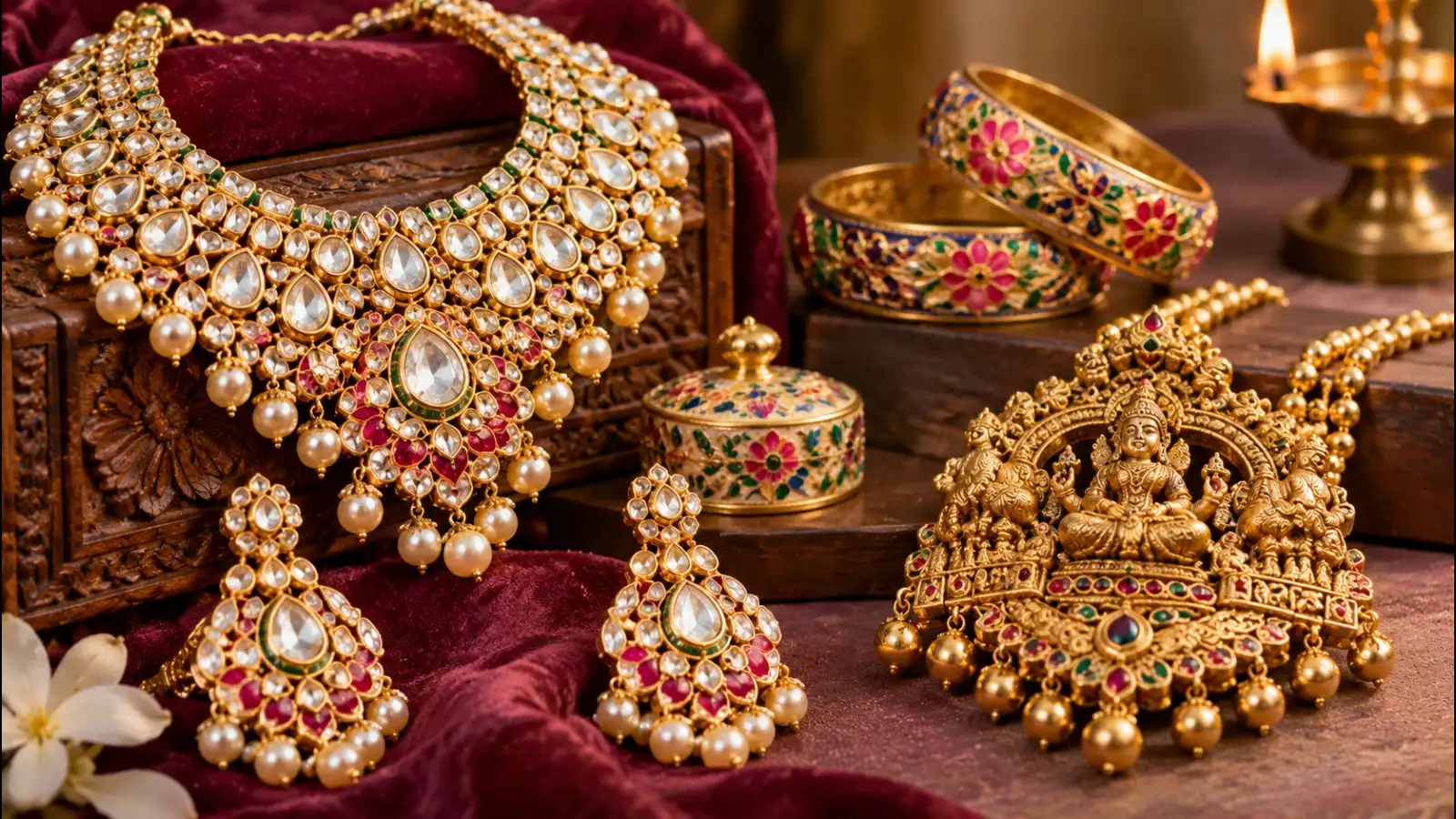
The craft flourished under Mughal and Rajput patronage, particularly in Rajasthan. Jaipur became an important centre for Kundan craftsmanship. Traditionally associated with royal families, it remains popular for weddings and festive occasions.
The craft received considerable encouragement during the Mughal period, with Rajasthan becoming one of its most recognised centres. Jaipur is especially famous for Meenakari work, which is often combined with Kundan designs.
Historically, such ornaments were associated with temple dancers and performers. Today, traditional temple jewellery is widely worn by brides and classical dancers, particularly in Tamil Nadu and other parts of South India.
The technique developed under royal patronage and is admired for its detailed scenes, floral patterns and traditional motifs. The process requires considerable precision, making each piece a reflection of specialised craftsmanship.
The style became popular in royal jewellery traditions, particularly during the Mughal period. Its slightly irregular appearance gives each piece a distinctive character. Polki necklaces and earrings are still popular choices for traditional Indian weddings.
The craft received patronage from Mughal and Rajput courts. Jadau ornaments are often elaborate, featuring colourful stones, intricate patterns and detailed craftsmanship.
The arrangement generally includes ruby, pearl, red coral, emerald, yellow sapphire, diamond, blue sapphire, hessonite and cat's eye. Such ornaments have long been associated with traditional beliefs about planetary influences and are found in rings, pendants and other jewellery forms.
Artisans traditionally use materials such as silver, brass, beads, shells, wood and colourful stones. Large necklaces, elaborate earrings, bangles and decorative headpieces often reflect community identity, local customs and cultural celebrations.
Traditional Indian jewellery tells stories of royal patronage, religious traditions, regional craftsmanship and community identity. While designs and materials have evolved over time, many age-old techniques continue to survive through skilled artisans. From the detailed enamel work of Meenakari to the natural beauty of Polki diamonds, these styles demonstrate how jewellery can preserve history while remaining relevant to modern fashion.
1. Kundan Jewellery : A Royal Mughal-Era Favourite
Kundan jewellery is known for its elaborate designs and carefully set gemstones. The technique involves placing highly refined gold foil around gemstones to hold them in position.The craft flourished under Mughal and Rajput patronage, particularly in Rajasthan. Jaipur became an important centre for Kundan craftsmanship. Traditionally associated with royal families, it remains popular for weddings and festive occasions.
2. Meenakari Jewellery : Colourful Enamel Craftsmanship
Meenakari is a decorative technique in which colourful enamel is applied to metal surfaces, often gold or silver. It is particularly admired for its intricate floral patterns and vibrant colours.The craft received considerable encouragement during the Mughal period, with Rajasthan becoming one of its most recognised centres. Jaipur is especially famous for Meenakari work, which is often combined with Kundan designs.
3. Temple Jewellery : Inspired by Sacred Art
Temple jewellery has a strong connection with South Indian religious and classical dance traditions. Its designs often feature deities, lotus flowers, peacocks and other motifs inspired by temple sculptures.Historically, such ornaments were associated with temple dancers and performers. Today, traditional temple jewellery is widely worn by brides and classical dancers, particularly in Tamil Nadu and other parts of South India.
4. Thewa Jewellery: Rajasthan's Intricate Gold Work
Thewa jewellery is a distinctive craft from Pratapgarh in Rajasthan. It involves creating delicate gold designs and fusing them onto coloured glass.The technique developed under royal patronage and is admired for its detailed scenes, floral patterns and traditional motifs. The process requires considerable precision, making each piece a reflection of specialised craftsmanship.
You may also like
- Winter Gut Health: 7 Doctor-Approved Foods to Eat Every Day
- How to Get 100g Daily Protein: Doctor-Approved Kitchen Staples
- Why Fruits Cause Acidity: Hidden Triggers, Digestion Science & Tips
- Toxic Air Attacks Heart, Brain, and Kidneys: AIIMS Doctors Warn
- Firecracker Smoke Health Risks: Shielding Lungs, Eyes, and Asthma
5. Polki Jewellery : The Beauty of Uncut Diamonds
Polki jewellery uses natural, uncut diamonds that retain much of their original form rather than being shaped into modern faceted stones.The style became popular in royal jewellery traditions, particularly during the Mughal period. Its slightly irregular appearance gives each piece a distinctive character. Polki necklaces and earrings are still popular choices for traditional Indian weddings.
6. Jadau Jewellery : A Craft Rooted in Royal Tradition
Jadau refers to a traditional gemstone-setting technique in which precious or semi-precious stones are embedded into gold. It is closely associated with the jewellery traditions of Rajasthan and Gujarat.The craft received patronage from Mughal and Rajput courts. Jadau ornaments are often elaborate, featuring colourful stones, intricate patterns and detailed craftsmanship.
7. Navratna Jewellery: Nine Gemstones With Traditional Meaning
Navratna jewellery features nine gemstones, each traditionally associated with one of the nine celestial bodies in Indian astrology.The arrangement generally includes ruby, pearl, red coral, emerald, yellow sapphire, diamond, blue sapphire, hessonite and cat's eye. Such ornaments have long been associated with traditional beliefs about planetary influences and are found in rings, pendants and other jewellery forms.
8. Tribal Jewellery: A Reflection of Regional Identity
Tribal jewellery represents the diverse artistic traditions of communities across India. Rajasthan, Gujarat, Nagaland, Odisha and several other regions have distinctive ornament-making practices.Artisans traditionally use materials such as silver, brass, beads, shells, wood and colourful stones. Large necklaces, elaborate earrings, bangles and decorative headpieces often reflect community identity, local customs and cultural celebrations.
Traditional Indian jewellery tells stories of royal patronage, religious traditions, regional craftsmanship and community identity. While designs and materials have evolved over time, many age-old techniques continue to survive through skilled artisans. From the detailed enamel work of Meenakari to the natural beauty of Polki diamonds, these styles demonstrate how jewellery can preserve history while remaining relevant to modern fashion.






Loving Newspoint? Download the app now
