
Traditional Indian Recipes That Have Survived for Hundreds of Years

There is something remarkable about eating a recipe that generations of people before you also knew. India has numerous dishes whose origins reach deep into history, yet they remain part of ordinary meals rather than museum displays. Their survival is not accidental. These recipes succeeded because they adapted to local ingredients, changing tastes and practical household needs. Khichdi , fermented rice dishes , millet preparations, traditional sweets and regional breads all demonstrate how old culinary knowledge can remain relevant in a modern kitchen. The story of these foods is ultimately a story of continuity, adaptation and the remarkable ability of Indian households to preserve traditions without keeping them frozen.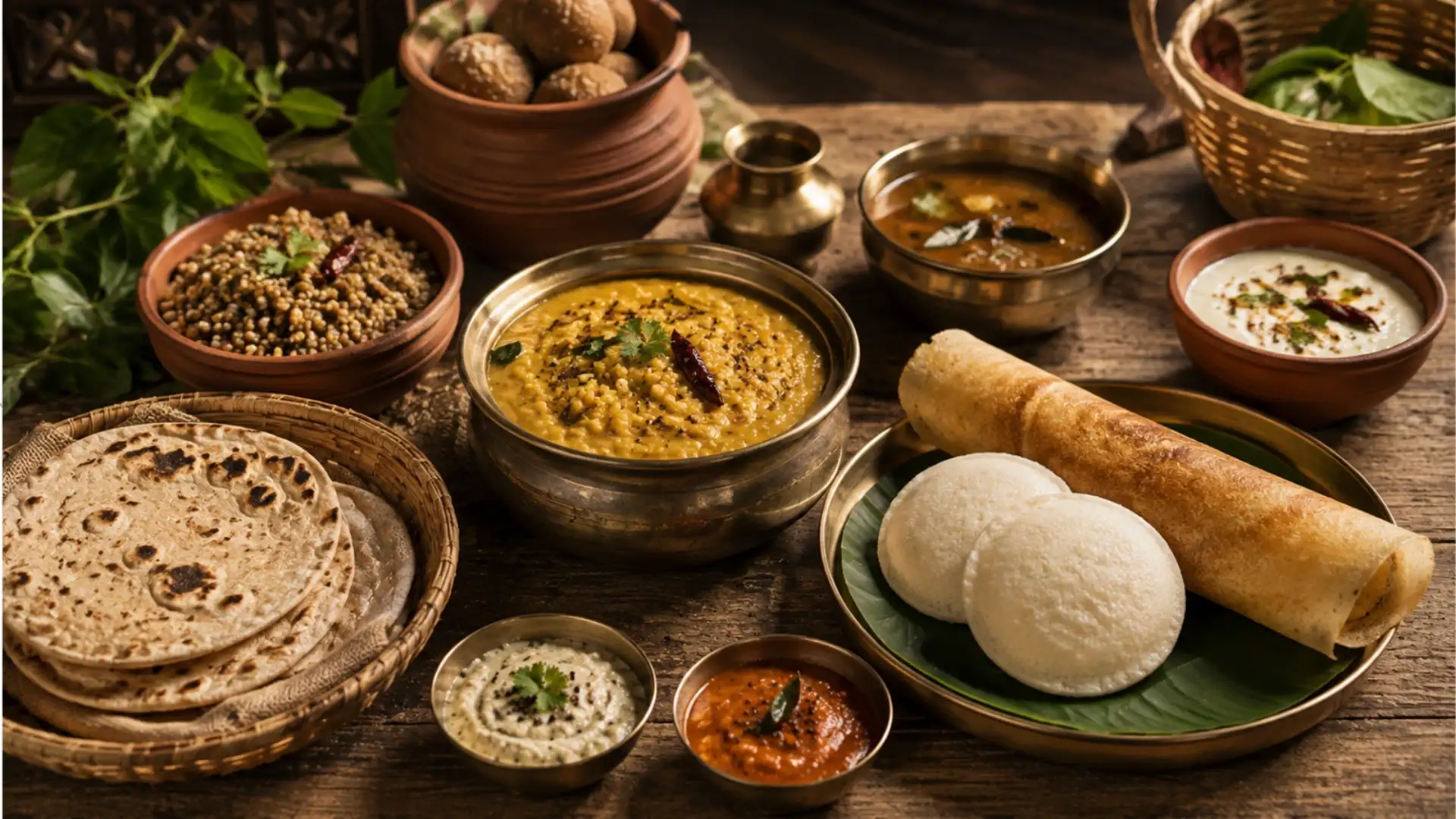
Its simplicity is deceptive. Different regions add vegetables, spices, ghee or other grains, creating versions that can taste completely different while retaining the basic rice-and-pulse idea.
Historical discussions around dosa trace references to the dish back many centuries, while fermented rice-and-lentil preparations have long been associated with South Indian cooking.
Fermentation also demonstrates practical knowledge. The process changes flavour, texture and digestibility without requiring sophisticated technology.
Millet-based foods are a particularly good modern example. Grains such as ragi, jowar and bajra were once everyday staples in many rural communities. Their renewed popularity today is often presented as a new health trend, although the knowledge behind them is centuries old.
The same principle applies to regional sweets, steamed foods and preserved preparations.
That makes family kitchens important cultural archives.
That may be their most important lesson for modern food culture. We often search for innovative ingredients and new cooking techniques, while some of the most adaptable ideas have already been tested for centuries.
A recipe that survives hundreds of years does not merely belong to the past. It proves that good food can outlive the people who created it, provided each new generation finds a reason to keep cooking it.
Khichdi and the Logic of Simple Food
Khichdi is one of the clearest examples of an enduring Indian recipe. The combination of rice and pulses is economical, adaptable and easy to digest, which helps explain its longevity.Its simplicity is deceptive. Different regions add vegetables, spices, ghee or other grains, creating versions that can taste completely different while retaining the basic rice-and-pulse idea.
Fermentation Has Deep Roots
Fermented foods offer another window into India's culinary past. Dosa and idli are now international favourites, but their histories are considerably older than their modern restaurant popularity.Historical discussions around dosa trace references to the dish back many centuries, while fermented rice-and-lentil preparations have long been associated with South Indian cooking.
You may also like
- When it comes to protein, it's about eating appropriately, not eating more, say experts
- Anand Mahindra says, “How could this state not be on top of the travel bucket list?” as 5-year-old Yato Wangnao stuns the world with his National Anthem
- A town in the Netherlands will not let you live there unless you grow food on at least half of your land
- How your daily UAE commute could expose skin to sun damage; experts weigh in
- From beauty to self-care: Cosmetics are becoming everyday essentials
Fermentation also demonstrates practical knowledge. The process changes flavour, texture and digestibility without requiring sophisticated technology.
Ancient Foods Continue to Adapt
Traditional Indian recipes have survived partly because they are flexible. A household can change the ingredients according to what is available without abandoning the underlying method.Millet-based foods are a particularly good modern example. Grains such as ragi, jowar and bajra were once everyday staples in many rural communities. Their renewed popularity today is often presented as a new health trend, although the knowledge behind them is centuries old.
The same principle applies to regional sweets, steamed foods and preserved preparations.
What Cookbooks Cannot Capture
An important part of India's culinary heritage exists outside written recipes. Food historian Abhijit Gupta has observed that many culinary traditions are passed orally from generation to generation and may never be formally recorded.That makes family kitchens important cultural archives.
Why These Recipes Still Matter
Ancient recipes survive when they remain useful. They provide affordable meals, use familiar ingredients and fit naturally into local traditions.That may be their most important lesson for modern food culture. We often search for innovative ingredients and new cooking techniques, while some of the most adaptable ideas have already been tested for centuries.
A recipe that survives hundreds of years does not merely belong to the past. It proves that good food can outlive the people who created it, provided each new generation finds a reason to keep cooking it.






Loving Newspoint? Download the app now
