
Why Traditional Indian Summer Drinks Still Matter Today

Long before packaged juices, fizzy drinks and ready-to-serve beverages became popular, Indian households had their own ways of staying refreshed during the summer. Across different regions, people prepared drinks using roasted gram flour, raw mangoes, buttermilk, bael fruit, herbs, spices and seasonal ingredients.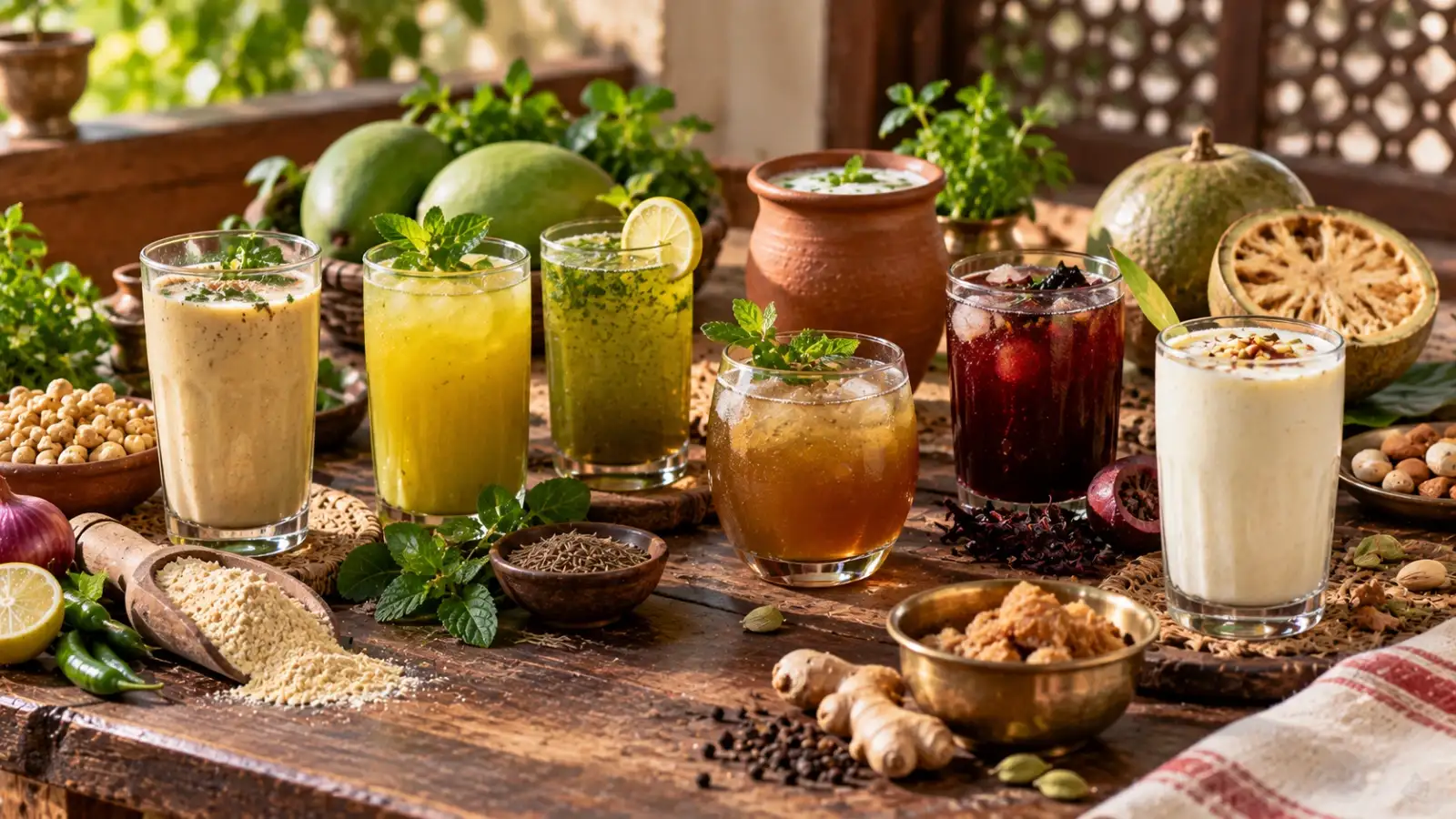
These traditional summer drinks were shaped by local climates, food habits and generations of household knowledge. Many were made with ingredients already available in village kitchens and family gardens. Some were served to guests, while others were prepared daily to accompany meals or provide relief from the intense heat.
From Bihar's earthy sattu sharbat to the tangy aam panna enjoyed across northern and western India, these beverages tell the story of India's relationship with food, weather and regional traditions.
The sweet version may include jaggery or sugar instead of savoury ingredients. Both variations are popular for their simple preparation and filling nature.
Sattu became an important summer drink because roasted gram was easy to store and could be turned into a quick beverage with very little effort. It was especially useful for farmers, labourers and people working outdoors.
The drink reflects a practical food culture in which everyday ingredients were used to create affordable and satisfying refreshments.
The drink is known for its sharp, tangy flavour and refreshing taste. Roasted cumin, black salt and mint are often added to give it a distinctive aroma.
Aam panna is particularly popular in states such as Maharashtra, Uttar Pradesh, Rajasthan and parts of northern India. Families often prepare a concentrated mango mixture that can be stored for later use.
The drink is also associated with the seasonal arrival of raw mangoes. Its popularity shows how Indian kitchens have long used summer produce creatively rather than allowing it to go to waste.
It is usually served chilled and is valued for its sharp, savoury and slightly sour taste. Jaljeera is commonly enjoyed before meals or as a refreshing drink during hot weather.
The use of roasted spices gives it a strong flavour, while mint and other herbs add freshness. In many homes, the spice mixture is prepared in advance and diluted with water whenever needed.
Jaljeera represents the Indian habit of balancing flavours through the use of herbs, spices and souring agents. It is a drink that functions as both a refreshment and a traditional accompaniment to food.
The resulting drink has a distinctive flavour that can be sweet, earthy and slightly tart. It is especially popular in parts of northern, central and eastern India during the warmer months.
Bael fruit also has a place in Indian religious and cultural traditions. Its leaves and fruit are associated with certain Hindu rituals, although the meanings and practices vary between communities.
Bael sharbat highlights the importance of seasonal fruits in traditional Indian kitchens. It also reflects how ingredients with strong local identities become part of everyday summer food.
It is widely consumed across India, with different states offering their own versions. In Gujarat, chaas is often served alongside meals, while in Rajasthan and other parts of western India, spiced buttermilk is a familiar summer beverage.
The drink is easy to prepare and can be adjusted according to taste. Its light texture makes it a popular choice during hot weather.
Chaas also reflects the traditional Indian practice of using dairy products in multiple ways. Instead of discarding the liquid left after churning butter, households could turn it into a useful and refreshing drink.
The dried fruit or kokum concentrate is mixed with water, sugar and sometimes spices to create a drink with a deep colour and tangy flavour.
Kokum grows well in the warm, humid conditions of the western coast and has long been used in regional cooking. Its use in beverages demonstrates how local fruits can become important parts of a region's culinary identity.
Kokum sharbat is often served during summer meals and is also enjoyed as a welcome drink in many coastal households.
It is especially associated with southern India and is commonly prepared during religious festivals, including celebrations connected with Lord Rama in some communities.
The drink has a sweet and mildly spiced flavour. Dry ginger and pepper add warmth, while lemon can provide a refreshing sharpness.
Panakam is a good example of how summer beverages can also carry ritual and cultural significance. It is not merely prepared to quench thirst but is often offered during religious gatherings and shared among visitors.
The drink has a distinctive herbal aroma and is commonly enjoyed during hot weather. Street-side stalls and small beverage shops often serve it during the summer season.
Nannari sharbat reflects the long-standing use of aromatic plants in regional food and drink traditions. Its flavour is different from fruit-based beverages, making it a distinctive part of southern India's summer culture.
As with other traditional drinks, the ingredients and preparation methods may vary from one place to another.
It is widely associated with festivals such as Holi and Mahashivratri, although it may also be prepared on other occasions. The drink has a rich texture and a complex flavour created by the combination of nuts, spices and milk.
Traditional thandai recipes vary considerably. Some are lightly spiced, while others are richer and sweeter.
Its place in Indian festive culture shows how beverages can become closely connected with celebrations, seasonal gatherings and regional food customs.
Roasted gram, raw mangoes, kokum, bael, curd and jaggery were not simply cooking ingredients. They were part of a larger system of seasonal eating in which households made use of what grew nearby.
These drinks also carried social value. They were served to guests, shared during festivals and prepared for family members returning from work or travel.
Although modern beverages offer convenience, traditional drinks continue to attract interest because of their distinctive flavours and cultural connections.
However, these beverages should be prepared with clean water, fresh ingredients and proper hygiene. Drinks containing dairy or freshly prepared fruit pulp should be refrigerated when necessary and consumed safely.
From the nutty taste of sattu to the sharp flavour of aam panna, India's summer drinks offer a refreshing reminder that food traditions often emerge from a close understanding of nature, climate and community life.
These traditional summer drinks were shaped by local climates, food habits and generations of household knowledge. Many were made with ingredients already available in village kitchens and family gardens. Some were served to guests, while others were prepared daily to accompany meals or provide relief from the intense heat.
From Bihar's earthy sattu sharbat to the tangy aam panna enjoyed across northern and western India, these beverages tell the story of India's relationship with food, weather and regional traditions.
1. Sattu Sharbat and the Everyday Wisdom of Bihar
Sattu sharbat is closely associated with Bihar and parts of eastern and northern India. It is generally made by mixing roasted gram flour with water, salt, lemon juice, roasted cumin and sometimes chopped onions or green chillies.The sweet version may include jaggery or sugar instead of savoury ingredients. Both variations are popular for their simple preparation and filling nature.
Sattu became an important summer drink because roasted gram was easy to store and could be turned into a quick beverage with very little effort. It was especially useful for farmers, labourers and people working outdoors.
The drink reflects a practical food culture in which everyday ingredients were used to create affordable and satisfying refreshments.
2. Aam Panna and the Flavour of Raw Mangoes
Aam panna is one of India's best-known traditional summer beverages. It is prepared using raw mangoes, which are cooked or roasted before their pulp is blended with water, sugar or jaggery, salt and spices.The drink is known for its sharp, tangy flavour and refreshing taste. Roasted cumin, black salt and mint are often added to give it a distinctive aroma.
Aam panna is particularly popular in states such as Maharashtra, Uttar Pradesh, Rajasthan and parts of northern India. Families often prepare a concentrated mango mixture that can be stored for later use.
The drink is also associated with the seasonal arrival of raw mangoes. Its popularity shows how Indian kitchens have long used summer produce creatively rather than allowing it to go to waste.
3. Jaljeera and India's Love for Spiced Drinks
Jaljeera is a spiced beverage traditionally made with roasted cumin, mint, coriander, black salt, tamarind, dry mango powder and other ingredients. Recipes differ across households and regions.It is usually served chilled and is valued for its sharp, savoury and slightly sour taste. Jaljeera is commonly enjoyed before meals or as a refreshing drink during hot weather.
The use of roasted spices gives it a strong flavour, while mint and other herbs add freshness. In many homes, the spice mixture is prepared in advance and diluted with water whenever needed.
Jaljeera represents the Indian habit of balancing flavours through the use of herbs, spices and souring agents. It is a drink that functions as both a refreshment and a traditional accompaniment to food.
4. Bael Sharbat and the Fruit of Summer
Bael sharbat is made from the pulp of the bael fruit, which has been used in several parts of India for generations. The fruit has a hard shell and a naturally aromatic pulp that is mixed with water, sugar or jaggery.The resulting drink has a distinctive flavour that can be sweet, earthy and slightly tart. It is especially popular in parts of northern, central and eastern India during the warmer months.
Bael fruit also has a place in Indian religious and cultural traditions. Its leaves and fruit are associated with certain Hindu rituals, although the meanings and practices vary between communities.
Bael sharbat highlights the importance of seasonal fruits in traditional Indian kitchens. It also reflects how ingredients with strong local identities become part of everyday summer food.
5. Chaas and the Tradition of Buttermilk
Chaas, also known as mattha in some regions, is a simple drink made by blending curd with water. It may be seasoned with salt, roasted cumin, ginger, curry leaves, coriander or green chillies.It is widely consumed across India, with different states offering their own versions. In Gujarat, chaas is often served alongside meals, while in Rajasthan and other parts of western India, spiced buttermilk is a familiar summer beverage.
The drink is easy to prepare and can be adjusted according to taste. Its light texture makes it a popular choice during hot weather.
Chaas also reflects the traditional Indian practice of using dairy products in multiple ways. Instead of discarding the liquid left after churning butter, households could turn it into a useful and refreshing drink.
6. Kokum Sharbat from the Konkan Coast
Kokum sharbat is particularly associated with the Konkan region, including parts of Maharashtra, Goa and Karnataka. It is made from kokum, a deep purple fruit that is commonly used as a souring agent in coastal cuisine.The dried fruit or kokum concentrate is mixed with water, sugar and sometimes spices to create a drink with a deep colour and tangy flavour.
Kokum grows well in the warm, humid conditions of the western coast and has long been used in regional cooking. Its use in beverages demonstrates how local fruits can become important parts of a region's culinary identity.
Kokum sharbat is often served during summer meals and is also enjoyed as a welcome drink in many coastal households.
7. Panakam and South India's Festive Tradition
Panakam is a traditional drink made using jaggery, water, dry ginger, black pepper and cardamom. Some versions also include lemon juice.It is especially associated with southern India and is commonly prepared during religious festivals, including celebrations connected with Lord Rama in some communities.
The drink has a sweet and mildly spiced flavour. Dry ginger and pepper add warmth, while lemon can provide a refreshing sharpness.
Panakam is a good example of how summer beverages can also carry ritual and cultural significance. It is not merely prepared to quench thirst but is often offered during religious gatherings and shared among visitors.
8. Nannari Sharbat and the Flavours of Tamil Nadu
Nannari sharbat is a popular traditional beverage in parts of southern India, particularly Tamil Nadu and Kerala. It is prepared using syrup made from the roots of the Indian sarsaparilla plant, which is mixed with water, ice and often lemon juice.The drink has a distinctive herbal aroma and is commonly enjoyed during hot weather. Street-side stalls and small beverage shops often serve it during the summer season.
Nannari sharbat reflects the long-standing use of aromatic plants in regional food and drink traditions. Its flavour is different from fruit-based beverages, making it a distinctive part of southern India's summer culture.
As with other traditional drinks, the ingredients and preparation methods may vary from one place to another.
9. Thandai and the Seasonal Role of Spices
Thandai is a milk-based drink prepared using ingredients such as almonds, fennel seeds, melon seeds, black pepper, cardamom and saffron. Some recipes also include rose petals or other aromatic ingredients.It is widely associated with festivals such as Holi and Mahashivratri, although it may also be prepared on other occasions. The drink has a rich texture and a complex flavour created by the combination of nuts, spices and milk.
Traditional thandai recipes vary considerably. Some are lightly spiced, while others are richer and sweeter.
Its place in Indian festive culture shows how beverages can become closely connected with celebrations, seasonal gatherings and regional food customs.
Why Traditional Summer Drinks Matter
Traditional Indian summer drinks are more than simple refreshments. They reveal how earlier generations adapted their food habits to local weather and available ingredients.Roasted gram, raw mangoes, kokum, bael, curd and jaggery were not simply cooking ingredients. They were part of a larger system of seasonal eating in which households made use of what grew nearby.
These drinks also carried social value. They were served to guests, shared during festivals and prepared for family members returning from work or travel.
Although modern beverages offer convenience, traditional drinks continue to attract interest because of their distinctive flavours and cultural connections.
Bringing India's Summer Drink Traditions Back
Preparing traditional summer drinks at home can be a simple way to reconnect with regional food heritage. It also encourages people to explore ingredients that may be overlooked in modern kitchens.However, these beverages should be prepared with clean water, fresh ingredients and proper hygiene. Drinks containing dairy or freshly prepared fruit pulp should be refrigerated when necessary and consumed safely.
From the nutty taste of sattu to the sharp flavour of aam panna, India's summer drinks offer a refreshing reminder that food traditions often emerge from a close understanding of nature, climate and community life.
Next Story