
From Sarson Ka Saag to Gajar Ka Halwa: 10 Indian Foods to Enjoy This Winter

Winter brings a special charm to Indian kitchens, where seasonal vegetables, warming spices and traditional recipes become part of everyday meals. From rich lentil preparations to wholesome millet rotis and comforting desserts, many regional dishes are enjoyed particularly during colder months. These foods offer a combination of flavour, energy and nutrients that can make winter meals more satisfying. Several recipes also use seasonal ingredients such as carrots, mustard greens, sesame seeds and jaggery. If you enjoy traditional Indian cooking, here are ten winter favourites worth adding to your seasonal food list.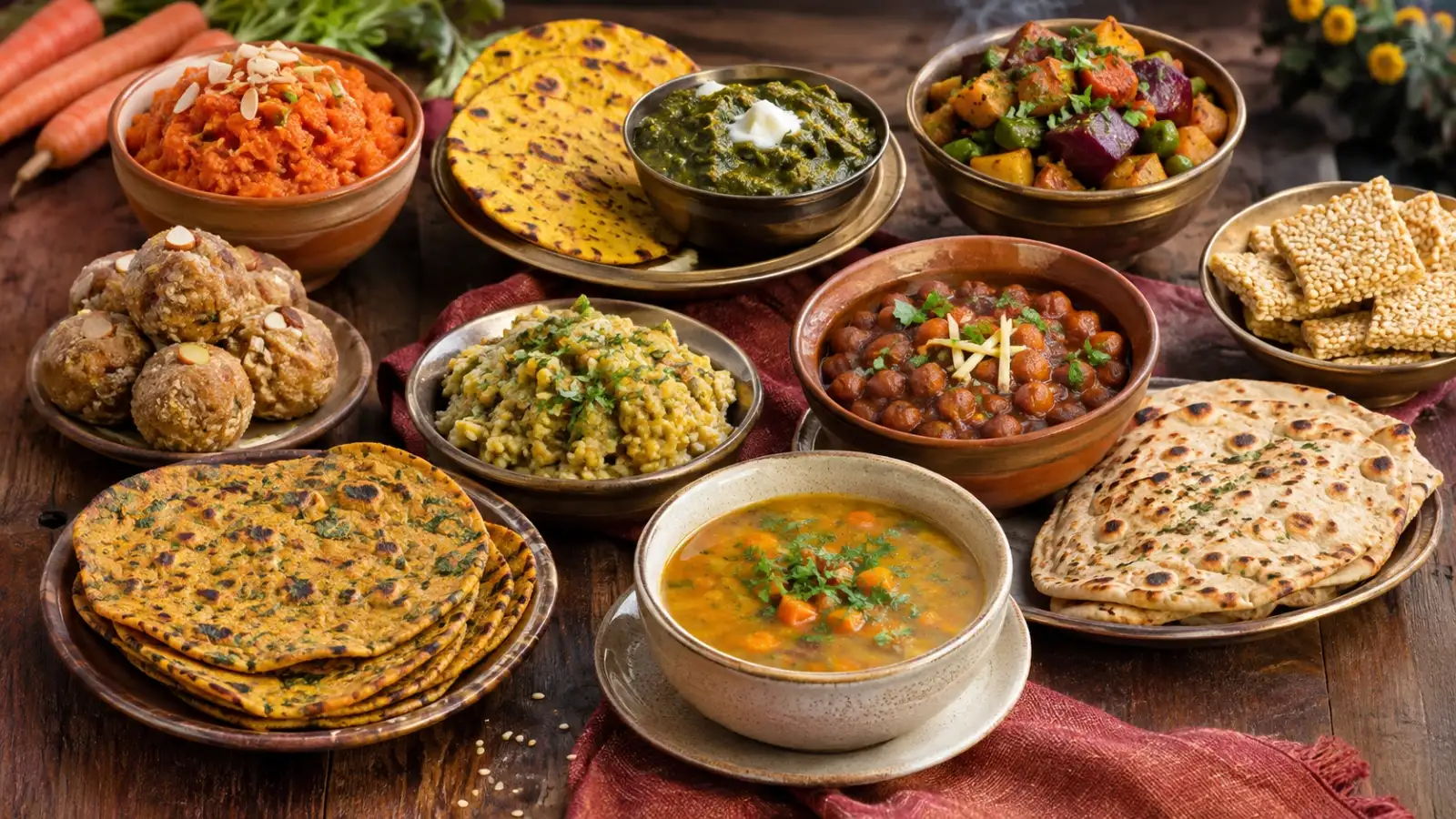
It is traditionally served with maize flour flatbread, homemade white butter and sometimes jaggery. Mustard greens provide vitamins, minerals and fibre, while makki ki roti makes the meal filling. This combination is especially popular during the winter harvest season.
Chopped almonds, cashews and pistachios are often added for extra flavour and texture. Since fresh red carrots are widely available during winter in North India, this dessert becomes a seasonal favourite in many households.
Bajra contains fibre, protein and minerals such as iron and magnesium. The dish is often served with homemade ghee, curd or garlic chutney. Its hearty texture makes it a satisfying option for cold afternoons and evenings.
The vegetables are cooked with a flavourful mixture of coconut, coriander, green chillies and aromatic spices. Undhiyu is often enjoyed with puris or rotis, particularly during the winter festival of Uttarayan. It is a wonderful way to bring several seasonal vegetables together in one meal.
Sesame seeds provide healthy fats, calcium and other minerals, while jaggery adds natural sweetness. The mixture is heated until the jaggery reaches the right consistency and then shaped into small round ladoos. These sweets are energy-dense, so enjoying them in moderate portions is sensible.
Gajak is usually made by combining sesame seeds with a thin, crisp sweet mixture, while rewari consists of small crunchy sesame-based pieces. These traditional snacks are widely associated with winter festivals and seasonal markets.
The chickpeas are cooked with tea or other traditional ingredients to develop their darker appearance, then mixed with spices such as cumin, coriander, amchur and garam masala. Served with kulcha, roti or rice, it makes a satisfying winter meal.
Theplas are easy to prepare and can be enjoyed for breakfast, lunch or travel meals. They are commonly served with curd, pickle or homemade chutney. Fenugreek leaves add flavour along with fibre and several micronutrients.
The edible gum puffs up when fried in ghee and gives the ladoos their characteristic texture. These sweets are calorie-dense and traditionally considered warming foods. They are best enjoyed in small portions as part of a balanced diet.
Cook the ingredients with cumin, ginger, garlic and black pepper, then blend them partially or completely according to your preferred texture. Lentils provide plant-based protein and fibre, while vegetables add vitamins and minerals. It makes a light yet satisfying option for chilly evenings.
These foods can provide fibre, protein, healthy fats and essential micronutrients. However, their nutritional value depends on ingredients and cooking methods. Ghee-rich sweets and fried snacks are best enjoyed in moderation, while seasonal vegetables, millets and lentil-based dishes can form regular parts of a balanced diet.
Traditional Indian winter foods offer a delicious combination of seasonal ingredients, regional flavours and comforting recipes. From sarson ka saag and bajra khichdi to til ke ladoo and gajar ka halwa, these dishes reflect India's diverse food traditions. You can enjoy them at home by choosing fresh seasonal ingredients and balancing richer preparations with vegetables, whole grains and lentils. This winter, explore different regional favourites and bring more variety to your everyday meals.
1. Sarson Ka Saag with Makki Ki Roti
Sarson ka saag with makki ki roti is one of the most loved winter combinations in Punjab and several other parts of North India. Prepared using mustard greens, spinach and other leafy vegetables, the saag has a rich texture and distinctive flavour.It is traditionally served with maize flour flatbread, homemade white butter and sometimes jaggery. Mustard greens provide vitamins, minerals and fibre, while makki ki roti makes the meal filling. This combination is especially popular during the winter harvest season.
2. Gajar Ka Halwa
Gajar ka halwa is a classic Indian winter dessert prepared using fresh red carrots. The grated carrots are slowly cooked with milk, ghee, sugar and cardamom until the mixture becomes rich and aromatic.Chopped almonds, cashews and pistachios are often added for extra flavour and texture. Since fresh red carrots are widely available during winter in North India, this dessert becomes a seasonal favourite in many households.
3. Bajra Khichdi
Bajra khichdi is a traditional winter meal enjoyed in Rajasthan, Haryana and parts of North India. It is generally prepared using pearl millet and moong dal, cooked together with spices until soft.Bajra contains fibre, protein and minerals such as iron and magnesium. The dish is often served with homemade ghee, curd or garlic chutney. Its hearty texture makes it a satisfying option for cold afternoons and evenings.
4. Undhiyu
Undhiyu is a popular Gujarati winter speciality prepared using a variety of seasonal vegetables. Traditional versions may include purple yam, sweet potatoes, green beans, brinjal and fenugreek dumplings.The vegetables are cooked with a flavourful mixture of coconut, coriander, green chillies and aromatic spices. Undhiyu is often enjoyed with puris or rotis, particularly during the winter festival of Uttarayan. It is a wonderful way to bring several seasonal vegetables together in one meal.
5. Til Ke Ladoo
Til ke ladoo are traditional winter sweets made using sesame seeds and jaggery. They are especially popular during Makar Sankranti and other winter celebrations across different parts of India.Sesame seeds provide healthy fats, calcium and other minerals, while jaggery adds natural sweetness. The mixture is heated until the jaggery reaches the right consistency and then shaped into small round ladoos. These sweets are energy-dense, so enjoying them in moderate portions is sensible.
6. Gajak and Rewari
Gajak and rewari are popular North Indian winter treats, particularly in Rajasthan, Uttar Pradesh, Haryana and Delhi. Both are commonly prepared using sesame seeds and jaggery or sugar.Gajak is usually made by combining sesame seeds with a thin, crisp sweet mixture, while rewari consists of small crunchy sesame-based pieces. These traditional snacks are widely associated with winter festivals and seasonal markets.
7. Pindi Chole
Pindi chole is a flavourful Punjabi chickpea preparation known for its deep colour and aromatic spice blend. Unlike some other chickpea curries, it is traditionally prepared without a tomato-heavy gravy.You may also like
- Ola, Uber, and Rapido will no longer ask for a tip before a ride; the government has imposed a fine of ₹10 lakh on Ola..
- Dev Uthani Ekadashi 2026: Date, Significance and 7 Auspicious Tulsi Rituals to Follow
- Will salaries and pensions increase every 5 years under the 8th Pay Commission? Demand raised to change the existing 10-year rule..
- Limit set for government employees on the purchase of new cars; budget for EVs doubled..
- Maximum Returns on 18-Month FDs: Federal Bank Hikes Interest Rates
The chickpeas are cooked with tea or other traditional ingredients to develop their darker appearance, then mixed with spices such as cumin, coriander, amchur and garam masala. Served with kulcha, roti or rice, it makes a satisfying winter meal.
8. Methi Thepla
Methi thepla is a popular Gujarati flatbread prepared using whole wheat flour, fresh fenugreek leaves, yoghurt and spices. Fresh methi is widely used in winter cooking, making this a convenient seasonal recipe.Theplas are easy to prepare and can be enjoyed for breakfast, lunch or travel meals. They are commonly served with curd, pickle or homemade chutney. Fenugreek leaves add flavour along with fibre and several micronutrients.
9. Gond Ke Ladoo
Gond ke ladoo are traditional North Indian sweets often prepared during winter, particularly in households that follow seasonal food traditions. They generally contain edible gum, wheat flour, ghee, nuts and jaggery or sugar.The edible gum puffs up when fried in ghee and gives the ladoos their characteristic texture. These sweets are calorie-dense and traditionally considered warming foods. They are best enjoyed in small portions as part of a balanced diet.
10. Vegetable and Dal Soup
A warm bowl of vegetable and dal soup is a simple winter comfort food that can be prepared with ingredients commonly found in Indian kitchens. It can include lentils, carrots, tomatoes, spinach, bottle gourd and seasonal vegetables.Cook the ingredients with cumin, ginger, garlic and black pepper, then blend them partially or completely according to your preferred texture. Lentils provide plant-based protein and fibre, while vegetables add vitamins and minerals. It makes a light yet satisfying option for chilly evenings.
Why Traditional Indian Winter Foods Are Popular
Many traditional winter recipes are built around ingredients that are readily available during the season. Mustard greens, fresh fenugreek, carrots, sesame seeds, pearl millet and jaggery feature in several regional preparations.These foods can provide fibre, protein, healthy fats and essential micronutrients. However, their nutritional value depends on ingredients and cooking methods. Ghee-rich sweets and fried snacks are best enjoyed in moderation, while seasonal vegetables, millets and lentil-based dishes can form regular parts of a balanced diet.
Traditional Indian winter foods offer a delicious combination of seasonal ingredients, regional flavours and comforting recipes. From sarson ka saag and bajra khichdi to til ke ladoo and gajar ka halwa, these dishes reflect India's diverse food traditions. You can enjoy them at home by choosing fresh seasonal ingredients and balancing richer preparations with vegetables, whole grains and lentils. This winter, explore different regional favourites and bring more variety to your everyday meals.






Loving Newspoint? Download the app now
