
10 Simple Lifestyle Changes to Reduce Air Pollution at Home

Most people think of air pollution as something that happens outside, on highways, near factories, in city smog. But the air inside a home can carry higher concentrations of harmful particles than the street below the window. Cooking smoke, synthetic fragrances, dust mites, mould spores, and off-gassing from furniture all build up in enclosed spaces. The good news is that the same enclosed space gives you control that no one has over outdoor air.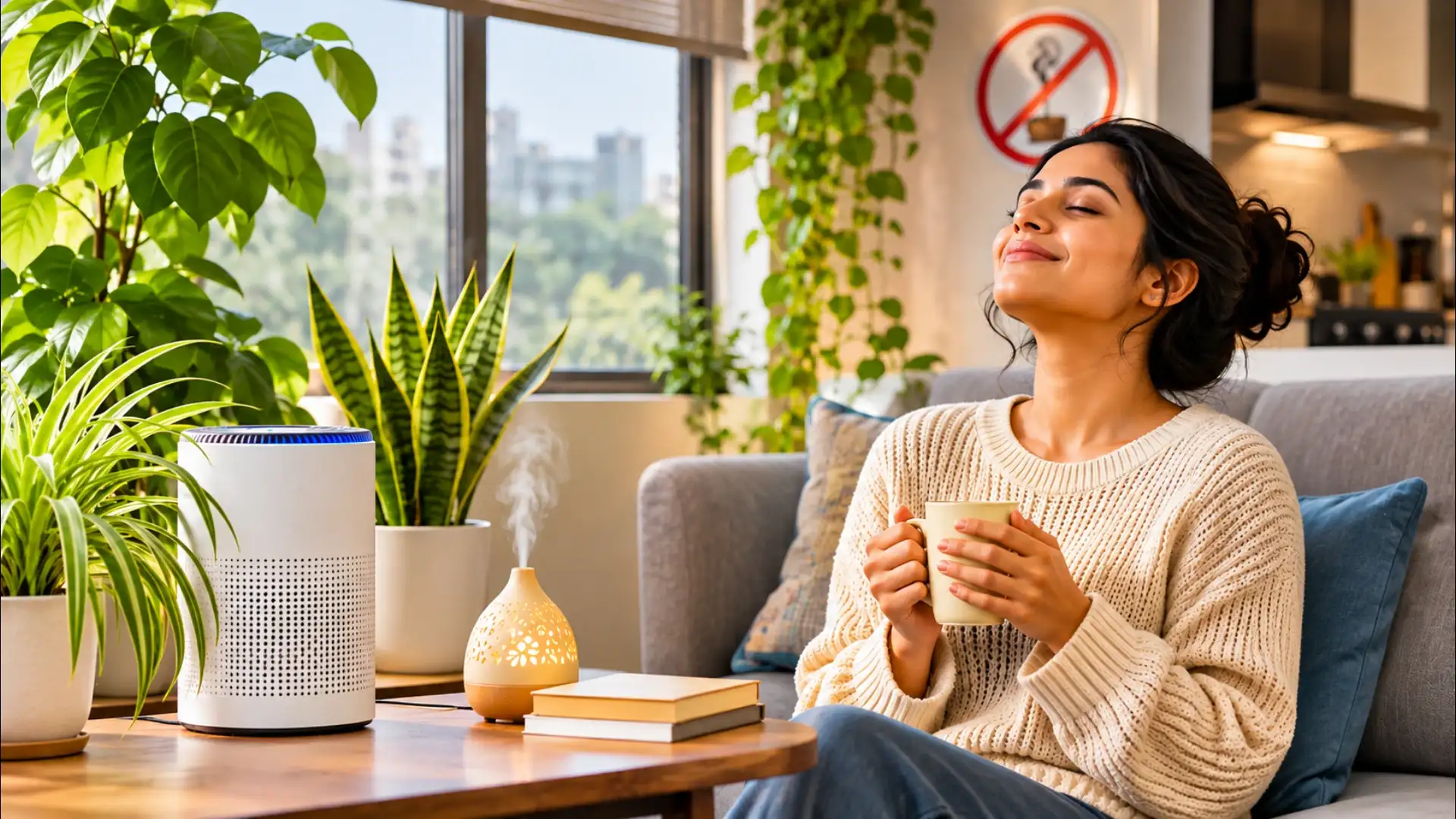
Indoor air quality is not one problem with one fix. It is a set of small, overlapping sources that each add a little. Cut enough of them and the total load on the air inside drops to something the body handles without effort. None of these changes requires equipment or expense, they require noticing what was already there.
Switch to a Pressure Cooker or Covered Pan
Open-flame cooking on a gas stove releases nitrogen dioxide and fine particulate matter directly into the kitchen. A pressure cooker or a tightly covered pan keeps the heat contained, cuts cooking time, and releases far less smoke into the room. If you cook on an open tawa or kadai daily, a simple splatter lid is not just about mess, it reduces the aerosol of oil particles that float into the air and settle in your lungs.Run the Kitchen Exhaust Fan Every Single Time
An exhaust fan that gets switched on only when something burns is doing a fraction of its job. Cooking releases particles from the very first minute of heat, long before any visible smoke appears. Switch the fan on before you light the flame and leave it running for five minutes after you finish. If your kitchen has a window instead of a fan, open it on the opposite side of the room from the stove to create a cross-draft that pulls the smoke out rather than just stirring it around.Replace Synthetic Air Fresheners with Ventilation
Aerosol sprays and plug-in fresheners work by releasing volatile organic compounds, chemicals that evaporate at room temperature and stay suspended in the air you breathe. They do not remove odour; they mask it with more chemicals. The actual fix for a stale room is airflow. Open two windows on opposite walls for ten minutes. A small bowl of baking soda near a bin absorbs odour without adding anything to the air. Dried neem leaves or cloves in a corner do the same and have been used in Indian homes for generations.Dust with a Damp Cloth, Not a Dry One
A dry duster lifts particles off a surface and releases them into the air, where they stay suspended for hours. A damp cloth picks them up and holds them. This one change cuts the amount of fine dust circulating in a room more than any air freshener can. Wash the cloth after each use rather than shaking it out indoors.You may also like
- Psychology says people who buy notebooks and fancy pens despite having smartphones and laptops may have a deeper connection with writing than they realise
- New Urine Test Detects 95% of Bladder Cancer Cases in Study, Raising Hope for Early Diagnosis
- Government Proposes Tougher Action Against Substandard Medicines to Strengthen Drug Safety
- Rushing Into a Relationship? Notice These 7 Signs
- Wearing Tight Clothes Every Day? Avoid These 7 Habits
Take Off Footwear at the Door
Shoes carry in pesticides, lead dust, pollen, and whatever the pavement outside holds. Studies on indoor dust consistently find that a significant share of indoor particulate matter arrives on the soles of shoes. A dedicated spot at the door, a rack, a mat, a small basket, and the habit of removing footwear before stepping in reduces what enters the home before it has a chance to circulate.Choose Low-VOC Paints and Finishes
Freshly painted walls off-gas for weeks after the paint dries. Furniture made with pressed wood and synthetic adhesives does the same, sometimes for months. When repainting or buying new furniture, low-VOC or zero-VOC options are now widely available and cost roughly the same as conventional ones. After any painting, keep windows open for as long as the smell persists, that smell is the chemical leaving the surface and entering your lungs.Keep Indoor Plants That Actually Help
The claim that houseplants clean indoor air is often overstated, you would need hundreds of plants in a sealed room to match what a single open window does. But plants do contribute, and certain ones more than others. Money plant, spider plant, and snake plant are commonly kept in Indian homes and are among those studied for absorbing formaldehyde and benzene. Keep them in rooms where ventilation is limited, such as bedrooms with windows that stay closed at night. Water them correctly, an overwatered pot grows mould, which adds to indoor pollution rather than reducing it.Avoid Burning Incense Sticks Indoors for Long Periods
Agarbatti is a part of daily ritual in many Indian homes, and this is not an argument against it. But burning multiple sticks in a small, closed room for extended periods releases fine particles and carbon monoxide at levels that build up quickly. Light one stick, keep a window cracked, and let the room air out after the ritual. The practice stays intact; the air stays cleaner.Wash Bedding and Curtains Regularly
Fabric holds dust, dead skin cells, and mould spores. Curtains in particular act as filters, they catch what floats in from outside and then release it back into the room every time someone walks past or opens a window. Washing curtains once a month and bedsheets once a week in warm water removes the accumulated load before it becomes a source of its own. Dry them in sunlight where possible; sunlight kills dust mites that survive a cold wash.Fix Damp Before It Becomes Mould
A water stain on a ceiling, a corner that stays wet after rain, a bathroom wall that never fully dries, each of these is a mould colony waiting to establish itself. Mould releases spores into the air continuously, and those spores are among the most persistent indoor pollutants, particularly for anyone with asthma or allergies. Seal the leak, improve ventilation in the bathroom, and use a squeegee on wet tiles after a shower. The intervention costs almost nothing. The alternative, a wall that needs replastering and lungs that have been breathing spores for a season, costs considerably more.Indoor air quality is not one problem with one fix. It is a set of small, overlapping sources that each add a little. Cut enough of them and the total load on the air inside drops to something the body handles without effort. None of these changes requires equipment or expense, they require noticing what was already there.






Loving Newspoint? Download the app now
