
Sivasagar Travel Guide: 8 Fascinating Attractions That Reveal Assam's Royal Past

Sivasagar is one of Assam's most historically significant destinations, offering a fascinating glimpse into the legacy of the Ahom dynasty. Once the capital of the Ahom Kingdom, the town is known for its centuries-old temples, royal palaces, massive tanks and distinctive architecture. Its historic monuments reflect the cultural and engineering achievements of a kingdom that ruled much of Assam for nearly 600 years. Located in Upper Assam, Sivasagar is an interesting destination for travellers who enjoy history, architecture and local culture. From the impressive Rang Ghar to the peaceful Sivasagar Tank, here is what you can explore.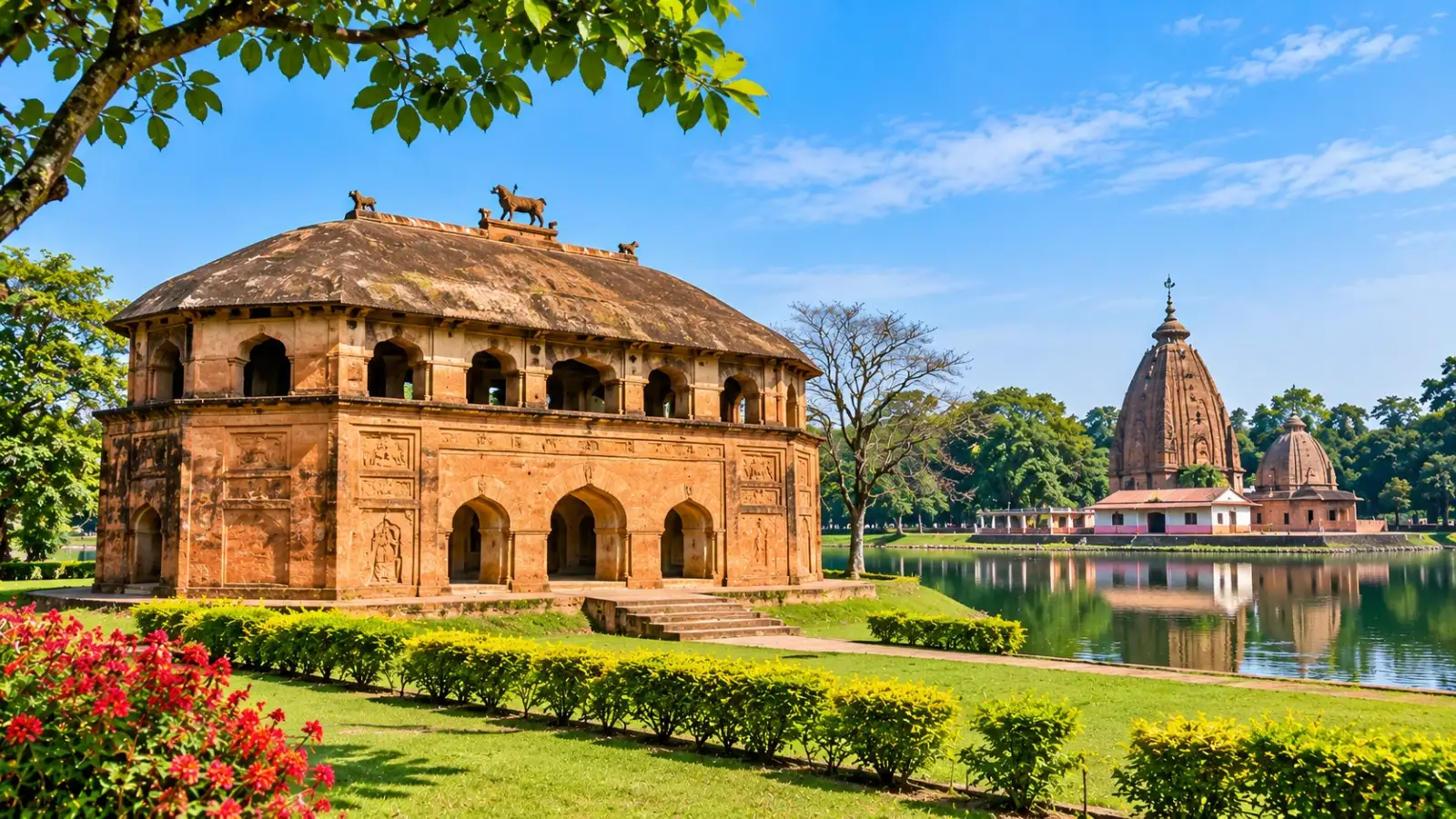
1. Rang Ghar
Rang Ghar is among the most recognisable historical monuments in Sivasagar. Built during the reign of Ahom king Swargadeo Pramatta Singha in the 18th century, it is often described as one of Asia's oldest surviving amphitheatres.
The two-storey structure was used by Ahom royalty to watch traditional sports and cultural events, including buffalo fights and other festivities. Its distinctive roof resembles an inverted boat, while its architectural design reflects the craftsmanship of the Ahom period.
2. Talatal Ghar
Talatal Ghar is an important part of the Rangpur palace complex and one of the most impressive examples of Ahom architecture. It was developed during the reign of King Rajeshwar Singha in the 18th century.
The structure is notable for its multiple levels, including underground sections that are associated with the military and administrative functions of the kingdom. Although not every part is accessible to visitors, exploring its historic chambers and surviving architectural features offers an insight into the royal lifestyle and defensive planning of the Ahoms.
3. Sivadol Temple
Sivadol is one of the most prominent religious landmarks in Sivasagar. Located beside the Sivasagar Tank, this historic Shiva temple was built in 1734 by Queen Ambika, the wife of Ahom king Swargadeo Siva Singha.
Its tall shikhara, traditional temple architecture and detailed decorative elements make it an important example of the region's religious heritage. The temple remains an active place of worship and attracts devotees throughout the year, particularly during festivals such as Maha Shivaratri.
4. Sivasagar Tank
The Sivasagar Tank, also known as Borpukhuri, is a large artificial reservoir constructed during the Ahom period. It was developed alongside important religious structures and remains one of the town's most recognisable landmarks.
The tank is surrounded by historic buildings, including Sivadol, Vishnudol and Devidol. Its peaceful waterfront setting makes it a pleasant place for a walk, while the surrounding monuments provide opportunities to learn about the town's history and traditional engineering.
5. Joysagar Tank and Temples
Joysagar is another remarkable example of the Ahom dynasty's water-management and construction skills. Located near Sivasagar town, the large tank was built by Ahom king Swargadeo Rudra Singha in memory of his mother, Joymoti.
Several historic temples stand around the reservoir, including the Joydol complex. The open surroundings and water views make it an interesting place to explore, particularly for travellers interested in the religious and architectural traditions of Assam.
6. Gargaon Kareng Ghar
Located around 15 kilometres from Sivasagar, Kareng Ghar was an important royal palace of the Ahom kings at Gargaon. The original palace complex was built during the reign of Swargadeo Suklenmung in the 16th century and later underwent several changes.
The surviving structure offers a glimpse into the royal architecture of the Ahom period. Its brick construction, historic setting and association with the kingdom's administration make it a worthwhile excursion from Sivasagar.
7. Charaideo Maidams
Charaideo, located around 30 kilometres from Sivasagar, is one of the most important historical sites associated with the Ahom dynasty. It is famous for its maidams, which are burial mounds built for Ahom royalty and other members of the ruling elite.
These structures resemble earthen mounds and reflect the burial traditions and beliefs of the Ahom community. Charaideo Maidams were inscribed on the UNESCO World Heritage List in 2024, recognising their exceptional cultural importance.
8. Devidol and Vishnudol
Devidol and Vishnudol are two historic temples located beside the Sivasagar Tank. Built during the Ahom period, they form part of the town's important religious and architectural heritage.
Devidol is dedicated to Goddess Durga, while Vishnudol is associated with Lord Vishnu. Their traditional designs and proximity to Sivadol make it convenient for visitors to explore all three temples during the same outing.
Best Time to Visit Sivasagar
The best time to explore Sivasagar is generally from October to March, when the weather is comparatively pleasant for sightseeing. Winter is particularly suitable for visiting historical monuments, temples and nearby attractions. The Bihu festivals and other local celebrations also offer opportunities to experience Assamese culture. Monsoon months bring heavy rainfall to Assam, which can make outdoor travel and sightseeing less convenient.
How to Reach Sivasagar
Sivasagar is connected to other parts of Assam by road and rail. The nearest major airport is Jorhat Airport, while Dibrugarh Airport is another option for travellers arriving by air. Simaluguri Junction is an important railway station serving the area. Taxis and local transport can be used to reach the town's main attractions and nearby historical sites.
1. Rang Ghar
Rang Ghar is among the most recognisable historical monuments in Sivasagar. Built during the reign of Ahom king Swargadeo Pramatta Singha in the 18th century, it is often described as one of Asia's oldest surviving amphitheatres.
The two-storey structure was used by Ahom royalty to watch traditional sports and cultural events, including buffalo fights and other festivities. Its distinctive roof resembles an inverted boat, while its architectural design reflects the craftsmanship of the Ahom period.
2. Talatal Ghar
Talatal Ghar is an important part of the Rangpur palace complex and one of the most impressive examples of Ahom architecture. It was developed during the reign of King Rajeshwar Singha in the 18th century.
The structure is notable for its multiple levels, including underground sections that are associated with the military and administrative functions of the kingdom. Although not every part is accessible to visitors, exploring its historic chambers and surviving architectural features offers an insight into the royal lifestyle and defensive planning of the Ahoms.
3. Sivadol Temple
Sivadol is one of the most prominent religious landmarks in Sivasagar. Located beside the Sivasagar Tank, this historic Shiva temple was built in 1734 by Queen Ambika, the wife of Ahom king Swargadeo Siva Singha.
Its tall shikhara, traditional temple architecture and detailed decorative elements make it an important example of the region's religious heritage. The temple remains an active place of worship and attracts devotees throughout the year, particularly during festivals such as Maha Shivaratri.
4. Sivasagar Tank
The Sivasagar Tank, also known as Borpukhuri, is a large artificial reservoir constructed during the Ahom period. It was developed alongside important religious structures and remains one of the town's most recognisable landmarks.
The tank is surrounded by historic buildings, including Sivadol, Vishnudol and Devidol. Its peaceful waterfront setting makes it a pleasant place for a walk, while the surrounding monuments provide opportunities to learn about the town's history and traditional engineering.
5. Joysagar Tank and Temples
Joysagar is another remarkable example of the Ahom dynasty's water-management and construction skills. Located near Sivasagar town, the large tank was built by Ahom king Swargadeo Rudra Singha in memory of his mother, Joymoti.
Several historic temples stand around the reservoir, including the Joydol complex. The open surroundings and water views make it an interesting place to explore, particularly for travellers interested in the religious and architectural traditions of Assam.
6. Gargaon Kareng Ghar
Located around 15 kilometres from Sivasagar, Kareng Ghar was an important royal palace of the Ahom kings at Gargaon. The original palace complex was built during the reign of Swargadeo Suklenmung in the 16th century and later underwent several changes.
The surviving structure offers a glimpse into the royal architecture of the Ahom period. Its brick construction, historic setting and association with the kingdom's administration make it a worthwhile excursion from Sivasagar.
You may also like
- Priyanka Chopra takes Malti on a wildlife adventure at a zoo, where feeding kangaroos and cuddling koalas become lessons in curiosity and how parents can teach children to love and respect animals
- Can Babies Wear Woollen Clothes Directly?
- 8th Pay Commission: Will everyone receive Rs 3.4 lakh? Major revelation in a report
- Canceling a GST registration will become easier starting December 1—no need for official approval!
- Sleep Debt and What It Actually Costs a Training Week
7. Charaideo Maidams
Charaideo, located around 30 kilometres from Sivasagar, is one of the most important historical sites associated with the Ahom dynasty. It is famous for its maidams, which are burial mounds built for Ahom royalty and other members of the ruling elite.
These structures resemble earthen mounds and reflect the burial traditions and beliefs of the Ahom community. Charaideo Maidams were inscribed on the UNESCO World Heritage List in 2024, recognising their exceptional cultural importance.
8. Devidol and Vishnudol
Devidol and Vishnudol are two historic temples located beside the Sivasagar Tank. Built during the Ahom period, they form part of the town's important religious and architectural heritage.
Devidol is dedicated to Goddess Durga, while Vishnudol is associated with Lord Vishnu. Their traditional designs and proximity to Sivadol make it convenient for visitors to explore all three temples during the same outing.
Best Time to Visit Sivasagar
The best time to explore Sivasagar is generally from October to March, when the weather is comparatively pleasant for sightseeing. Winter is particularly suitable for visiting historical monuments, temples and nearby attractions. The Bihu festivals and other local celebrations also offer opportunities to experience Assamese culture. Monsoon months bring heavy rainfall to Assam, which can make outdoor travel and sightseeing less convenient.
How to Reach Sivasagar
Sivasagar is connected to other parts of Assam by road and rail. The nearest major airport is Jorhat Airport, while Dibrugarh Airport is another option for travellers arriving by air. Simaluguri Junction is an important railway station serving the area. Taxis and local transport can be used to reach the town's main attractions and nearby historical sites.






Loving Newspoint? Download the app now
