
A Travel Guide to Petra in Jordan: Explore the Ancient Rose-Red City Carved into Rock

Petra, located in southern Jordan, is one of the world's most remarkable archaeological destinations. Known as the Rose City because of the pink and reddish shades of its sandstone cliffs, this ancient settlement is famous for its impressive buildings carved directly into rock. Once an important centre of trade for the Nabataean civilisation , Petra attracted merchants travelling between Arabia, Egypt and the Mediterranean. Today, its monumental tombs, temples, narrow passageways and mountain landscapes draw visitors from around the world. Whether you enjoy history, architecture or adventure, Petra offers an unforgettable journey into the past.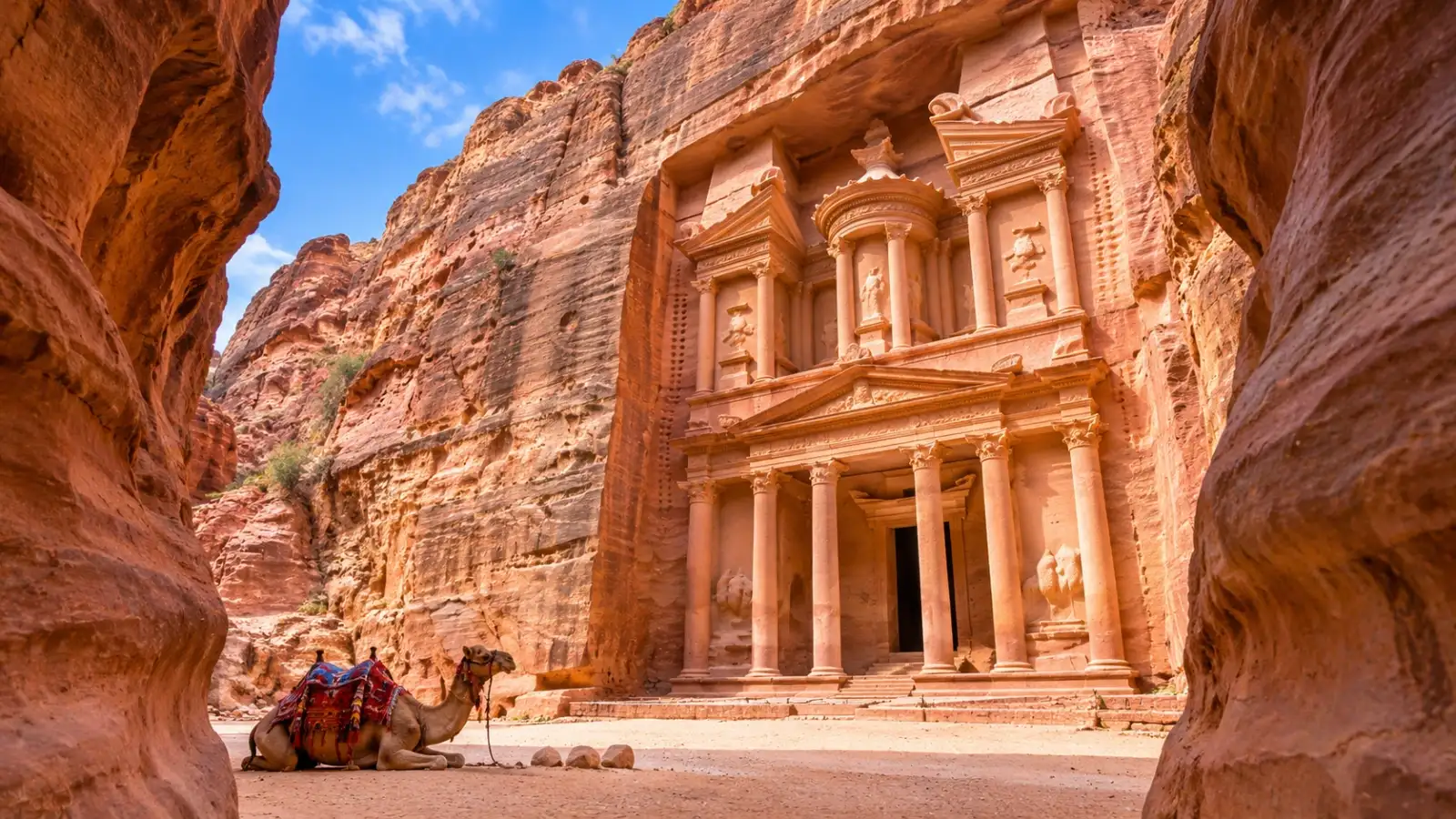
1. The Treasury: Petra's Most Recognisable Landmark
One of Petra's most photographed monuments is Al-Khazneh, commonly known as the Treasury. It stands at the end of the narrow Siq, a dramatic natural gorge that serves as the main entrance to the archaeological site.
The Treasury features an elaborate sandstone façade decorated with columns, sculptures and classical architectural details. Despite its name, it was not necessarily built to store treasure. Archaeologists generally identify it as a royal tomb, although its exact original purpose remains debated.
2. Walk Through the Siq
The Siq is a narrow, winding gorge stretching for approximately 1.2 kilometres. Its towering sandstone walls create an impressive approach to Petra's main archaeological area.
Walking through this passage is an experience in itself. The changing colours, natural rock formations and occasional glimpses of ancient water channels reveal how the Nabataeans adapted to their challenging desert environment.
3. Explore the Monastery
Ad-Deir, commonly called the Monastery, is another major highlight. Reaching it involves climbing hundreds of rock-cut steps, so comfortable footwear and sufficient drinking water are essential.
The monument has a large carved façade and stands in a dramatic mountain setting. Despite its name, it is generally believed to have served a religious or ceremonial purpose rather than functioning as a monastery.
4. Discover the Royal Tombs
The Royal Tombs form an impressive group of rock-cut structures on the eastern side of Petra's main valley. These include the Urn Tomb, Silk Tomb, Corinthian Tomb and Palace Tomb.
Their façades display different architectural styles and sandstone patterns. The changing colours of the rock make this area particularly interesting for photography.
5. Visit the Street of Facades
The Street of Facades is lined with rows of rock-cut tombs carved into the sandstone cliffs. It offers a closer look at the funerary architecture associated with the Nabataean civilisation.
Unlike the elaborate Treasury, many of these structures have simpler designs, making them useful for understanding the variety of buildings found across Petra.
6. See the Ancient Theatre
Petra's Theatre is a large structure carved into the rock, with seating arranged in a semicircular layout. It reflects the city's architectural development and its connections with wider regional influences.
The theatre could accommodate thousands of spectators. Its design is particularly interesting because much of it was cut directly into the sandstone hillside.
7. Explore the Great Temple Complex
The Great Temple is one of Petra's significant archaeological complexes. Its remains include monumental columns, courtyards and other architectural features.
Archaeological research has helped reveal how the Nabataeans planned and developed important public spaces. Although parts of the structure remain damaged, the site offers valuable insight into Petra's urban history.
8. Visit the High Place of Sacrifice
For travellers who enjoy hiking, the High Place of Sacrifice offers a rewarding experience. The route involves climbing a series of steps carved into the mountainside.
At the top, visitors can see the remains of an ancient ceremonial area and enjoy sweeping views of Petra's surrounding landscape. Allow enough time for the climb and take care on uneven sections.
9. Experience Petra by Night
Petra by Night is a special evening experience in which the route through the Siq towards the Treasury is illuminated with candles. The atmosphere is different from a daytime visit, offering a quieter and more dramatic perspective of the monument.
The event operates on selected evenings and requires a separate ticket in addition to the regular entrance arrangements. Check the latest schedule before planning your visit.
10. Learn About the Nabataean Civilisation
Petra was developed by the Nabataeans, an ancient Arab people who became wealthy through trade and their ability to manage water in a dry environment.
They built an extensive system of channels, cisterns and reservoirs to collect and store water. This engineering helped the city support its population and commercial activity despite the challenging climate.
Petra later came under Roman control in the second century CE. Its importance gradually declined as trade routes changed and other regional centres became more prominent.
Best Time to Visit Petra
Spring, from March to May, and autumn, from September to November, are generally considered comfortable periods for exploring Petra. Temperatures are usually more suitable for walking and hiking than during the intense summer months.
Summer can be extremely hot, while winter may bring cold weather and occasional rainfall. Start your visit early in the morning, carry water and plan breaks between major attractions.
How to Reach Petra
Petra is located near the town of Wadi Musa in southern Jordan. The nearest major international gateway is Queen Alia International Airport in Amman.
From Amman, travellers can reach Wadi Musa by rental car, private transfer or bus. The journey generally takes around three hours, depending on traffic and road conditions. Staying overnight in Wadi Musa makes it easier to explore the archaeological site without rushing.
Petra is much more than a collection of ancient monuments. Its rock-carved architecture, impressive mountain scenery and remarkable water-management systems reveal the achievements of the Nabataean civilisation. From the famous Treasury and the winding Siq to the Monastery and Royal Tombs, every corner offers a different glimpse into its history. For travellers visiting Jordan, exploring Petra is an opportunity to experience one of the world's most extraordinary archaeological landscapes.
1. The Treasury: Petra's Most Recognisable Landmark
One of Petra's most photographed monuments is Al-Khazneh, commonly known as the Treasury. It stands at the end of the narrow Siq, a dramatic natural gorge that serves as the main entrance to the archaeological site.
The Treasury features an elaborate sandstone façade decorated with columns, sculptures and classical architectural details. Despite its name, it was not necessarily built to store treasure. Archaeologists generally identify it as a royal tomb, although its exact original purpose remains debated.
2. Walk Through the Siq
The Siq is a narrow, winding gorge stretching for approximately 1.2 kilometres. Its towering sandstone walls create an impressive approach to Petra's main archaeological area.
Walking through this passage is an experience in itself. The changing colours, natural rock formations and occasional glimpses of ancient water channels reveal how the Nabataeans adapted to their challenging desert environment.
3. Explore the Monastery
Ad-Deir, commonly called the Monastery, is another major highlight. Reaching it involves climbing hundreds of rock-cut steps, so comfortable footwear and sufficient drinking water are essential.
The monument has a large carved façade and stands in a dramatic mountain setting. Despite its name, it is generally believed to have served a religious or ceremonial purpose rather than functioning as a monastery.
4. Discover the Royal Tombs
The Royal Tombs form an impressive group of rock-cut structures on the eastern side of Petra's main valley. These include the Urn Tomb, Silk Tomb, Corinthian Tomb and Palace Tomb.
Their façades display different architectural styles and sandstone patterns. The changing colours of the rock make this area particularly interesting for photography.
5. Visit the Street of Facades
The Street of Facades is lined with rows of rock-cut tombs carved into the sandstone cliffs. It offers a closer look at the funerary architecture associated with the Nabataean civilisation.
Unlike the elaborate Treasury, many of these structures have simpler designs, making them useful for understanding the variety of buildings found across Petra.
6. See the Ancient Theatre
Petra's Theatre is a large structure carved into the rock, with seating arranged in a semicircular layout. It reflects the city's architectural development and its connections with wider regional influences.
The theatre could accommodate thousands of spectators. Its design is particularly interesting because much of it was cut directly into the sandstone hillside.
7. Explore the Great Temple Complex
The Great Temple is one of Petra's significant archaeological complexes. Its remains include monumental columns, courtyards and other architectural features.
Archaeological research has helped reveal how the Nabataeans planned and developed important public spaces. Although parts of the structure remain damaged, the site offers valuable insight into Petra's urban history.
8. Visit the High Place of Sacrifice
For travellers who enjoy hiking, the High Place of Sacrifice offers a rewarding experience. The route involves climbing a series of steps carved into the mountainside.
At the top, visitors can see the remains of an ancient ceremonial area and enjoy sweeping views of Petra's surrounding landscape. Allow enough time for the climb and take care on uneven sections.
9. Experience Petra by Night
Petra by Night is a special evening experience in which the route through the Siq towards the Treasury is illuminated with candles. The atmosphere is different from a daytime visit, offering a quieter and more dramatic perspective of the monument.
The event operates on selected evenings and requires a separate ticket in addition to the regular entrance arrangements. Check the latest schedule before planning your visit.
10. Learn About the Nabataean Civilisation
You may also like
- 5 Delicious Winter Soups That Will Keep You Warm and Healthy! Add These Nutritious Options to Your Diet
- Forget Market-Bought Nachos! Turn Last Night's Leftover Rotis into a Crispy, Spicy Snack with Chef Sanjeev Kapoor's Recipe
- Fully Boiled vs Half-Boiled Eggs: Which Is Healthier? Know What Nutrition Experts Recommend
- Restaurant-Style Rumali Roti at Home: Add This One Ingredient While Kneading the Dough for Super-Soft Rotis!
- Why Global Post-Study Work Visa Changes Catch Students Off Guard
Petra was developed by the Nabataeans, an ancient Arab people who became wealthy through trade and their ability to manage water in a dry environment.
They built an extensive system of channels, cisterns and reservoirs to collect and store water. This engineering helped the city support its population and commercial activity despite the challenging climate.
Petra later came under Roman control in the second century CE. Its importance gradually declined as trade routes changed and other regional centres became more prominent.
Best Time to Visit Petra
Spring, from March to May, and autumn, from September to November, are generally considered comfortable periods for exploring Petra. Temperatures are usually more suitable for walking and hiking than during the intense summer months.
Summer can be extremely hot, while winter may bring cold weather and occasional rainfall. Start your visit early in the morning, carry water and plan breaks between major attractions.
How to Reach Petra
Petra is located near the town of Wadi Musa in southern Jordan. The nearest major international gateway is Queen Alia International Airport in Amman.
From Amman, travellers can reach Wadi Musa by rental car, private transfer or bus. The journey generally takes around three hours, depending on traffic and road conditions. Staying overnight in Wadi Musa makes it easier to explore the archaeological site without rushing.
Petra is much more than a collection of ancient monuments. Its rock-carved architecture, impressive mountain scenery and remarkable water-management systems reveal the achievements of the Nabataean civilisation. From the famous Treasury and the winding Siq to the Monastery and Royal Tombs, every corner offers a different glimpse into its history. For travellers visiting Jordan, exploring Petra is an opportunity to experience one of the world's most extraordinary archaeological landscapes.






Loving Newspoint? Download the app now
