
Travelling With a Cat by Car: A Practical Guide for Pet Parents

A car journey can be an unfamiliar experience for a cat, particularly if the pet is used to spending most of its time indoors. New sounds, movement, unfamiliar surroundings and changes to routine can make travelling challenging.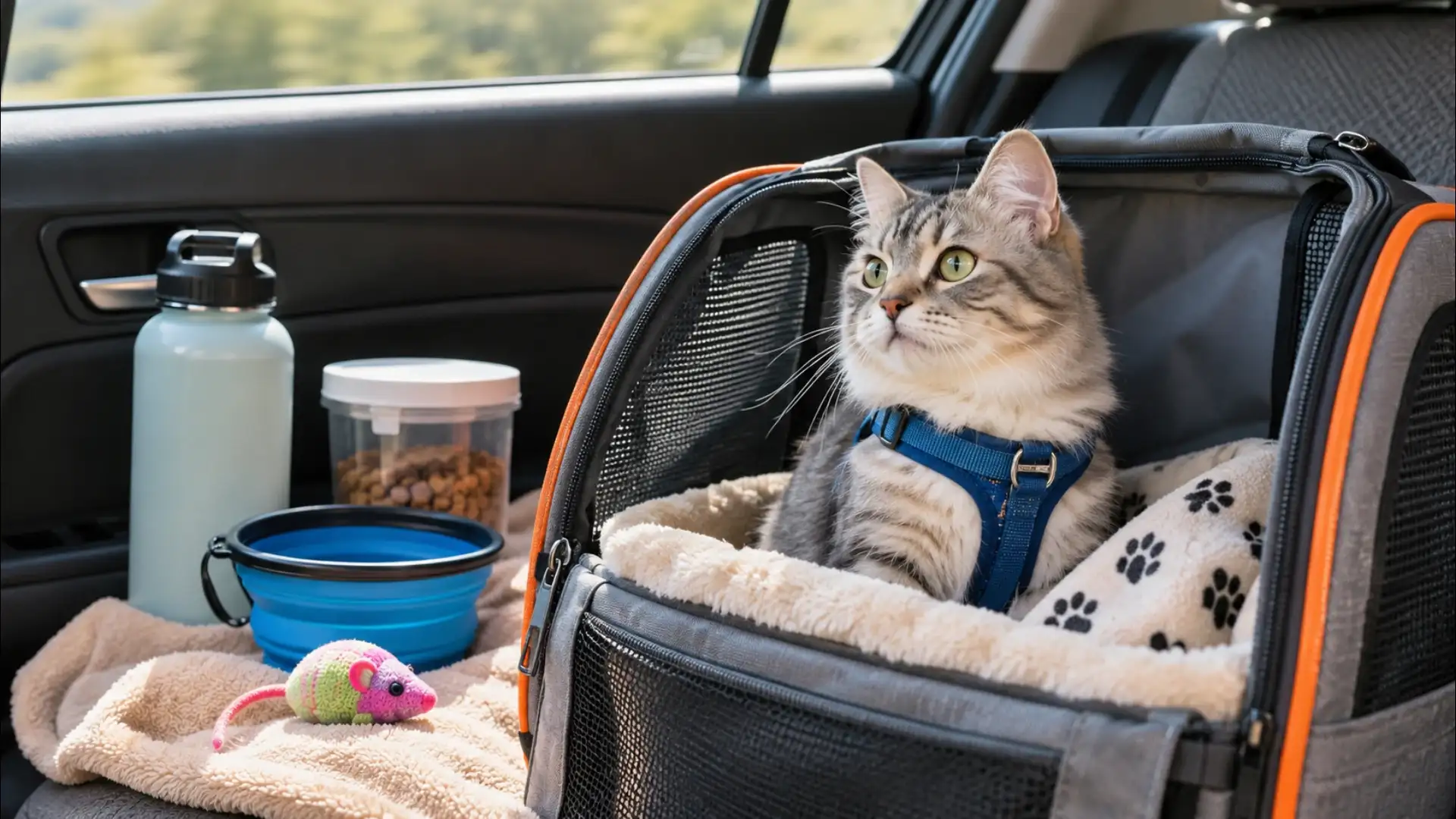
Preparation can make the experience more manageable. The most important steps are choosingTravelling With a Cat by Car: A Practical Guide for Pet Parents
a suitable carrier, allowing the cat to become familiar with it and planning the journey around the pet's needs.
Whether you are travelling across a city or taking a longer road trip, avoid leaving preparations until the day of departure.
Choose one that is large enough for your cat to stand, turn around and lie down comfortably. It should have good ventilation, a secure door and a strong handle.
A carrier with a removable top can make it easier to place the cat inside without forcing it through a narrow opening.
Check the locks and hinges before every journey. Avoid using a damaged carrier or one that can open unexpectedly.
Place it in a familiar room several days or weeks beforehand. Keep the door open and allow the cat to investigate it at its own pace.
Add a familiar blanket or bedding inside. You can also place a few treats or a favourite toy in the carrier to encourage positive associations.
Once the cat is comfortable entering it, practise closing the door for a short period while remaining nearby.
Start by placing the carrier inside the stationary vehicle. Allow your pet to become familiar with the new surroundings before attempting a short drive.
Gradually increase the duration if the cat appears comfortable.
Avoid making the first experience a long journey whenever possible. A gradual introduction can help you understand how your pet responds to movement and vehicle sounds.
Follow the carrier manufacturer's instructions for safe placement.
The Feline Veterinary Medical Association recommends placing carriers securely on the floor behind the front seats, or using an appropriate crash-tested carrier with the correct restraint arrangement.
Do not assume that every carrier is suitable for fastening with an ordinary seat belt.
Carry cleaning supplies and an extra towel in case the carrier needs attention.
Keep your pet's identification details accessible. A collar with an identification tag may be useful if your cat is comfortable wearing one, but it should not replace the secure carrier.
Do not open the carrier beside a busy road or in an unfamiliar public area. If your cat needs to come out, choose a fully enclosed and secure space.
Never leave the cat unattended inside a parked car, particularly in warm weather.
Keep the vehicle comfortably ventilated and maintain a calm environment.
Speak gently and allow your pet to rest.
With a suitable carrier, gradual preparation and thoughtful planning, travelling by car can become a more manageable experience for both the cat and its owner.
Preparation can make the experience more manageable. The most important steps are choosingTravelling With a Cat by Car: A Practical Guide for Pet Parents
a suitable carrier, allowing the cat to become familiar with it and planning the journey around the pet's needs.
Whether you are travelling across a city or taking a longer road trip, avoid leaving preparations until the day of departure.
Choose a sturdy carrier
A secure carrier is essential for transporting a cat by car.Choose one that is large enough for your cat to stand, turn around and lie down comfortably. It should have good ventilation, a secure door and a strong handle.
A carrier with a removable top can make it easier to place the cat inside without forcing it through a narrow opening.
Check the locks and hinges before every journey. Avoid using a damaged carrier or one that can open unexpectedly.
Help your cat become familiar with it
Do not bring out the carrier only when it is time to travel.Place it in a familiar room several days or weeks beforehand. Keep the door open and allow the cat to investigate it at its own pace.
Add a familiar blanket or bedding inside. You can also place a few treats or a favourite toy in the carrier to encourage positive associations.
Once the cat is comfortable entering it, practise closing the door for a short period while remaining nearby.
Introduce car journeys gradually
If your cat has never travelled by car, begin with short practice sessions.Start by placing the carrier inside the stationary vehicle. Allow your pet to become familiar with the new surroundings before attempting a short drive.
Gradually increase the duration if the cat appears comfortable.
Avoid making the first experience a long journey whenever possible. A gradual introduction can help you understand how your pet responds to movement and vehicle sounds.
Secure the carrier properly
Never allow a cat to move freely around a moving vehicle. It may become trapped under a seat, interfere with the driver or attempt to escape when a door opens.Follow the carrier manufacturer's instructions for safe placement.
The Feline Veterinary Medical Association recommends placing carriers securely on the floor behind the front seats, or using an appropriate crash-tested carrier with the correct restraint arrangement.
Do not assume that every carrier is suitable for fastening with an ordinary seat belt.
Pack a travel kit
For a longer journey, keep a small bag ready with your cat's familiar food, drinking water, bowls, bedding, waste bags and a portable litter tray.Carry cleaning supplies and an extra towel in case the carrier needs attention.
Keep your pet's identification details accessible. A collar with an identification tag may be useful if your cat is comfortable wearing one, but it should not replace the secure carrier.
Plan breaks carefully
For longer trips, plan suitable stopping points in advance.You may also like
- AI Healthcare: The Rise of AI Platforms in Indian Healthcare Sector
- Priyanka Chopra's Diwali gown took over 2,200 hours of embroidery, according to its designer, who blended Kashmiri aari and zardozi with Sindhi craft details in an outfit inspired by Indian architectural heritage
- Two New Vande Bharat Trains for the Nation: Which Routes Will They Serve and When Will They Begin?
- Know the Limits: How Much Cash Can You Withdraw from a Post Office ATM in a Day?
- Ration Card Complaint 2026: Not getting your ration or is the dealer making a mistake? Now you can complain to officials on Webex
Do not open the carrier beside a busy road or in an unfamiliar public area. If your cat needs to come out, choose a fully enclosed and secure space.
Never leave the cat unattended inside a parked car, particularly in warm weather.
Keep the vehicle comfortably ventilated and maintain a calm environment.
Follow your cat's pace
Some cats settle into travel more easily than others. Avoid forcing unnecessary handling or repeatedly opening the carrier.Speak gently and allow your pet to rest.
With a suitable carrier, gradual preparation and thoughtful planning, travelling by car can become a more manageable experience for both the cat and its owner.






Loving Newspoint? Download the app now
