The Hidden Social Life of Forests: Trees That Communicate With Their Neighbours

When you take a quiet walk through an ancient woodland, the giant trunks around you seem entirely isolated from one another. Trees appear to stand as solitary individuals, silently competing for sunlight, soil moisture, and physical space in the forest floor. However, over the last few decades, groundbreaking botanical discoveries have completely shattered this classic view of nature. Beneath the soft carpet of leaves lies an extraordinarily complex social network that links individual trunks into an interconnected community. Instead of living in constant competition, forest giants actively share food, trade essential minerals, and warn each other about incoming dangers. Exploring trees that communicate with their neighbours reveals a fascinating world of underground fungal highways, airborne chemical signals, and cooperative survival strategies that help whole woodland ecosystems thrive together.
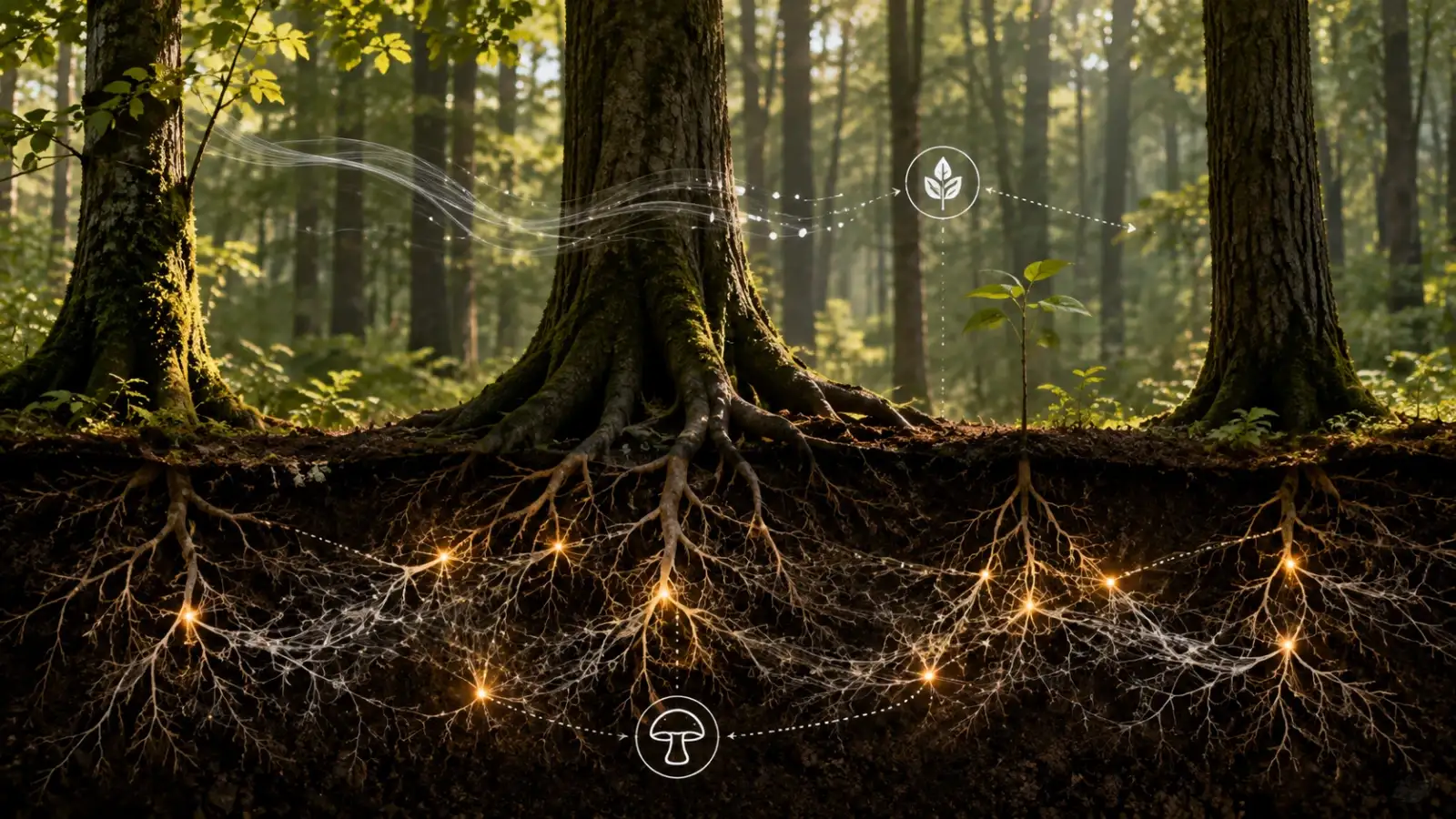
However, this fungal grid does far more than trade raw nutrients between two partners. It operates as an information superhighway connecting hundreds of individual trunks across acres of land. Older, mature specimens, often called mother trees, use this underground web to send surplus carbon and sugars to young saplings struggling to grow in the shade of the dark canopy. If an older tree becomes sick or dies, it can even dump its remaining resource reserves into the network to feed surrounding saplings, ensuring the long term survival of the local forest community.
Upon catching these subtle chemical warnings, neighbouring trees immediately trigger their internal defense mechanisms before a single pest reaches their leaves. They quickly pump bitter chemicals, such as tannins, into their foliage, making their leaves unpalatable and toxic to grazing insects. Through this airborne broadcast system, a single attacked branch warns an entire woodland section to prepare its chemical shields against an incoming pest invasion.
The fungal highways of the underground wood wide web
The primary network that allows forest vegetation to interact is a vast underground system of beneficial fungi known as mycorrhizae. Microscopic fungal threads wrap around tree roots, fusing with plant cells to create a massive subterranean grid often called the wood wide web. In this mutually beneficial partnership, trees provide the fungi with nutrient-rich sugars produced during photosynthesis. In return, the expansive fungal threads absorb water, nitrogen, and essential minerals from deep within the earth and feed them directly back to the roots.However, this fungal grid does far more than trade raw nutrients between two partners. It operates as an information superhighway connecting hundreds of individual trunks across acres of land. Older, mature specimens, often called mother trees, use this underground web to send surplus carbon and sugars to young saplings struggling to grow in the shade of the dark canopy. If an older tree becomes sick or dies, it can even dump its remaining resource reserves into the network to feed surrounding saplings, ensuring the long term survival of the local forest community.
Airborne alarm signals and chemical warnings
Underground fungal threads are not the only communication channels available to woodland ecosystems. When insect pests like caterpillars or beetles attack a specific branch, trees that communicate with their neighbours quickly release volatile organic chemicals into the surrounding air. These airborne scent compounds travel on gentle breezes toward nearby foliage.Upon catching these subtle chemical warnings, neighbouring trees immediately trigger their internal defense mechanisms before a single pest reaches their leaves. They quickly pump bitter chemicals, such as tannins, into their foliage, making their leaves unpalatable and toxic to grazing insects. Through this airborne broadcast system, a single attacked branch warns an entire woodland section to prepare its chemical shields against an incoming pest invasion.
Resource sharing across different plant species
One of the most remarkable discoveries regarding forest communication is that resource sharing is not limited to members of the exact same species. Birch trees and Douglas fir trees, for instance, engage in a continuous seasonal exchange of nutrients. During the sunny summer months, when birch trees enjoy abundant foliage, they send surplus carbon through fungal threads to shaded young fir trees. In the chilly autumn, when birch trees drop their leaves and cannot photosynthesize, the evergreen fir trees return the favour by sending carbon back through the soil network to keep the birch roots healthy. This seasonal teamwork proves that forest balance relies on cooperation rather than individual dominance.Redefining the true nature of forest intelligence
Uncovering how trees that communicate with their neighbours survive completely transforms our understanding of natural ecosystems. A forest is not merely a collection of individual plants standing side by side; it functions as a single, living superorganism. Recognizing these intricate subterranean networks and airborne signals reminds us how deeply interconnected life on our planet truly is.Next Story