
Love Mushroom Dishes? Discover 10 Varieties That Can Transform Everyday Vegetarian Meals

Mushrooms are popular in vegetarian cooking because of their distinctive flavours, interesting textures and ability to complement a wide range of ingredients. They can be grilled, roasted, sautéed, stuffed or added to curries, soups, pasta and rice dishes. While button mushrooms are commonly available in supermarkets, several other varieties offer different culinary experiences. Some have a mild flavour and soft texture, while others are known for their earthy taste or firm, meaty consistency. Exploring different mushroom varieties can make everyday vegetarian meals more interesting and introduce new flavours to familiar recipes.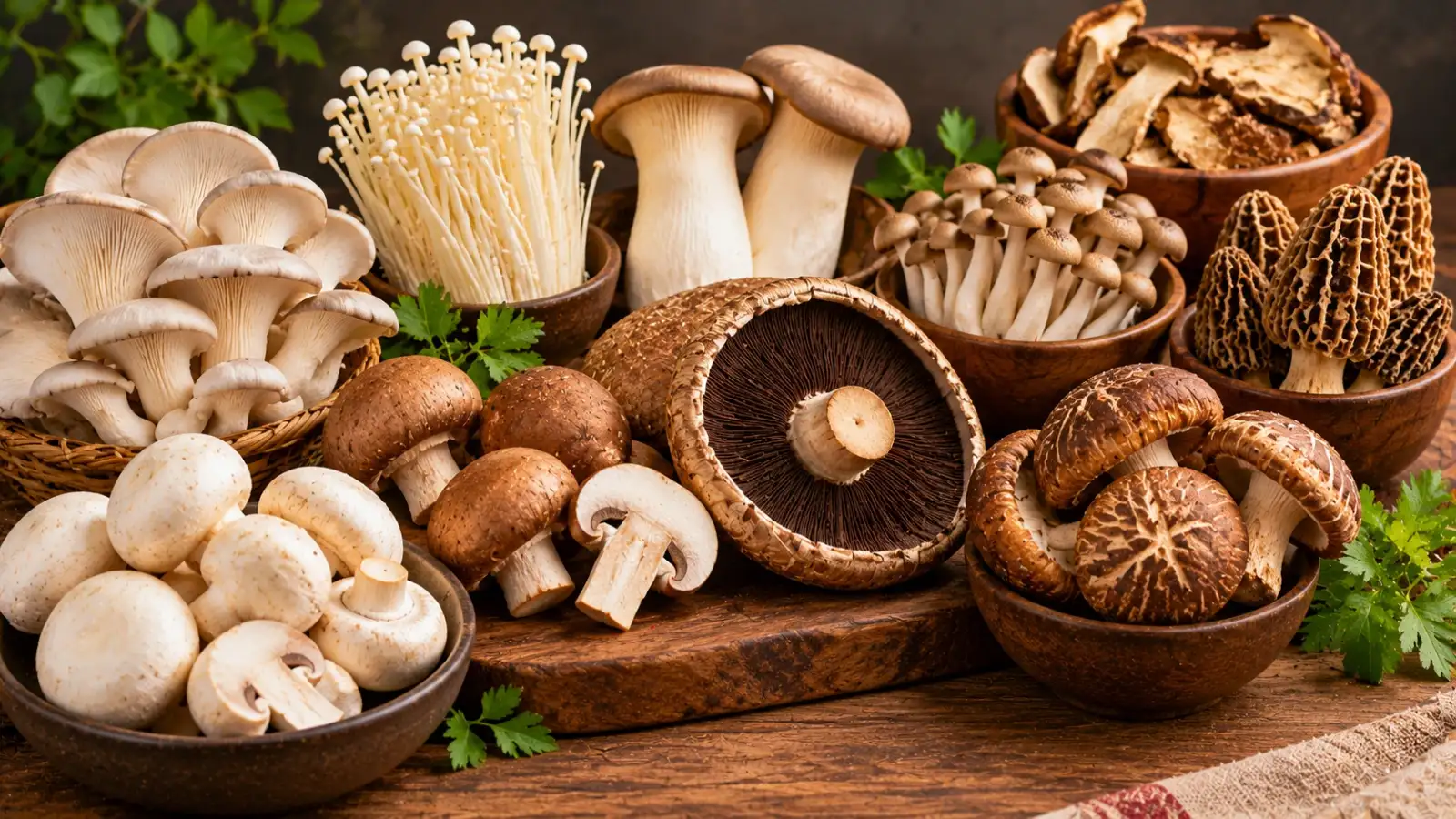
1. Button Mushrooms
Button mushrooms are among the most widely available edible mushrooms. They have a round cap, short stem and pale appearance. Their mild flavour makes them suitable for several vegetarian preparations.
They can be added to mushroom masala, vegetable pulao, sandwiches, pasta and soups. They also work well when sautéed with garlic, butter, black pepper and herbs. Their compact size makes them convenient for stuffing and baking.
2. Cremini Mushrooms
Cremini mushrooms, also called brown mushrooms, are closely related to white button mushrooms but have a darker colour and a somewhat richer flavour.
They are useful in risottos, pasta sauces, stir-fries and grilled dishes. Their firm texture allows them to retain their shape during cooking, making them suitable for recipes that require longer preparation.
3. Portobello Mushrooms
Portobello mushrooms are mature brown mushrooms with broad, fleshy caps. Their size and firm texture make them particularly useful in substantial vegetarian dishes.
They can be grilled, roasted or stuffed with ingredients such as paneer, cheese, spinach and herbs. Portobello caps can also be used as a filling for sandwiches and burgers.
4. Shiitake Mushrooms
Shiitake mushrooms are recognised by their brown caps and distinctive savoury flavour. They are widely used in Japanese, Chinese and other East Asian dishes.
Fresh shiitake mushrooms work well in noodle bowls, soups, fried rice and vegetable stir-fries. Dried shiitake mushrooms are also popular because they develop an intense flavour when soaked and can add depth to broths and sauces.
5. Oyster Mushrooms
Oyster mushrooms grow in overlapping clusters and are named after the shape of their caps. They are available in several colours, including white, grey and pale yellow.
Their tender texture makes them suitable for stir-fries, soups, curries and roasted dishes. They can also be shredded and cooked with spices to prepare a filling for vegetarian wraps or sandwiches.
6. Enoki Mushrooms
Enoki mushrooms are easily recognised by their long, slender white stems and small caps. They are commonly used in East Asian cooking and are valued for their delicate texture.
They can be added to hot pots, noodle soups, ramen and vegetable stir-fries. Their mild taste allows them to absorb the flavours of broths, sauces and seasonings. They cook quickly, so they are usually added towards the end of preparation.
7. Porcini Mushrooms
Porcini mushrooms are known for their rich, nutty flavour and firm texture. Fresh porcini can be difficult to find in many markets, but dried versions are widely used in cooking.
They are particularly popular in risotto, pasta sauces, soups and creamy vegetarian dishes. The soaking liquid from dried porcini can also be strained and added to recipes for extra flavour.
8. Morel Mushrooms
Morel mushrooms have an unusual appearance, with deeply textured caps that resemble a honeycomb. They are considered a prized ingredient in several cuisines and are often associated with spring cooking.
Morels can be sautéed with butter, herbs and cream or added to rice and pasta preparations. They must always be cooked thoroughly before consumption. Raw or undercooked morels can cause illness.
9. King Oyster Mushrooms
King oyster mushrooms have large, thick stems and relatively small caps. Their firm texture makes them suitable for recipes where mushrooms are sliced into substantial pieces.
They can be cut into rounds or strips and grilled, roasted or pan-fried. Some cooks also slice the stems lengthwise to create vegetarian dishes with a texture similar to scallops or other firm ingredients.
10. Shimeji Mushrooms
Shimeji mushrooms usually grow in compact clusters and are available in white and brown varieties. They have a mild, slightly nutty flavour and a firm texture when cooked.
They are commonly used in soups, noodle dishes, vegetable stir-fries and rice preparations. The clusters should be separated and the tough base trimmed before cooking. Shimeji mushrooms should not be eaten raw, as cooking improves their flavour and texture.
Tips for Cooking with Different Mushroom Varieties
Clean mushrooms gently with a damp cloth or soft brush, removing visible dirt before cooking. Avoid soaking them unnecessarily, as they can absorb water and become difficult to brown.
Use a sufficiently hot pan and avoid overcrowding it when sautéing. This allows moisture to evaporate and helps the mushrooms develop a golden surface. Remove tough stems where necessary and cook each variety according to its texture and size.
Always purchase edible mushrooms from reliable suppliers. Never collect wild mushrooms for cooking unless they have been identified by a qualified expert, as some poisonous varieties can resemble edible ones.
Different mushroom varieties can add flavour, texture and variety to vegetarian cooking. From everyday button mushrooms and oyster mushrooms to speciality options such as porcini and morels, each type has its own culinary uses. Experimenting with these varieties can help you create more interesting curries, soups, pasta dishes, rice preparations and snacks while expanding your everyday vegetarian menu.
1. Button Mushrooms
Button mushrooms are among the most widely available edible mushrooms. They have a round cap, short stem and pale appearance. Their mild flavour makes them suitable for several vegetarian preparations.
They can be added to mushroom masala, vegetable pulao, sandwiches, pasta and soups. They also work well when sautéed with garlic, butter, black pepper and herbs. Their compact size makes them convenient for stuffing and baking.
2. Cremini Mushrooms
Cremini mushrooms, also called brown mushrooms, are closely related to white button mushrooms but have a darker colour and a somewhat richer flavour.
They are useful in risottos, pasta sauces, stir-fries and grilled dishes. Their firm texture allows them to retain their shape during cooking, making them suitable for recipes that require longer preparation.
3. Portobello Mushrooms
Portobello mushrooms are mature brown mushrooms with broad, fleshy caps. Their size and firm texture make them particularly useful in substantial vegetarian dishes.
They can be grilled, roasted or stuffed with ingredients such as paneer, cheese, spinach and herbs. Portobello caps can also be used as a filling for sandwiches and burgers.
4. Shiitake Mushrooms
Shiitake mushrooms are recognised by their brown caps and distinctive savoury flavour. They are widely used in Japanese, Chinese and other East Asian dishes.
Fresh shiitake mushrooms work well in noodle bowls, soups, fried rice and vegetable stir-fries. Dried shiitake mushrooms are also popular because they develop an intense flavour when soaked and can add depth to broths and sauces.
5. Oyster Mushrooms
Oyster mushrooms grow in overlapping clusters and are named after the shape of their caps. They are available in several colours, including white, grey and pale yellow.
Their tender texture makes them suitable for stir-fries, soups, curries and roasted dishes. They can also be shredded and cooked with spices to prepare a filling for vegetarian wraps or sandwiches.
6. Enoki Mushrooms
Enoki mushrooms are easily recognised by their long, slender white stems and small caps. They are commonly used in East Asian cooking and are valued for their delicate texture.
They can be added to hot pots, noodle soups, ramen and vegetable stir-fries. Their mild taste allows them to absorb the flavours of broths, sauces and seasonings. They cook quickly, so they are usually added towards the end of preparation.
7. Porcini Mushrooms
Porcini mushrooms are known for their rich, nutty flavour and firm texture. Fresh porcini can be difficult to find in many markets, but dried versions are widely used in cooking.
They are particularly popular in risotto, pasta sauces, soups and creamy vegetarian dishes. The soaking liquid from dried porcini can also be strained and added to recipes for extra flavour.
8. Morel Mushrooms
Morel mushrooms have an unusual appearance, with deeply textured caps that resemble a honeycomb. They are considered a prized ingredient in several cuisines and are often associated with spring cooking.
Morels can be sautéed with butter, herbs and cream or added to rice and pasta preparations. They must always be cooked thoroughly before consumption. Raw or undercooked morels can cause illness.
9. King Oyster Mushrooms
King oyster mushrooms have large, thick stems and relatively small caps. Their firm texture makes them suitable for recipes where mushrooms are sliced into substantial pieces.
They can be cut into rounds or strips and grilled, roasted or pan-fried. Some cooks also slice the stems lengthwise to create vegetarian dishes with a texture similar to scallops or other firm ingredients.
10. Shimeji Mushrooms
You may also like
- Forget Sightseeing! Indians Are Choosing Wellness Vacations in 2026, With Searches Surging by 1,600%
- Kusha Kapila's ex-husband Zorawar calls himself 'loser at 40': Psychiatrist explains why rebuilding life at 40 feels difficult
- Cancer Screening: India Urged to Link Data with Digital Records
- Do you wear a shared bike-taxi helmet? Learn about the infections it causes and how to prevent them
- In a world addicted to scrolling, Brain Rot and Wisdom by Farhat Nasreen and Yusuf Rana Kamal asks if we're losing the art of thinking
Shimeji mushrooms usually grow in compact clusters and are available in white and brown varieties. They have a mild, slightly nutty flavour and a firm texture when cooked.
They are commonly used in soups, noodle dishes, vegetable stir-fries and rice preparations. The clusters should be separated and the tough base trimmed before cooking. Shimeji mushrooms should not be eaten raw, as cooking improves their flavour and texture.
Tips for Cooking with Different Mushroom Varieties
Clean mushrooms gently with a damp cloth or soft brush, removing visible dirt before cooking. Avoid soaking them unnecessarily, as they can absorb water and become difficult to brown.
Use a sufficiently hot pan and avoid overcrowding it when sautéing. This allows moisture to evaporate and helps the mushrooms develop a golden surface. Remove tough stems where necessary and cook each variety according to its texture and size.
Always purchase edible mushrooms from reliable suppliers. Never collect wild mushrooms for cooking unless they have been identified by a qualified expert, as some poisonous varieties can resemble edible ones.
Different mushroom varieties can add flavour, texture and variety to vegetarian cooking. From everyday button mushrooms and oyster mushrooms to speciality options such as porcini and morels, each type has its own culinary uses. Experimenting with these varieties can help you create more interesting curries, soups, pasta dishes, rice preparations and snacks while expanding your everyday vegetarian menu.






Loving Newspoint? Download the app now
