
Post-Diwali Home Clean-up: 7 Simple Steps That Actually Work

The morning after Diwali has its own particular texture: a faint smell of smoke still in the curtains, rangoli powder tracked into the hallway, and a kitchen that hosted more dishes in one evening than it usually sees in a week. The good news is that this mess follows a pattern, and a pattern can be worked through methodically.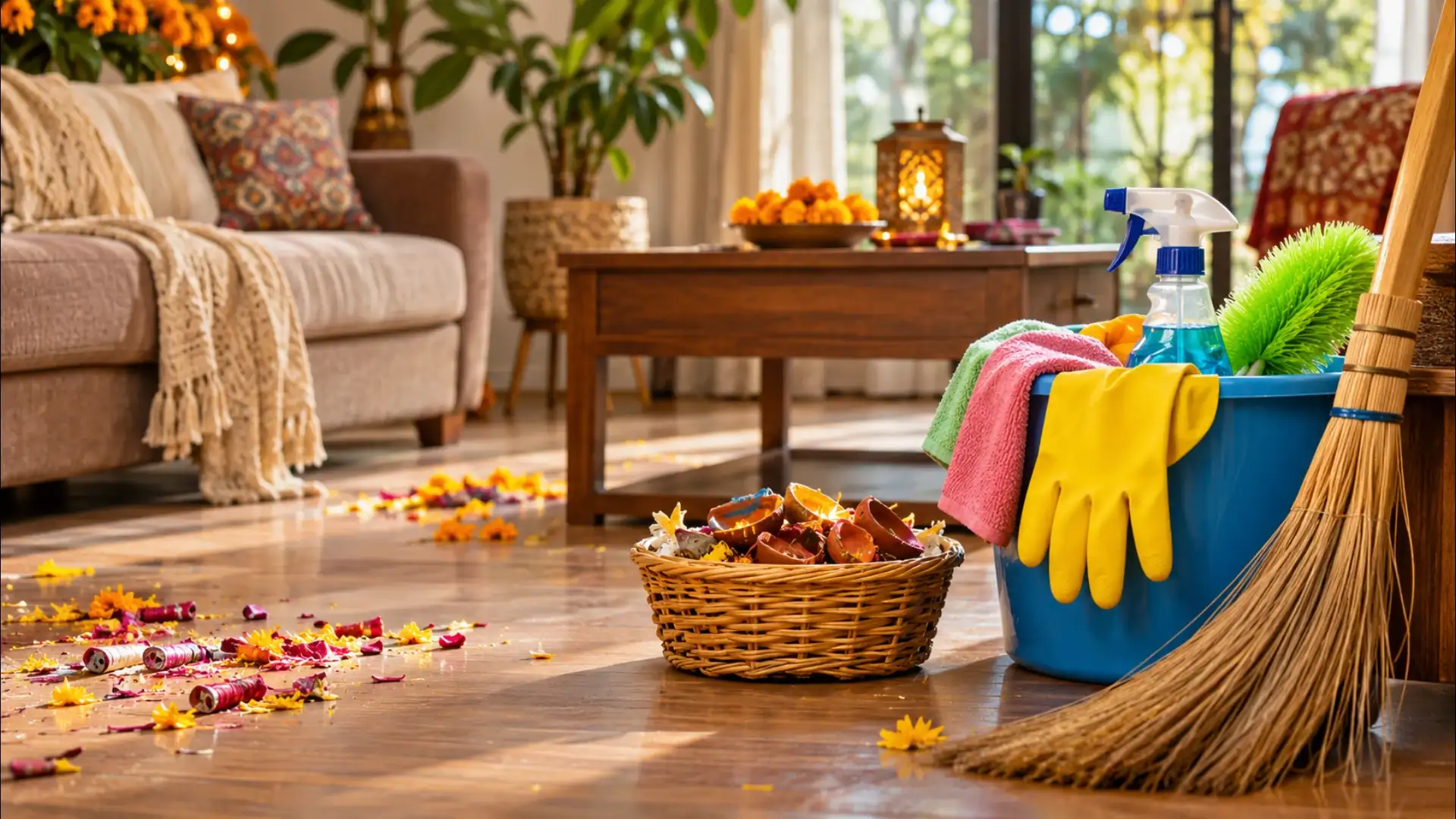
Diwali leaves a specific kind of mess because it involves light, colour, smoke, and food all at once, each requiring a slightly different approach. The sequence matters more than the effort: ventilate, work downward, handle wax and powder dry, clear food first, soak the vessels, freshen fabrics with air rather than water, and finish at the door. Follow the order and the house comes back to itself in a few hours rather than a full day.
Start with ventilation, not a broom
Open every window and door before you touch anything. Firework residue, agarbatti ash, and the smoke from dozens of diyas settle as a fine layer on every horizontal surface. Sweep or dust before airing the room and you push that layer into the air and breathe it back in. Ten minutes of cross-ventilation first means the dust you disturb later has somewhere to go.Work top to bottom, room by room
Ceiling fans collect a surprising amount of soot overnight. Wipe the blades first with a damp cloth, then move to shelves, then counters, then the floor. Cleaning in this order means anything that falls during the upper work gets swept up in the lower pass. Jumping between rooms mid-task doubles the effort because you keep returning to spots you thought were done.Tackle wax and rangoli before they set further
Diya wax that has cooled completely is easier to remove than wax that is still slightly warm and sticky. Harden it further by holding an ice cube in a cloth against the drip for thirty seconds, then lift the wax off as a single piece with a blunt-edged card. What remains is a faint oil stain; a drop of dish soap on a damp cloth takes it off most floor surfaces. For rangoli powder on stone or tile, dry-sweep first. Wetting it before sweeping turns the powder into a paste that fills the grout lines and takes real scrubbing to clear.Clear the sweets and food before the kitchen
Mithai left at room temperature for more than a day starts to change in texture and smell, and it draws ants. Before cleaning the kitchen surfaces, do a single pass through every room collecting plates, boxes, and leftover food. Consolidate what is still good into the refrigerator. Discard the rest. Doing this step first means you are not cleaning around food containers, and the kitchen stays clean once you have cleaned it.Soak, do not scrub, the stubborn vessels
The big pots and kadais from the night before have usually been sitting long enough that residue has dried hard. Fill them with warm water and a spoon of baking soda and leave them while you clean the rest of the kitchen. By the time you come back, most of what looked like it needed a steel scrubber will wipe out with a soft cloth. Scrubbing dry residue scratches the surface and takes three times as long.Freshen fabrics without a full wash
Curtains, cushion covers, and the durrie or carpet in the main room hold smoke smell even when they look clean. A light mist of water with a few drops of white vinegar, sprayed from a distance and left to dry, pulls the smell out without a wash cycle. For smaller cushion covers, fifteen minutes in direct sunlight does the same job. Reserve the washing machine for items that are visibly soiled rather than running everything through it at once.End with the entrance, not the interior
The doorstep, the threshold, and the area just outside the front door are where most of the outdoor residue, ash, spent cracker casings, rangoli dust tracked in by feet, has collected. Cleaning this last means you are not carrying fresh dirt back in over floors you have already mopped. A quick sweep of the entrance, a wipe of the doorknob and the light switches near the door, and the house reads as clean from the outside in.Diwali leaves a specific kind of mess because it involves light, colour, smoke, and food all at once, each requiring a slightly different approach. The sequence matters more than the effort: ventilate, work downward, handle wax and powder dry, clear food first, soak the vessels, freshen fabrics with air rather than water, and finish at the door. Follow the order and the house comes back to itself in a few hours rather than a full day.
Next Story