
Why Steel Utensils Get Rainbow Stains and How to Remove Them

Pick up a steel kadai after cooking at high heat and you will often find a ring of colour sitting just above the waterline or around the base, with blue shifting into gold and purple. It looks like a petrol spill on a wet road, but it is usually easy to clean once you understand what it actually is.
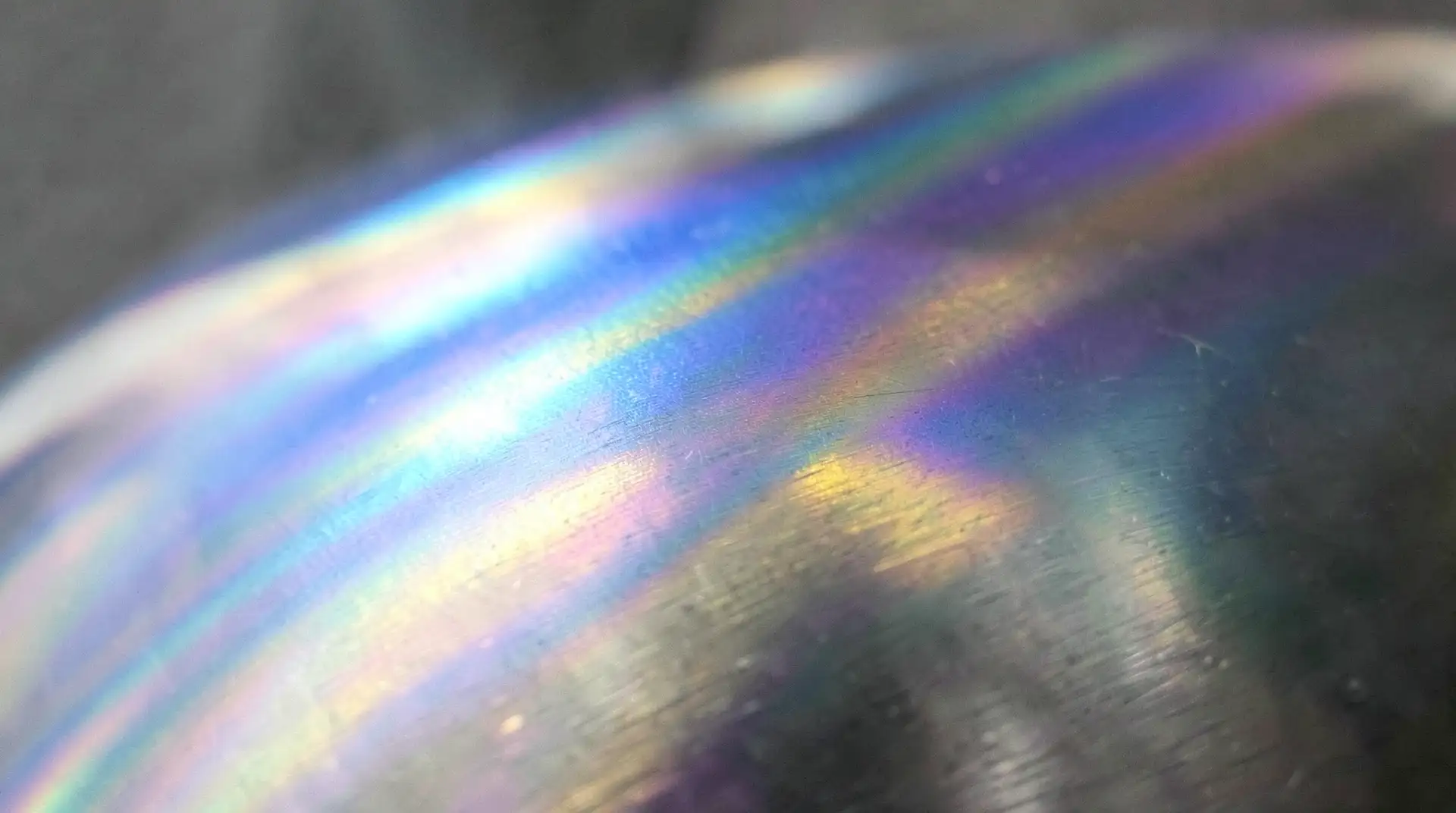
Light hits the surface, with some reflecting off the oxide layer and some passing through before reflecting off the steel beneath. The reflected light waves interact with each other. Depending on the thickness of the oxide layer, certain wavelengths are strengthened while others are cancelled out. This creates the colours you see. Different oxide thicknesses produce shades of gold, yellow, blue and purple. The colour variation across the pan can reflect differences in temperature and heating time.
A rainbow stain is generally a surface heat tint, not corrosion spreading through the metal. It does not normally weaken the pan or make it unsafe for cooking. The colour itself does not transfer to food. The main reason to remove it is appearance, although removing heavy heat tint can also help restore the surface's corrosion resistance.
Lemon juice can also help because it contains citric acid. Cut a lemon and rub the cut face across the stain. Leave it for a minute or two, then rinse. For a slightly more abrasive approach, make a paste of lemon juice and baking soda. The mild abrasive action of the soda can help with stubborn marks, although the two ingredients partly neutralise each other. Scrub gently, rinse and dry.
Tamarind pulp, commonly used in Indian kitchens to clean cookware, is another option. It contains tartaric acid, which can help loosen surface discolouration. Rub a small amount over the stain, leave it briefly and rinse.
One thing to avoid is steel wool or coarse abrasive pads. They can scratch the surface, affecting its smooth finish and potentially making it more difficult to clean. Use a soft sponge or a non-scratch cleaning pad instead.
Drying steel cookware thoroughly after washing also matters. Water left on the surface does not cause the rainbow effect, but it can leave mineral deposits that make the pan look stained and affect its appearance.
If a dark, rough patch resists cleaning and feels pitted rather than smooth, it could be genuine corrosion rather than a heat stain. Unlike the rainbow effect, corrosion can damage the metal surface. Prolonged contact with salt, bleach or chlorine can contribute to this type of damage.
The rainbow stain is one of those things that looks alarming until you know what it is. It is a result of changes to the protective oxide layer on stainless steel, and mild cleaning methods can often restore the pan's original appearance.
What Creates the Colour
Steel is mostly iron, with chromium and sometimes nickel added to make it stainless. When you heat the pan, oxygen from the air reacts with chromium at the surface, forming a thin, chromium-rich oxide layer. This layer is extremely thin, measured in nanometres, far thinner than a human hair.Light hits the surface, with some reflecting off the oxide layer and some passing through before reflecting off the steel beneath. The reflected light waves interact with each other. Depending on the thickness of the oxide layer, certain wavelengths are strengthened while others are cancelled out. This creates the colours you see. Different oxide thicknesses produce shades of gold, yellow, blue and purple. The colour variation across the pan can reflect differences in temperature and heating time.
Why It Is Not Usually Damage
The chromium-rich oxide layer is also what protects stainless steel from corrosion. However, heating can make this layer thicker and alter the protective properties of the surface beneath it.A rainbow stain is generally a surface heat tint, not corrosion spreading through the metal. It does not normally weaken the pan or make it unsafe for cooking. The colour itself does not transfer to food. The main reason to remove it is appearance, although removing heavy heat tint can also help restore the surface's corrosion resistance.
How to Remove It at Home
Acid-based cleaners are often effective against light heat stains. White vinegar can help remove surface discolouration. Apply a small amount of undiluted white vinegar to the stained area, leave it for a few minutes, then rub gently with a soft cloth. Rinse with water and dry immediately to prevent water spots.Lemon juice can also help because it contains citric acid. Cut a lemon and rub the cut face across the stain. Leave it for a minute or two, then rinse. For a slightly more abrasive approach, make a paste of lemon juice and baking soda. The mild abrasive action of the soda can help with stubborn marks, although the two ingredients partly neutralise each other. Scrub gently, rinse and dry.
Tamarind pulp, commonly used in Indian kitchens to clean cookware, is another option. It contains tartaric acid, which can help loosen surface discolouration. Rub a small amount over the stain, leave it briefly and rinse.
One thing to avoid is steel wool or coarse abrasive pads. They can scratch the surface, affecting its smooth finish and potentially making it more difficult to clean. Use a soft sponge or a non-scratch cleaning pad instead.
Preventing the Stain from Building Up
The stain forms when stainless steel is exposed to high temperatures and oxygen for an extended period. Preheating an empty pan for too long is a common cause. Adding oil or food before the pan gets excessively hot can help limit heat discolouration. Cooking on a flame suited to the pan's base also prevents excessive heating around the sides. These are not rules to follow obsessively, as the stain is generally harmless and can be cleaned.Drying steel cookware thoroughly after washing also matters. Water left on the surface does not cause the rainbow effect, but it can leave mineral deposits that make the pan look stained and affect its appearance.
When the Stain Does Not Come Off
If vinegar and gentle scrubbing do not remove the stain, it may be more stubborn or deeply developed. A longer application of a suitable stainless steel cleaner may help. Follow the product instructions and avoid cleaners containing chlorine or bleach.If a dark, rough patch resists cleaning and feels pitted rather than smooth, it could be genuine corrosion rather than a heat stain. Unlike the rainbow effect, corrosion can damage the metal surface. Prolonged contact with salt, bleach or chlorine can contribute to this type of damage.
The rainbow stain is one of those things that looks alarming until you know what it is. It is a result of changes to the protective oxide layer on stainless steel, and mild cleaning methods can often restore the pan's original appearance.
Next Story