
How to Keep Homemade Pickles Fresh for Months

A jar of homemade pickle can carry the flavour of an entire season. Mango , lemon, chilli, carrot and mixed vegetable pickles often become pantry staples, but keeping them fresh for months requires more than simply closing the lid. Salt, acidity, moisture, cleanliness and storage conditions all influence how well a pickle keeps. Traditional recipes work because preservation is built into their chemistry, not because the ingredients somehow become immune to spoilage. If you are preparing a batch to enjoy over several months, understanding those principles can help protect both its flavour and safety.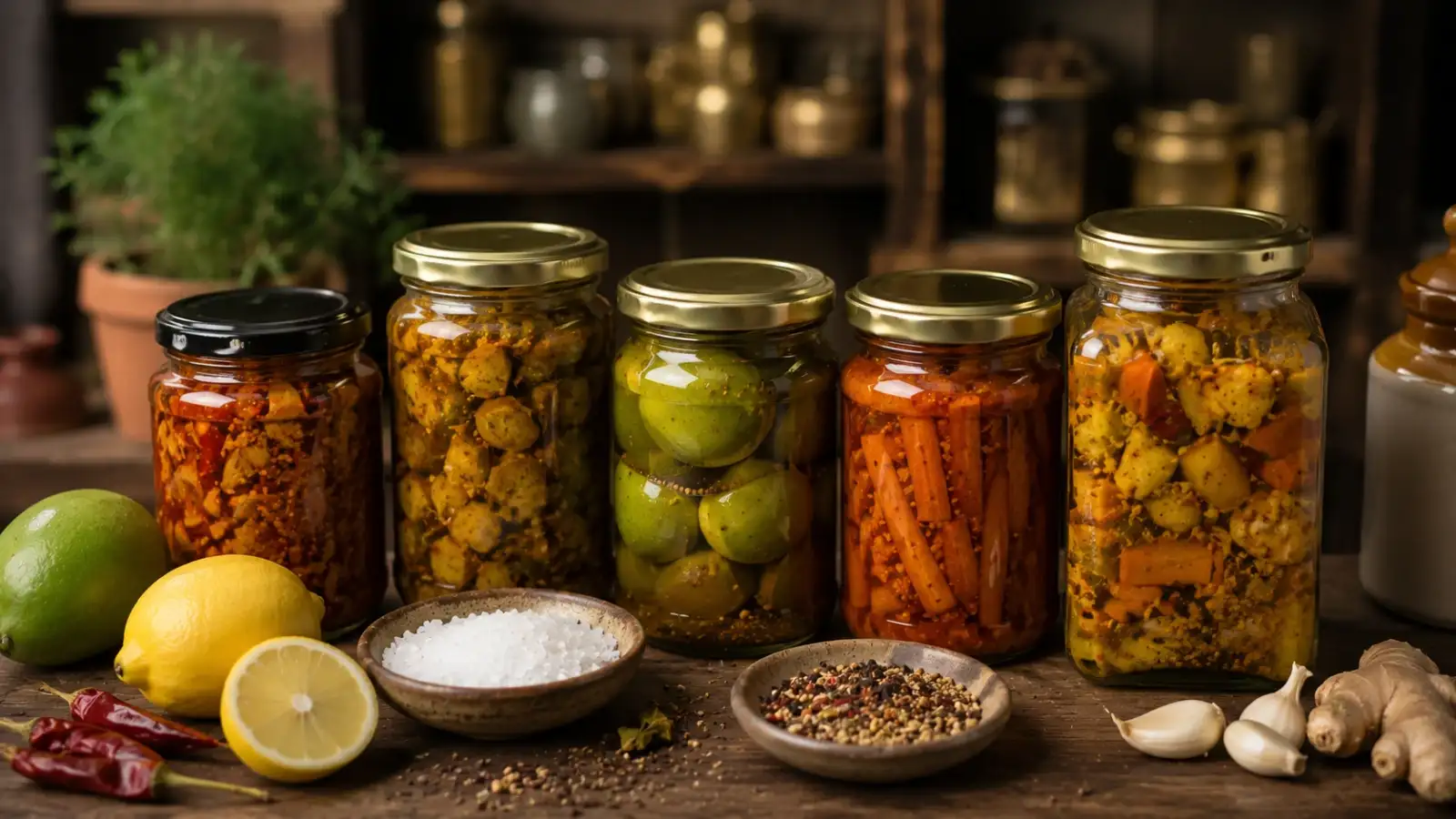
Acid is equally important in acidified pickles . Food-preservation guidance notes that properly acidified produce should reach a pH of 4.60 or below to reduce the risk associated with dangerous microorganisms such as
.
This is why changing a tested pickle recipe by dramatically reducing vinegar or salt can be risky.
For traditional oil-based pickles, moisture entering the jar through wet spoons or damp ingredients can also affect quality.
Always use a clean, dry spoon when serving. Introducing crumbs, water or other food into a jar can compromise its quality.
Do not rely only on smell or appearance to judge whether a preserved food is safe. When in doubt about a questionable batch, it is safer to discard it.
The long life of a good pickle is not accidental. It comes from controlling moisture, acidity, salt, cleanliness and storage. Traditional pickle-making may look simple, but behind every successful jar is a surprisingly precise preservation system. Treat that chemistry with care, and the taste of summer can stay on the shelf much longer.
Salt and Acid Are Part of the Preservation System
Salt is not merely a seasoning in pickling. It helps draw water out of produce through osmosis and contributes to the preservation process.Acid is equally important in acidified pickles . Food-preservation guidance notes that properly acidified produce should reach a pH of 4.60 or below to reduce the risk associated with dangerous microorganisms such as
.
This is why changing a tested pickle recipe by dramatically reducing vinegar or salt can be risky.
Moisture Is an Often-Overlooked Enemy
Water can dilute the preserving environment and encourage unwanted microbial growth. Ingredients should be properly prepared according to the recipe, and vegetables used for pickling should be clean and free from significant damage.You may also like
- Quote of the Day by John Locke," “Parents wonder why the streams are bitter, when they themselves....”
- When children leave home, parents can feel lost too: 5 signs of 'empty nest syndrome' and how to cope
- Who was Putri Andriani Juficha? Model and beauty queen dies at 25, death announced on her birthday
- This mutual fund turned an investment of ₹10 lakh into ₹1.25 crore in just 13 years..
For traditional oil-based pickles, moisture entering the jar through wet spoons or damp ingredients can also affect quality.
Use Clean, Suitable Jars
Clean jars and utensils are essential. For refrigerator pickles that are not heat-processed, food-preservation guidance recommends sterilising jars before filling them because the finished jars will not receive a later heat treatment.Always use a clean, dry spoon when serving. Introducing crumbs, water or other food into a jar can compromise its quality.
Storage Conditions Matter
Follow the storage instructions for the specific recipe. Some pickles are designed for refrigeration, while properly formulated and processed shelf-stable pickles can be stored differently.Do not rely only on smell or appearance to judge whether a preserved food is safe. When in doubt about a questionable batch, it is safer to discard it.
The long life of a good pickle is not accidental. It comes from controlling moisture, acidity, salt, cleanliness and storage. Traditional pickle-making may look simple, but behind every successful jar is a surprisingly precise preservation system. Treat that chemistry with care, and the taste of summer can stay on the shelf much longer.






Loving Newspoint? Download the app now
