
Why Rajasthani Kitchens Cook with So Little Water: The Desert Logic of Ker Sangri

A desert does not negotiate. When the Thar stretches out flat and pale in every direction, the kitchen adapts or the family goes hungry. Rajasthani cooking is often admired for its bold spices and deep colour, but the more interesting story is the one underneath: almost every technique in a traditional Rajasthani kitchen exists because water was too scarce, too far away, or too uncertain to waste on cooking.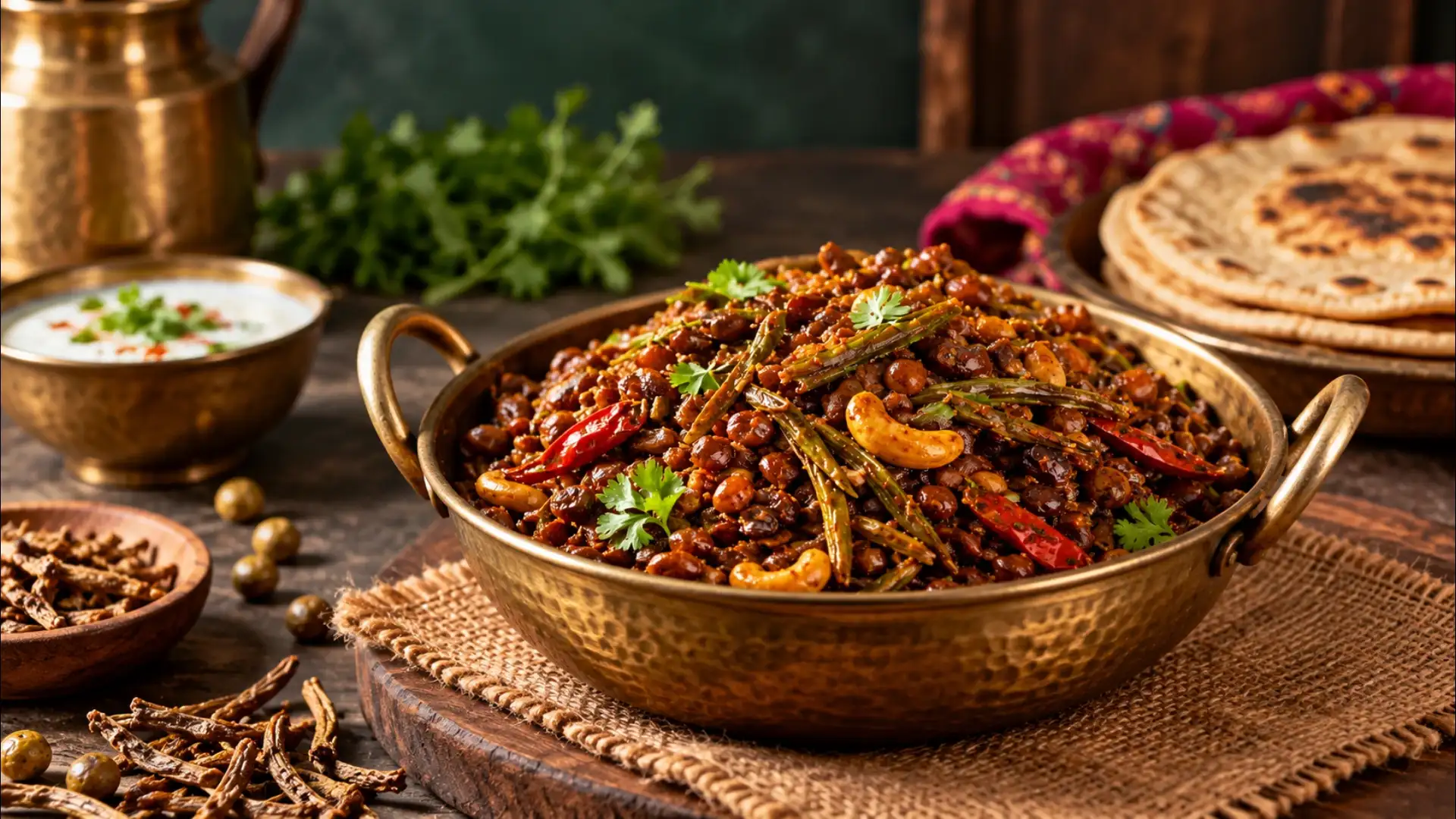
The Problem the Dish Was Solving
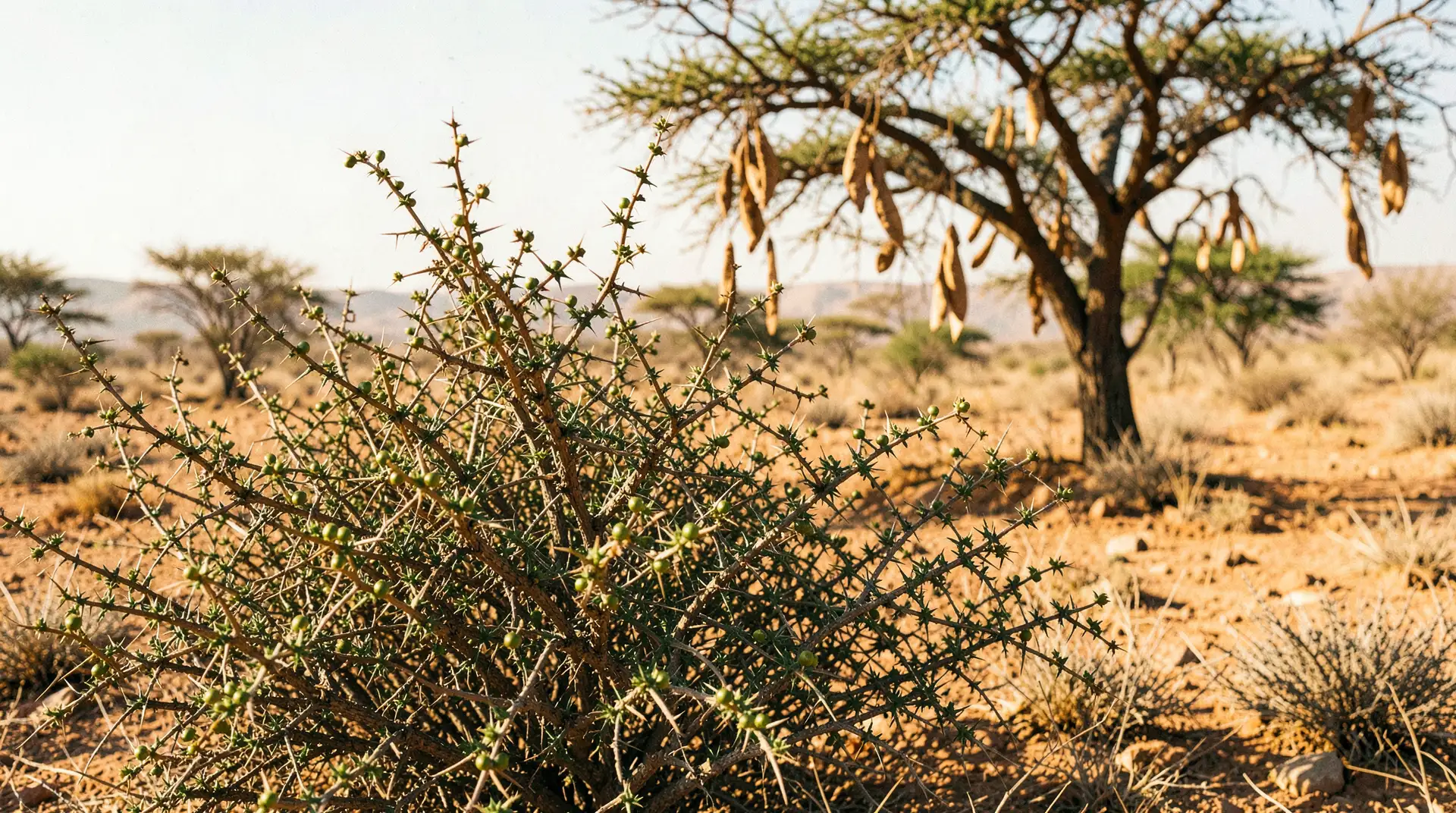
Ker sangri starts not with a recipe but with two plants tough enough to survive the desert. Ker is a small, tart berry from the Capparis decidua shrub, a thorny bush that grows wild across the Thar and fruits precisely when nothing else does, in the dry heat before the monsoon. Sangri is the long, slender pod of the khejri tree, called the Kalpataru of the desert because communities have depended on it for food, fodder, and shade for centuries. Neither fruit is eaten fresh. Both are harvested and then dried in the sun until they shrink to a fraction of their original size and can be stored for months without spoiling. The drying itself is the first piece of desert logic, preservation without refrigeration, without salt brine, without anything except the same sun that makes the region hostile to most other food.Cooking Without Water, on Purpose
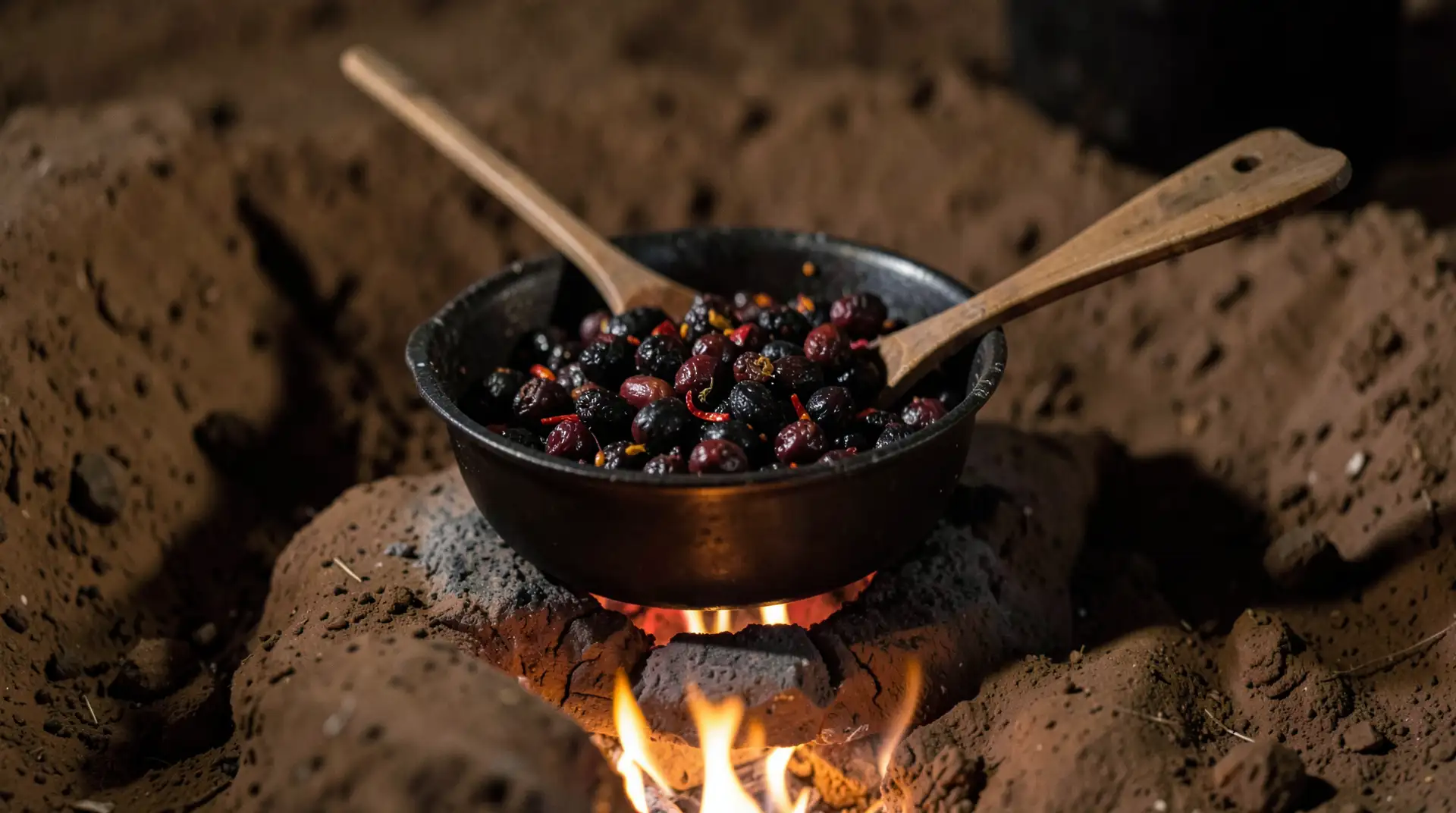
Most Indian cooking begins with water in the pot, for boiling, for the gravy base, for the pressure cooker. A traditional ker sangri preparation begins with soaking the dried ingredients overnight, then draining them completely, and then cooking in oil and spices with almost no added liquid at all. The dish finishes dry or nearly dry. This is not a stylistic preference. In villages without reliable water access, every cup used in cooking was a cup not available for drinking, for the animals, or for the next day. Dishes that cooked in their own moisture, in rendered fat, or in minimal oil were simply more practical. The technique produced something unexpected, because the berries and pods are not diluted by water, their flavour concentrates. The tartness of the ker deepens. The earthy, slightly smoky quality of the sangri becomes more pronounced. The constraint produced the character.You may also like
- Psychology says people who preserve old newspapers, greeting cards and even cinema tickets may have a deeper emotional connection with the past, finding it difficult to part with objects that hold memories of people, places and moments they never want to forget
- Fig Wasps and Figs: The Pollination Deal That Binds Two Species Forever
- Who is Shri Swami Shashwat Acharya Ji Maharaj? Meet Vrindavan's 19-year-old 'Gen Z Baba' taking social media by storm
- What Happens to a Grassland's Nutrient Cycle Without Large Grazers
- 3 Peter Drucker Questions That Clarify Any Job You Are Unsure About
The Pantry as Insurance
Ker sangri is part of a broader system that Rajasthani households built around the reality of an unpredictable food supply. Dried ker, dried sangri, dried amchur, dried red chillies, dried guar pods, roasted and ground spices that last a year, the traditional pantry was designed around ingredients that did not need a cold chain, did not spoil in heat, and could be cooked quickly with minimal fuel. Fuel was its own scarcity. Wood was not plentiful in open desert, and a dish that cooked fast over a small fire was better than one that needed an hour of simmering. The dry-cooking technique serves both constraints at once: little water, little fuel, maximum time before the next harvest.What the Spicing Is Actually Doing
Ker sangri is cooked with a particular combination: dried red chillies, coriander, turmeric, and often a souring agent, sometimes the ker itself provides enough tartness, sometimes dried mango powder is added. The heat level is real and deliberate. In high-temperature environments, capsaicin causes the body to sweat, and sweating is a cooling mechanism. Communities living in extreme heat across the world have independently arrived at spicy food for this reason. The fat used is traditionally ghee or mustard oil, both of which are stable at high temperatures and do not turn rancid quickly in heat, unlike refined oils, which were neither available nor practical before industrial supply chains reached the region.The Dish That Travelled Well
Rajasthan's geography meant long journeys, merchants on camel routes, soldiers moving across open terrain, families relocating between seasonal water sources. A meal that could be cooked once and carried for days without spoiling was worth more than a fresh preparation that lasted a few hours. Ker sangri, once cooked, keeps well. The low moisture content that makes it shelf-stable as a raw ingredient also means the cooked dish does not sour or ferment quickly. It was, in effect, a portable meal before the concept had a name. The desert logic runs all the way through: from how the plants survive, to how they are harvested, to how they are stored, to how they are cooked, to how the finished dish behaves. Every step reflects the same constraint answered the same way, take what the landscape offers and waste nothing.





Loving Newspoint? Download the app now
