
Why Vastu Shastra Favours Windows on Opposite Walls

A room with windows only on one wall traps air. A room with windows on opposite walls lets it move. Vastu shastra built this observation into its guidelines long before modern building science gave it a name, and the two accounts, one rooted in belief, one in physics, point in the same direction without being the same thing.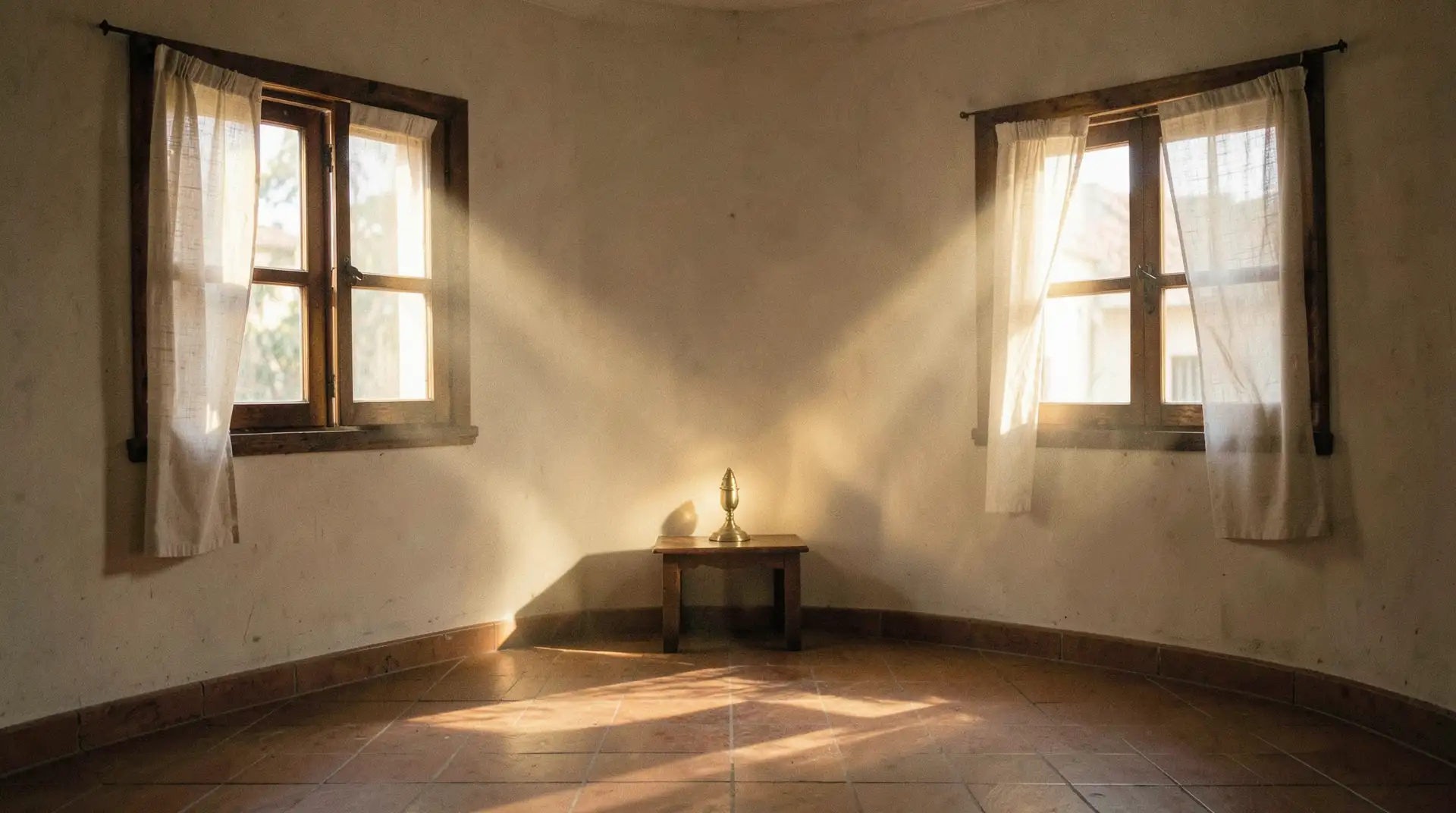
What Vastu Shastra Actually Says
Vastu shastra holds that a home should allow prana, life energy, to circulate freely through its rooms. Stagnant air, in the tradition's view, corresponds to stagnant energy, and stagnant energy is considered inauspicious for the people living inside. Windows placed on opposite walls are favoured because they create an open channel: what enters from one side can exit from the other, and nothing pools in the corners. The tradition also associates specific directions with specific qualities. East-facing openings are linked to the rising sun and are considered auspicious for morning light. North-facing windows are associated with the direction of Kuber, the deity of prosperity, and are generally welcomed. South and west openings are treated with more caution, though the reasoning varies by regional school. The core principle across all schools is the same: a home that breathes is a home that supports the people inside it.The Physical Reason It Works
When a window opens on only one wall, air enters and immediately loses momentum. There is nowhere for it to go, so it swirls near the opening and the rest of the room stays still. When windows sit on opposite walls, a pressure difference does the work. Air at a higher pressure outside one window pushes in; air at a lower pressure outside the opposite window pulls it through. The result is a steady, directed flow across the room, what engineers call cross-ventilation. This flow carries heat out of the room, replaces humid interior air with drier outside air, and reduces the concentration of airborne particles near surfaces. None of this requires a breeze. Even a small pressure difference between two sides of a building is enough to keep air moving. In Indian climates, where humidity and heat are the dominant discomforts for much of the year, a room that ventilates naturally stays cooler and feels less heavy than one that does not.Morning Light and the East Wall
Vastu's preference for east-facing windows carries a physical benefit that sits alongside the belief. Morning sunlight entering from the east is lower in angle and richer in the blue-spectrum wavelengths that signal the body's internal clock to shift from sleep mode to waking. A room that receives this light early tends to feel more alert by mid-morning than one that faces away from it. The warmth is also gentler than afternoon western sun, which arrives at a higher intensity and raises room temperature more sharply. None of this proves the vastu principle, it simply means the physical consequence of following it is not neutral. The tradition arrived at the recommendation through a different framework, and the outcome happens to be one that building science would also endorse.Where Vastu Holds and Where It Needs Adaptation
Vastu shastra was codified for a particular kind of construction: standalone homes on open plots, often in dry or semi-arid climates, where the four cardinal directions were always available to the builder. A flat in a high-rise tower may have windows on only one wall because the other three share surfaces with neighbouring units. In that situation, vastu practitioners often recommend maximising the openings that do exist, keeping interiors uncluttered near windows to let air spread further into the room, and using lighter colours on walls that face away from natural light to reflect what does enter. The principle, let air and light move, remains the same. The application shifts to match what the structure allows. Vastu shastra holds this as a belief about how a home supports its residents. The physical account of cross-ventilation holds it as a consequence of air pressure. Both agree on what to do with a room that can have windows on two walls: put them there.Next Story