
Why Indians Touch Elders' Feet and What the Gesture Really Means

Every Indian child learns it before they learn to explain it. Bend at the waist, touch the feet, receive a hand on the head. The motion is so embedded in daily life that it happens at weddings, on festival mornings, before exams, and at airport departures, almost without thought. But the thinking behind it is older and more specific than most people realise.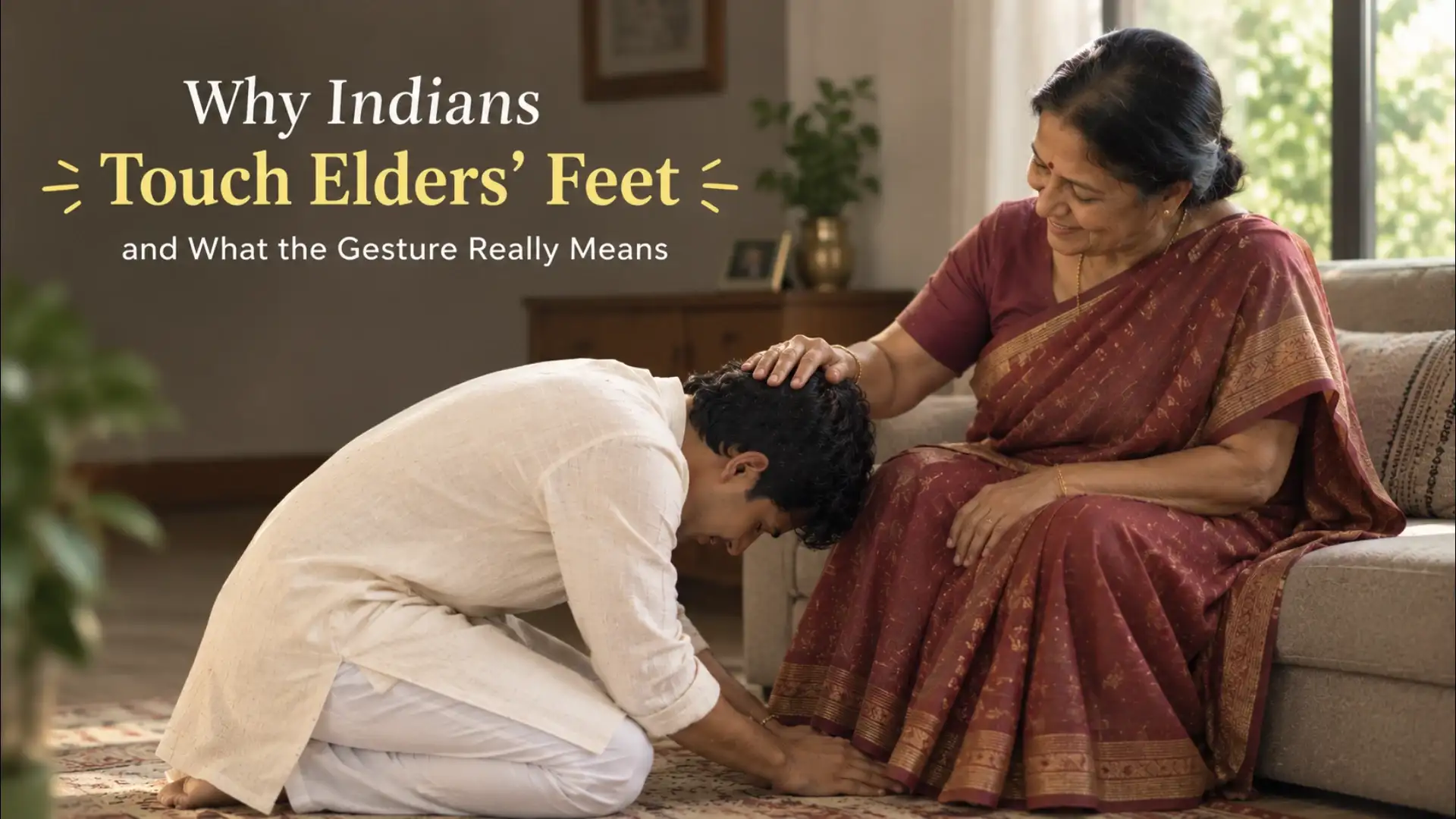
This is not metaphor. Texts across traditions, from the Ramayana to the Mahabharata, show characters touching feet not out of social habit but as an acknowledgement of a specific quality in the other person: age, learning, sacrifice, or spiritual standing. Rama touches the feet of sages. Students touch the feet of their guru. The gesture is directed at what the person has earned, not simply at who they are.
This exchange is not the same across every household or every tradition. In some families it is deeply felt. In others it has become a greeting ritual, closer in texture to a handshake than a blessing. Both are real. The meaning a family carries into the gesture shapes what the gesture becomes.
There are also people who decline to receive it. Many teachers and some elders in reformist traditions refuse the gesture, believing that no person should place themselves physically below another. This refusal is itself a position, not a rejection of respect but a different argument about where respect lives.
Regional variation is real too. In parts of South India, touching feet is less common as a daily domestic gesture and more specific to temple and guru contexts. In many North and West Indian families, it is woven into every festival morning and every farewell to a travelling elder. Neither version is more correct. Each reflects the tradition the family has kept.
The gesture also creates a moment of pause. In a household moving through a busy morning, bending to touch a grandparent's feet and receiving a hand on the head is a brief stop, a second of attention directed at a person who might otherwise be passed in the corridor. That pause is its own kind of meaning, separate from everything the tradition says about energy and merit.
The feet are the lowest point, and that is precisely the point. The gesture says: what you carry is higher than what I carry right now. It is one of the few physical acts in daily Indian life that makes a philosophical argument every time it is performed.
The Logic of Lowering Yourself
The gesture is called charan sparsh , sparsh meaning touch, charan meaning feet. In Indian philosophical traditions, the feet are considered the lowest point of the body, and the head the highest. To bring your head near another person's feet is to place your ego below their wisdom. It is a physical argument: the body enacts what words would struggle to say.This is not metaphor. Texts across traditions, from the Ramayana to the Mahabharata, show characters touching feet not out of social habit but as an acknowledgement of a specific quality in the other person: age, learning, sacrifice, or spiritual standing. Rama touches the feet of sages. Students touch the feet of their guru. The gesture is directed at what the person has earned, not simply at who they are.
What Is Said to Pass Between Them
In Vedic tradition , the elder receiving the gesture is said to transfer positive energy, sometimes called ashirvaad, sometimes described in terms of the elder's accumulated merit, through the hand placed on the younger person's head. The bent person receives; the elder gives. This is why the elder almost always responds with a blessing spoken aloud or a hand resting on the crown of the head. The gesture is incomplete without that response. One person lowers; the other lifts.This exchange is not the same across every household or every tradition. In some families it is deeply felt. In others it has become a greeting ritual, closer in texture to a handshake than a blessing. Both are real. The meaning a family carries into the gesture shapes what the gesture becomes.
Who Receives It and Who Does Not
The gesture is not given to everyone older. It is directed at those who have earned a specific kind of respect: grandparents, parents on significant occasions, teachers, priests, and in many households, elder siblings at the start of a new year or a festival. A stranger who happens to be older does not receive it. The selectivity is part of the meaning, it says something about the relationship, not just the age gap.There are also people who decline to receive it. Many teachers and some elders in reformist traditions refuse the gesture, believing that no person should place themselves physically below another. This refusal is itself a position, not a rejection of respect but a different argument about where respect lives.
The Same Gesture Across Different Traditions
Charan sparsh is most visible in Hindu households, but the underlying logic, lowering the self before the revered, appears across Indian traditions in different forms. In Sikh practice, the sangat bows before the Guru Granth Sahib, placing the forehead near the ground. In Jain tradition, the namaskar to a monk carries the same grammar of self-lowering. The specific form changes; the argument it makes does not.Regional variation is real too. In parts of South India, touching feet is less common as a daily domestic gesture and more specific to temple and guru contexts. In many North and West Indian families, it is woven into every festival morning and every farewell to a travelling elder. Neither version is more correct. Each reflects the tradition the family has kept.
What the Child Who Does It Is Actually Learning
A child who is taught charan sparsh is being taught something specific about how to hold the self in relation to others. The physical act of bending is a rehearsal of a mental posture, that knowledge, age, and sacrifice deserve acknowledgement, and that the person acknowledging them is not diminished by doing so. This is why the gesture tends to survive in families even when the theology behind it fades. It carries a social teaching that works independently of belief.The gesture also creates a moment of pause. In a household moving through a busy morning, bending to touch a grandparent's feet and receiving a hand on the head is a brief stop, a second of attention directed at a person who might otherwise be passed in the corridor. That pause is its own kind of meaning, separate from everything the tradition says about energy and merit.
The feet are the lowest point, and that is precisely the point. The gesture says: what you carry is higher than what I carry right now. It is one of the few physical acts in daily Indian life that makes a philosophical argument every time it is performed.
Next Story