
Why Ceiling Fan Blades Are Angled and How That Moves Air Around You

Look up at a ceiling fan while it is running and the blades appear almost flat. Tilt one out of its housing and hold it in your hand, and you will feel the difference, each blade is twisted along its length, one edge sitting higher than the other. That twist is called the blade pitch, and it is the reason a fan moves air at all.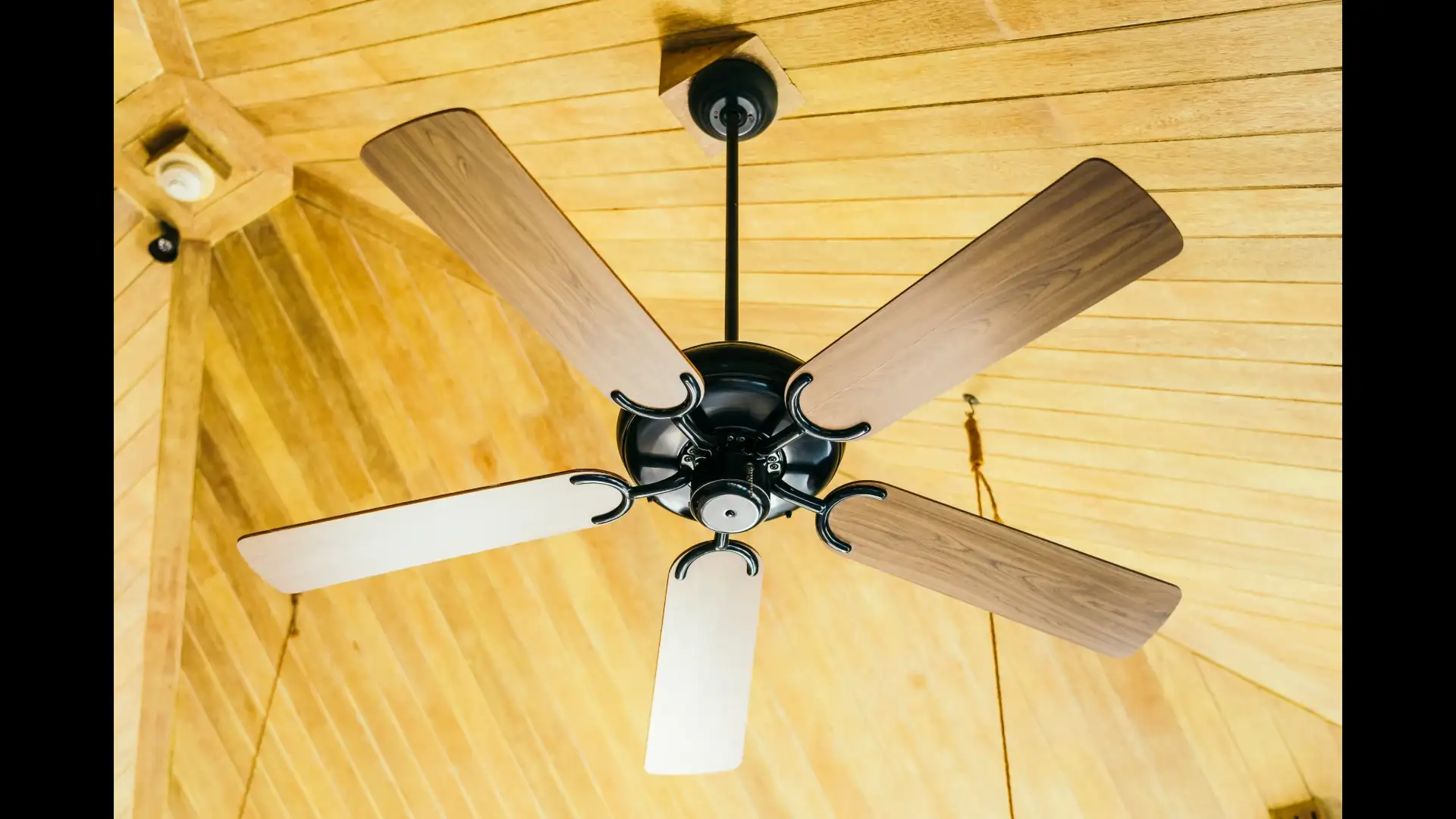
Most residential ceiling fans sit between 12 and 15 degrees of pitch. Below about 10 degrees, a blade moves too little air to feel useful regardless of how fast the motor spins. Much above 15 degrees, the motor has to work harder to overcome the drag, runs hotter, and wears faster. The angle is a balance between airflow and mechanical load, not a number chosen for aesthetics.
This loop is what you feel as a breeze. The moving air accelerates evaporation from your skin, which is how a fan cools you. The room's temperature does not drop; your body loses heat faster. A fan serving an empty room cools nothing.
Warm air collects near the ceiling because heat rises. In winter, reversing the fan at low speed circulates that warm air back down the walls and into the living space without creating a breeze that makes the room feel colder. The pitch does not change; only the direction in which the blade's angle acts. The same geometry that pushes air down in one direction pulls it up in the other.
The fix is to check each blade's angle with a simple angle gauge or even a phone's level app held against the blade surface. All blades should match within a degree or two. A blade that has physically bent usually needs replacing rather than bending back, because the material rarely returns to its original stiffness.
The angled blade is one of those solutions that looks obvious once you understand it and invisible until you do. Every revolution, each blade is performing a small act of fluid mechanics, trading its forward motion for a column of moving air that makes a room livable on a hot afternoon.
What Blade Pitch Actually Does
The blade pitch is the angle the blade makes with a flat horizontal plane as it sweeps through the air. A blade lying perfectly flat would slice through the air without grabbing any of it, like a knife held edge-on to the wind. Tilt the blade, and the leading edge rises above the trailing edge. Now as the blade moves forward, it scoops air from above and drives it downward. The steeper the pitch, the more air each blade grabs per revolution.Most residential ceiling fans sit between 12 and 15 degrees of pitch. Below about 10 degrees, a blade moves too little air to feel useful regardless of how fast the motor spins. Much above 15 degrees, the motor has to work harder to overcome the drag, runs hotter, and wears faster. The angle is a balance between airflow and mechanical load, not a number chosen for aesthetics.
The Column of Air a Fan Builds
When the blades spin, each one pushes a slice of air downward and outward. Because the fan is mounted centrally, these slices combine into a broad column of air moving toward the floor. That column spreads when it hits the floor and travels outward along the room's surface before rising again at the walls. The result is a slow, continuous loop, air cycling down through the centre and rising at the edges.This loop is what you feel as a breeze. The moving air accelerates evaporation from your skin, which is how a fan cools you. The room's temperature does not drop; your body loses heat faster. A fan serving an empty room cools nothing.
You may also like
- IVF Failing Once. Does That Mean Your Chances Are Lower Next Time?
- Psychology says travelling on a new Vande Bharat route makes people more likely to photograph and share their journey: How novelty, national pride and the excitement of experiencing something new turn a train ride into a social media moment
- Nose and Cheeks Dry First: The Anatomy Behind It
- Night shift work and diabetes: How disrupted sleep and late meals raise type 2 diabetes risk
- Elegant Bangle Styles to Enhance Your Silk Saree Look
Why the Direction Switch Exists
Most ceiling fans carry a small switch on the motor housing that reverses the blade direction. In the standard summer direction, blades spin so that the angled leading edge drives air downward, the column and the breeze described above. Reverse the direction, and the same blade angle now pulls air upward from the centre of the room and pushes it outward along the ceiling.Warm air collects near the ceiling because heat rises. In winter, reversing the fan at low speed circulates that warm air back down the walls and into the living space without creating a breeze that makes the room feel colder. The pitch does not change; only the direction in which the blade's angle acts. The same geometry that pushes air down in one direction pulls it up in the other.
What Happens When the Angle Is Wrong
A blade that has warped, bent, or been reinstalled at the wrong angle after cleaning disrupts the balance of the fan. One blade grabbing more air than its neighbours creates a wobble. Wobble adds vibration, vibration adds noise, and over time it stresses the motor mount. A fan that has developed a pronounced wobble almost always has at least one blade sitting at a different angle from the rest, either from a bend or from a loose blade bracket that has let the pitch drift.The fix is to check each blade's angle with a simple angle gauge or even a phone's level app held against the blade surface. All blades should match within a degree or two. A blade that has physically bent usually needs replacing rather than bending back, because the material rarely returns to its original stiffness.
The angled blade is one of those solutions that looks obvious once you understand it and invisible until you do. Every revolution, each blade is performing a small act of fluid mechanics, trading its forward motion for a column of moving air that makes a room livable on a hot afternoon.






Loving Newspoint? Download the app now
