
Why the Same Tea Can Taste Different Every Time You Brew It

You measure the same spoonful of tea leaves, use what appears to be the same amount of water and expect the same familiar cup. Yet sometimes the tea tastes smooth and comforting, while another cup made almost identically turns harsh and bitter. It is easy to assume that the tea leaves are to blame, but brewing is far more sensitive than it appears. Temperature, steeping time, leaf size, water chemistry and even how the leaves move through the water can change what ends up in your cup. The amount of tea matters, but it is only one part of the extraction process.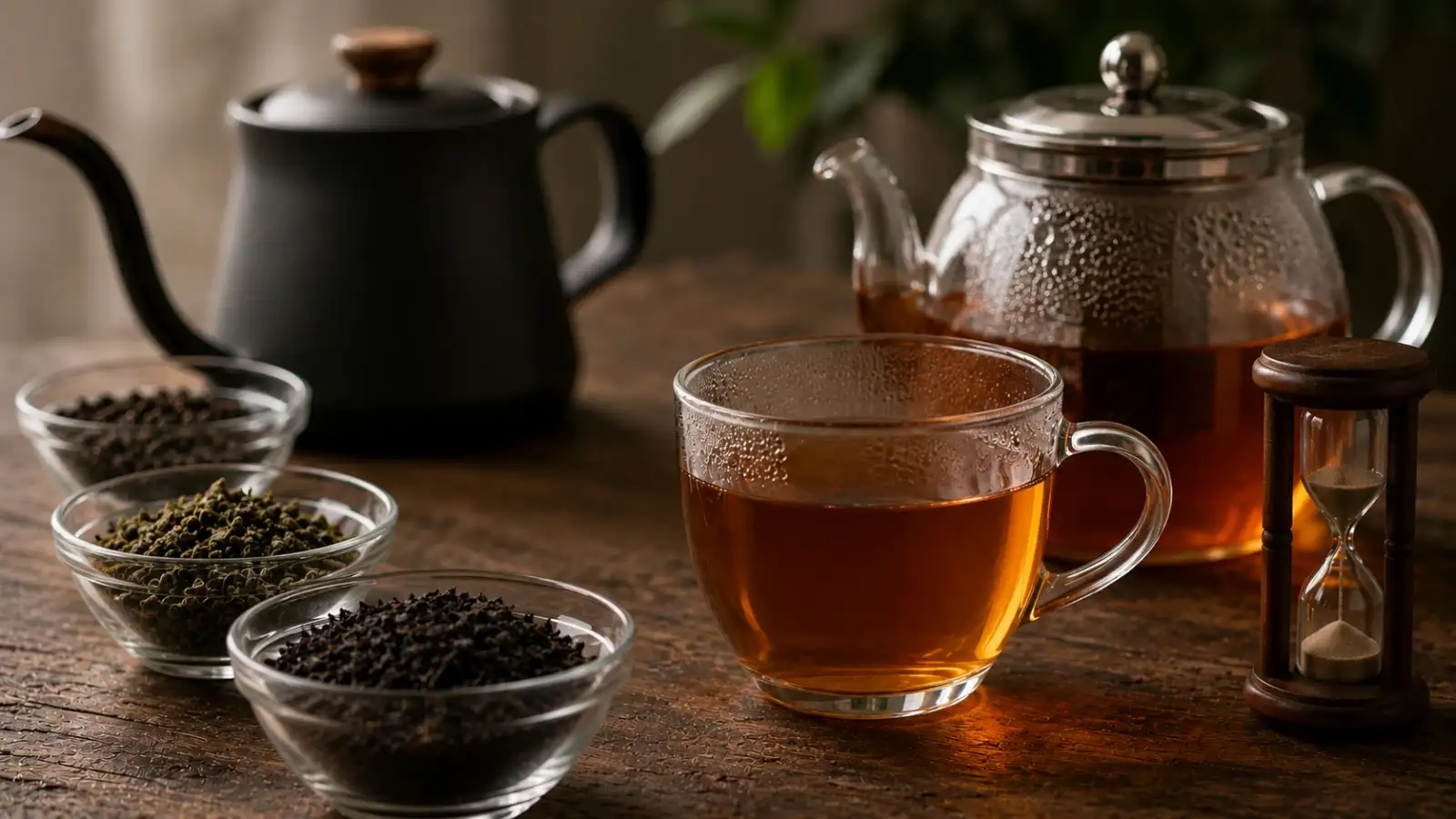
This is why leaving a tea bag in the cup for several extra minutes can make such a noticeable difference. You have not added more leaves, but you have given the water more time to extract compounds from them.
Research examining tea infusions at different temperatures has found measurable differences in compounds including caffeine, catechins and gallic acid.
This is particularly important for delicate teas. Using freshly boiled water for a tea that benefits from cooler brewing can produce a stronger, more astringent result than expected.
A study comparing whole and milled tea found that milled leaves produced infusions perceived as more bitter and astringent in some samples.
This helps explain why tea bags can sometimes taste stronger or harsher than loose-leaf tea even when the measured quantity appears similar.
So when your usual tea suddenly seems bitter, adding more milk or sugar is not always the best solution. Check how long it has steeped and how hot the water was.
A good cup of tea is less about following one fixed measurement and more about controlling extraction. The same amount of leaves can produce noticeably different results because time, temperature, particle size and water all influence which compounds reach the cup. That explains why making tea can feel almost effortless, yet achieving the same taste every morning is surprisingly precise. Sometimes, the difference between comforting and bitter is only a few degrees or an extra minute.
Time Can Change the Taste Dramatically
When tea leaves meet hot water, different compounds dissolve at different rates. Aromatic substances can be extracted relatively quickly, while caffeine, polyphenols and heavier compounds take longer. Tannins and related polyphenolic compounds contribute body and astringency, but excessive extraction can make the drink taste harsh or bitter.This is why leaving a tea bag in the cup for several extra minutes can make such a noticeable difference. You have not added more leaves, but you have given the water more time to extract compounds from them.
Water Temperature Matters Too
The temperature of the water changes the speed and balance of extraction. Hotter water generally extracts compounds more rapidly, which means a small change in temperature can alter the final taste even when everything else looks identical.Research examining tea infusions at different temperatures has found measurable differences in compounds including caffeine, catechins and gallic acid.
You may also like
- Why Some Men Choose Hookups Over Real Relationships After Their First Breakup?
- For Gen Z, patriotism doesn't always need a hero
- Women in uniform: When duty meets the lens
- Meet "Georgia ka Raj Kapoor": The Tbilisi street musician who surprises Indian travellers by singing the iconic 'Mera Joota Hai Japani' song
- EPFO: Over 15 lakh claims for higher pension settled; more than 1.49 lakh payment orders issued..
This is particularly important for delicate teas. Using freshly boiled water for a tea that benefits from cooler brewing can produce a stronger, more astringent result than expected.
The Size of the Leaves Can Surprise You
Two portions that weigh the same may not brew in exactly the same way. Broken or finely milled tea has more surface area exposed to water, allowing compounds to move out of the leaves more readily.A study comparing whole and milled tea found that milled leaves produced infusions perceived as more bitter and astringent in some samples.
This helps explain why tea bags can sometimes taste stronger or harsher than loose-leaf tea even when the measured quantity appears similar.
Even the Same Tea Can Behave Differently
Tea is an agricultural product, not a perfectly uniform manufactured powder. Harvest conditions, processing, storage and leaf grade can all influence its chemical composition. Water quality can add another variable, particularly when mineral content changes the way the brew tastes.So when your usual tea suddenly seems bitter, adding more milk or sugar is not always the best solution. Check how long it has steeped and how hot the water was.
A good cup of tea is less about following one fixed measurement and more about controlling extraction. The same amount of leaves can produce noticeably different results because time, temperature, particle size and water all influence which compounds reach the cup. That explains why making tea can feel almost effortless, yet achieving the same taste every morning is surprisingly precise. Sometimes, the difference between comforting and bitter is only a few degrees or an extra minute.






Loving Newspoint? Download the app now
