
The World's Most Unusual Local Rules Tourists Accidentally Break

When exploring historic global destinations, visitors often focus on capturing pictures without realizing that standard tourist activities can accidentally damage ancient structures. In Greece, authorities strictly ban wearing high heels or hard-soled footwear at iconic archaeological sites like the Acropolis. Sharp heels place immense concentrated pressure on ancient marble steps, causing irreversible surface wear and erosion.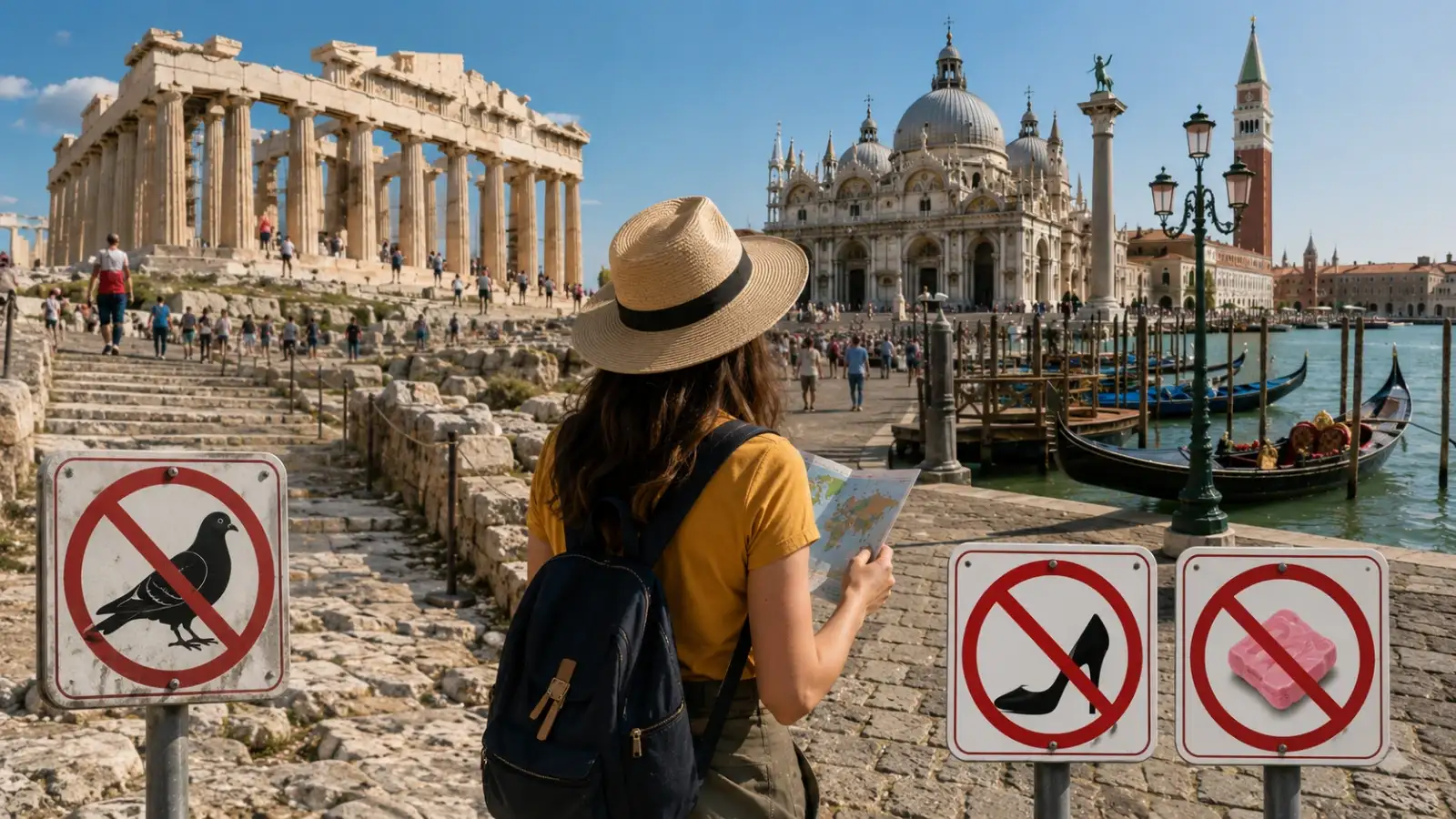
Similarly, in Venice, feeding pigeons in iconic locations like St Mark’s Square carries heavy fines ranging from tens to hundreds of euros. Municipalities enforce this prohibition because flocks of birds damage delicate historic stonework and spread acidic waste over centuries-old monuments. Swapping high heels for cushioned walking shoes and admiring local wildlife from a respectful distance keeps historical landmarks preserved for future generations.
Protecting Urban Cleanliness and Maintaining Civil Order
Urban centers around the world implement unique behavioral standards designed to maintain public hygiene and civil order. Singapore enforces a famous prohibition on importing and selling commercial chewing gum, a regulation introduced to prevent discarded gum from damaging public transport systems and underground train doors.
Meanwhile, coastal destinations across Italy and Spain impose strict fines on tourists walking through town centers in swimwear or without shirts after leaving nearby beaches. Local councils enact these dress regulations to preserve community standards and encourage respectful behavior in residential shopping districts. Carrying a light cover-up garment and checking local public etiquette rules prevents awkward encounters with local law enforcement officers.
Respecting Cultural Etiquette and Sacred National Symbols
Navigating foreign cultural customs requires keen awareness of regional traditions, particularly regarding sacred iconography and currency. In Sri Lanka, turning your back toward Buddha statues to pose for casual travel selfies is considered deeply disrespectful and can lead to immediate fines or official questioning.
Travellers should face sacred monuments respectfully or refrain from taking direct photos in religious sanctuaries. Furthermore, in Thailand, local currency carries the image of the revered monarch. Accidentally stepping on dropped coins or banknotes to prevent them from blowing away in the wind is illegal, as using your foot to pin down currency disrespects the royal image. Treating local customs with mindfulness ensures your holiday remains enjoyable and hassle-free.
Uniform Military Security and Coastal Protection Standards
Certain everyday fashion items and coastal activities face strict legal restrictions across specific tropical destinations. Throughout several Caribbean nations, including Barbados and Saint Lucia, civilians are legally prohibited from wearing camouflage patterned clothing, hats, or backpacks. This rule ensures that civilians and foreign tourists are never mistaken for official military or police personnel.
Additionally, in protected coastal regions like Sardinia, taking natural sand, pebbles, or seashells from public beaches as souvenirs carries severe monetary penalties. Environmental agencies enforce these strict conservation measures to combat severe beach erosion and safeguard delicate marine habitats.
Ensuring Transport Safety and Motorway Compliance
Driving habits that seem minor in your home country can carry serious legal consequences when traveling abroad. On Germany's world-famous Autobahn highway network, running out of fuel is considered a preventable driver error and carries a legal fine. Stopping unnecessarily on high-speed motorways creates extreme traffic hazards for other motorists, making regular fuel checks essential before long journeys.
Similarly, in popular holiday spots like Spain, driving a motor vehicle while wearing flip-flops or operating a car barefoot is strictly banned. Traffic authorities enforce this regulation because loose footwear can slip beneath brake pedals, compromising vehicle safety during sudden stops.
Similarly, in Venice, feeding pigeons in iconic locations like St Mark’s Square carries heavy fines ranging from tens to hundreds of euros. Municipalities enforce this prohibition because flocks of birds damage delicate historic stonework and spread acidic waste over centuries-old monuments. Swapping high heels for cushioned walking shoes and admiring local wildlife from a respectful distance keeps historical landmarks preserved for future generations.
Protecting Urban Cleanliness and Maintaining Civil Order
Urban centers around the world implement unique behavioral standards designed to maintain public hygiene and civil order. Singapore enforces a famous prohibition on importing and selling commercial chewing gum, a regulation introduced to prevent discarded gum from damaging public transport systems and underground train doors.
Meanwhile, coastal destinations across Italy and Spain impose strict fines on tourists walking through town centers in swimwear or without shirts after leaving nearby beaches. Local councils enact these dress regulations to preserve community standards and encourage respectful behavior in residential shopping districts. Carrying a light cover-up garment and checking local public etiquette rules prevents awkward encounters with local law enforcement officers.
You may also like
- “I think every parent should give their child this advice”: Kareena Kapoor on when parents should start building confidence in children
- Air Pollution and Lung Cancer Link: Reducing PM 2.5 Exposure Can Lower Cancer Risk, Study Reveals
- 5 Dangerous Morning Habits That Can Damage Your Kidneys, Warns Leading Urologist
- After years in corporate, a 35th-generation royal returns to his roots and is now reviving a 1929 palace and Kannauj's perfume heritage, giving employment to hundreds
- Sometimes, saying No is the most powerful form of equality
Respecting Cultural Etiquette and Sacred National Symbols
Navigating foreign cultural customs requires keen awareness of regional traditions, particularly regarding sacred iconography and currency. In Sri Lanka, turning your back toward Buddha statues to pose for casual travel selfies is considered deeply disrespectful and can lead to immediate fines or official questioning.
Travellers should face sacred monuments respectfully or refrain from taking direct photos in religious sanctuaries. Furthermore, in Thailand, local currency carries the image of the revered monarch. Accidentally stepping on dropped coins or banknotes to prevent them from blowing away in the wind is illegal, as using your foot to pin down currency disrespects the royal image. Treating local customs with mindfulness ensures your holiday remains enjoyable and hassle-free.
Uniform Military Security and Coastal Protection Standards
Certain everyday fashion items and coastal activities face strict legal restrictions across specific tropical destinations. Throughout several Caribbean nations, including Barbados and Saint Lucia, civilians are legally prohibited from wearing camouflage patterned clothing, hats, or backpacks. This rule ensures that civilians and foreign tourists are never mistaken for official military or police personnel.
Additionally, in protected coastal regions like Sardinia, taking natural sand, pebbles, or seashells from public beaches as souvenirs carries severe monetary penalties. Environmental agencies enforce these strict conservation measures to combat severe beach erosion and safeguard delicate marine habitats.
Ensuring Transport Safety and Motorway Compliance
Driving habits that seem minor in your home country can carry serious legal consequences when traveling abroad. On Germany's world-famous Autobahn highway network, running out of fuel is considered a preventable driver error and carries a legal fine. Stopping unnecessarily on high-speed motorways creates extreme traffic hazards for other motorists, making regular fuel checks essential before long journeys.
Similarly, in popular holiday spots like Spain, driving a motor vehicle while wearing flip-flops or operating a car barefoot is strictly banned. Traffic authorities enforce this regulation because loose footwear can slip beneath brake pedals, compromising vehicle safety during sudden stops.






Loving Newspoint? Download the app now
