
Why Jodhpur's Blue Walls Make Every Photograph Look Alive

Walk into the old city of Jodhpur at any hour and the blue does something unexpected: it changes. At dawn it sits cool and grey-green against the sandstone fort above. By noon it turns almost violet. In the hour before sunset it glows, and the lanes seem lit from inside. Painters have been chasing this quality for generations. Photographers arrive expecting a postcard and leave with something they cannot quite explain.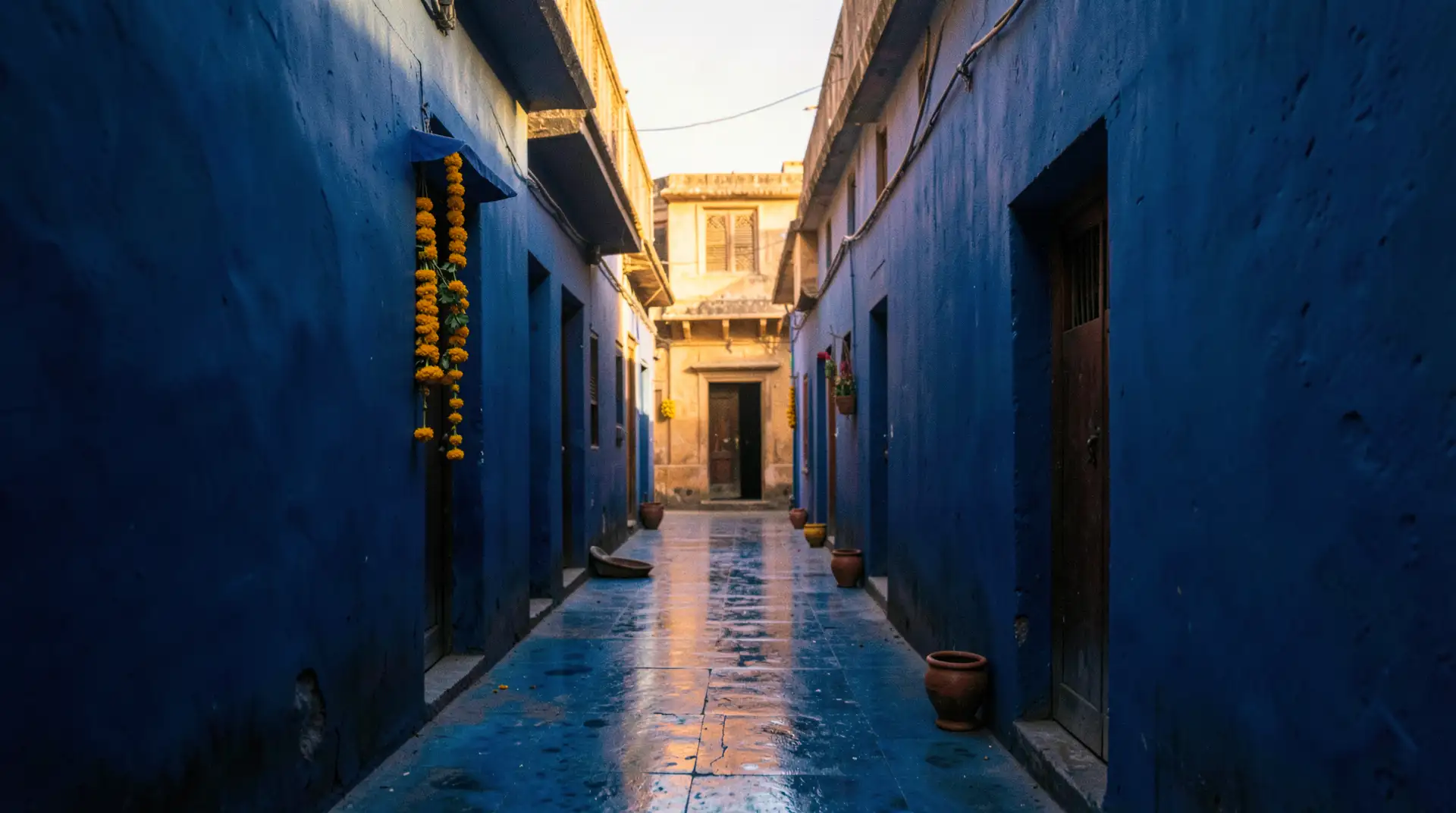
The blue of Jodhpur works because it is the product of a particular chemistry meeting a particular light. The copper sulphate limewash, the dry Rajasthan air, the sandstone above, and the narrow lanes below combine into conditions that no single element creates on its own. That is what keeps the camera coming back: the image is never quite finished, because the light is always moving through something that moves with it.
What Makes the Blue Behave Differently in Light
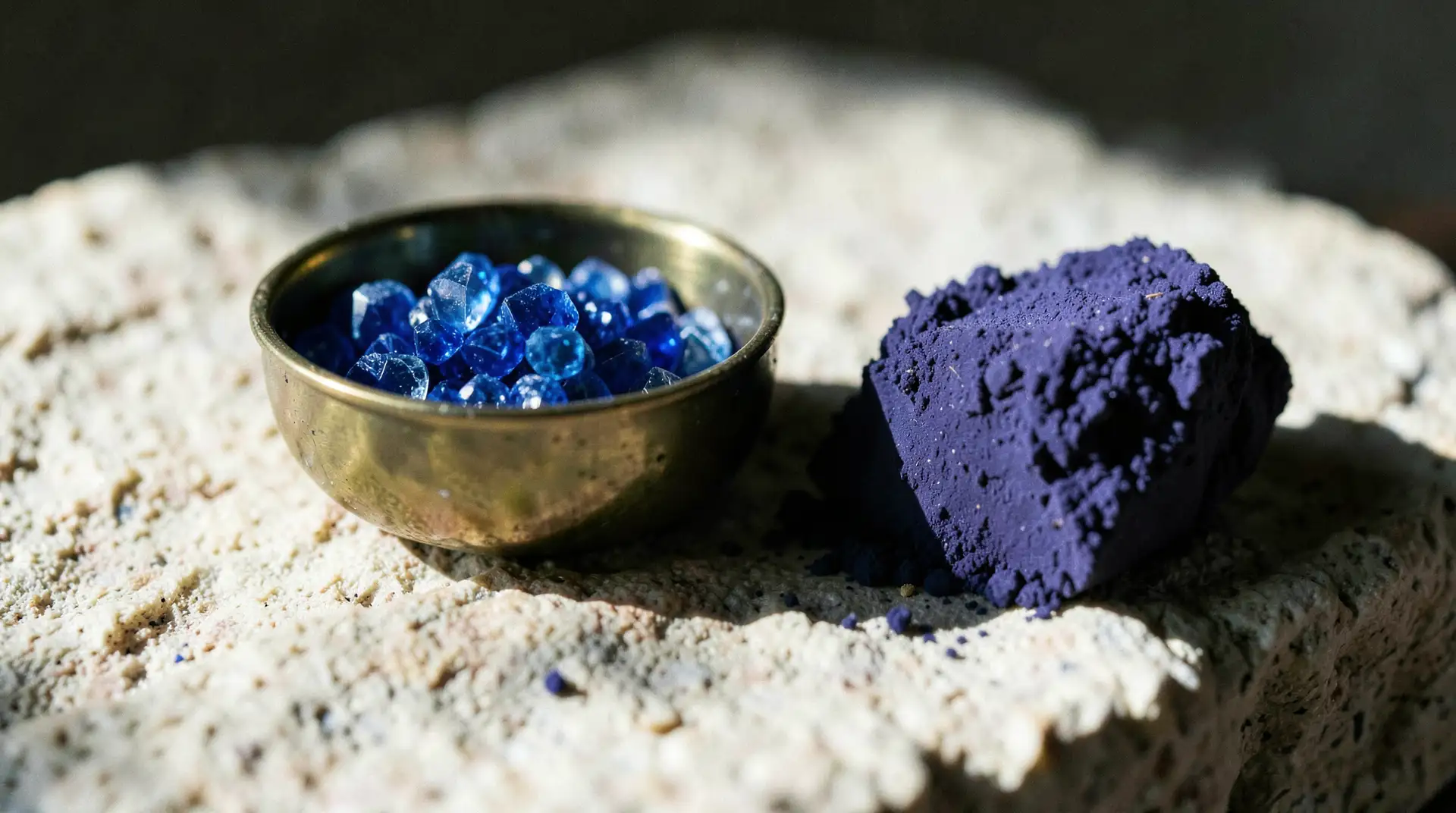
The blue of Jodhpur's houses is not a single colour. The original mix, copper sulphate dissolved in indigo-tinted limewash, absorbed and scattered light in a way that modern synthetic paints do not replicate. Copper sulphate is a natural insecticide, which is why the practice began, but its optical side effect is a surface that shifts tone as the angle of light changes. Photographers call this quality metamerism: the colour reads differently under different light sources. A wall that looks cool and desaturated in open shade turns warm and saturated the moment a shaft of direct sun cuts across it. This is why the same lane, shot at different times of day, can look like two different cities.How the Blue Interacts with the Fort and the Sky
Mehrangarh Fort sits on a sheer rock face above the old city, built from the same honey-coloured sandstone that lines every street below it. The pairing of warm sandstone and cool blue is not accidental composition, it is the contrast that makes both colours more vivid than either would be alone. In colour theory this is simultaneous contrast: adjacent complementary tones intensify each other. The blue city intensifies the gold of the fort; the fort intensifies the blue of the city. Rajasthan's sky, which runs a deeper, harder blue than coastal skies because of the dry air and high elevation, adds a third layer. A wide-angle photograph here contains three distinct blues, sky, wall, and shadow, each at a different temperature and saturation, and the eye reads them as a single coherent world rather than a busy frame.What Painters Have Found That Cameras Miss
The difficulty with painting Jodhpur's blue is that mixing it on a palette produces a colour that looks wrong the moment it is placed next to the real thing. The limewash surface is slightly chalky and slightly reflective at the same time, which means it holds both matte and specular qualities depending on the viewing angle. Watercolour painters working on location often use a wet-on-wet technique, laying a cool wash and dropping a warmer tone into it while still damp, to approximate this dual quality. Oil painters tend to work in glazes, building transparency over an opaque layer. Neither approach fully arrives, which is part of why the city keeps drawing artists back. The subject resists being solved.The Narrow Lanes as a Natural Studio
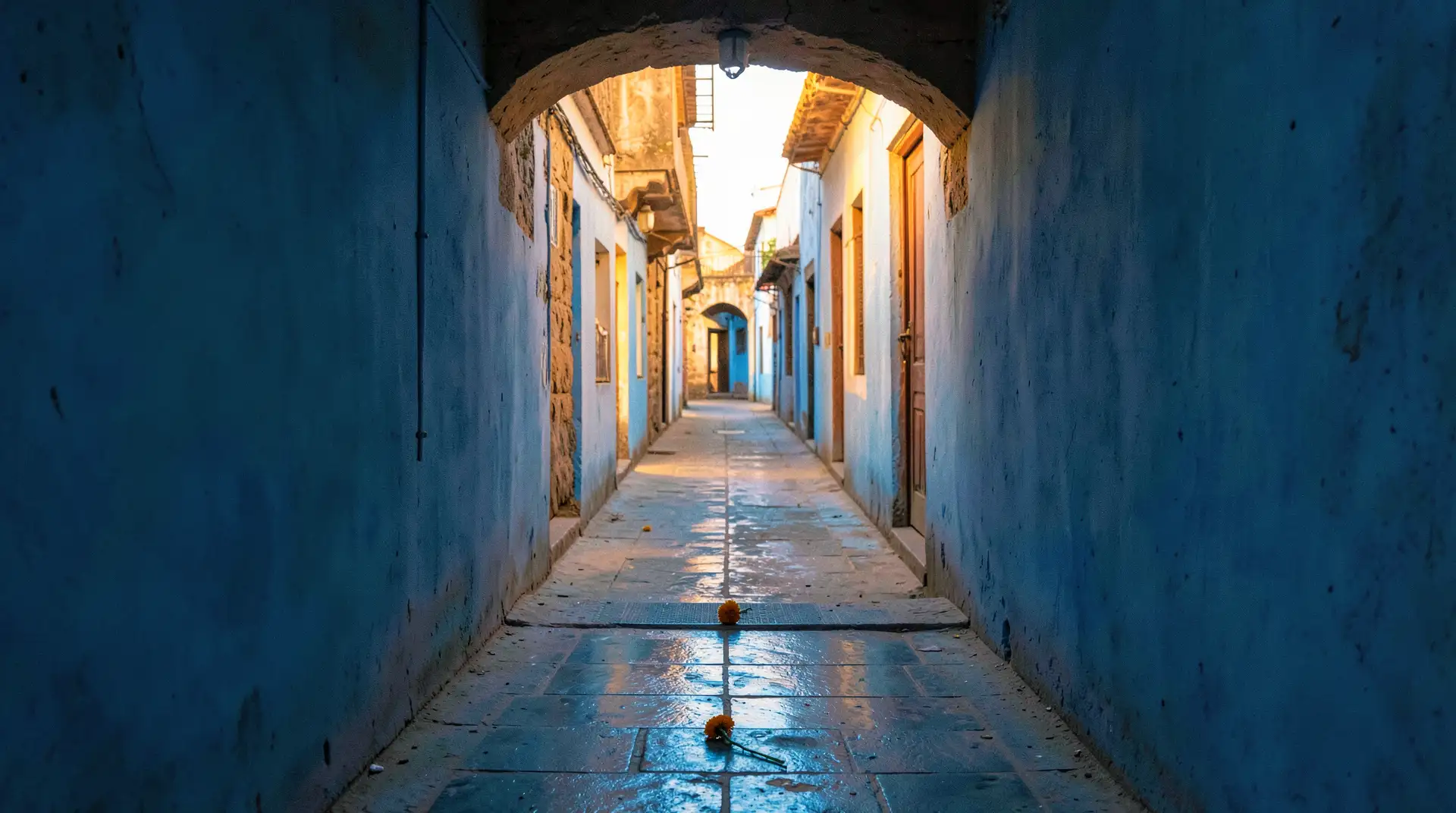
The old city's lanes are rarely wider than four or five metres. This creates a light well: sun enters from above and bounces between the blue walls before it reaches the ground. The reflected light on the lane floor is therefore already blue-tinted, and anyone standing in it, a person, a cow, a pile of marigolds, picks up that cast on their shadow side. Portrait photographers who understand this use the lanes as a natural softbox. The fill light is free, directional, and coloured in a way no studio modifier can produce. Street photographers find that the blue cast unifies the frame: subjects that would look compositionally unrelated in a neutral setting are held together by the shared colour temperature washing over everything.Why the Blue Has Become Harder to Find
The practice of painting with copper sulphate limewash has declined as cement plaster and commercial paint have replaced traditional construction. Many houses repainted in the last few decades use a synthetic blue that is flatter, more uniform, and does not shift with the light in the same way. The areas closest to the fort, particularly the Brahmpuri neighbourhood, have retained the older mix most consistently, which is why photographers and painters concentrate there. The visual quality that makes the city remarkable is not the colour itself but the specific material history behind it. A coat of synthetic blue paint in the same hue produces a different photograph entirely.The blue of Jodhpur works because it is the product of a particular chemistry meeting a particular light. The copper sulphate limewash, the dry Rajasthan air, the sandstone above, and the narrow lanes below combine into conditions that no single element creates on its own. That is what keeps the camera coming back: the image is never quite finished, because the light is always moving through something that moves with it.
Next Story