
Discovering Rome: Must-Visit Destinations In The City Of Seven Hills

Located in central-western Italy, Rome , the capital and largest city, boasts a history stretching over 2,500 years, adorned with captivating landmarks, ancient ruins, and vibrant modern culture. Serving as an ideal hub for exploring Italy, Rome's allure lies in its historical significance as the epicentre of the Roman Empire, featuring iconic structures like the Colosseum, Pantheon, and the Vatican City with St. Peter's Basilica and the Sistine Chapel . The city resonates with Renaissance art treasures and beckons with the temptation of delectable Italian cuisine.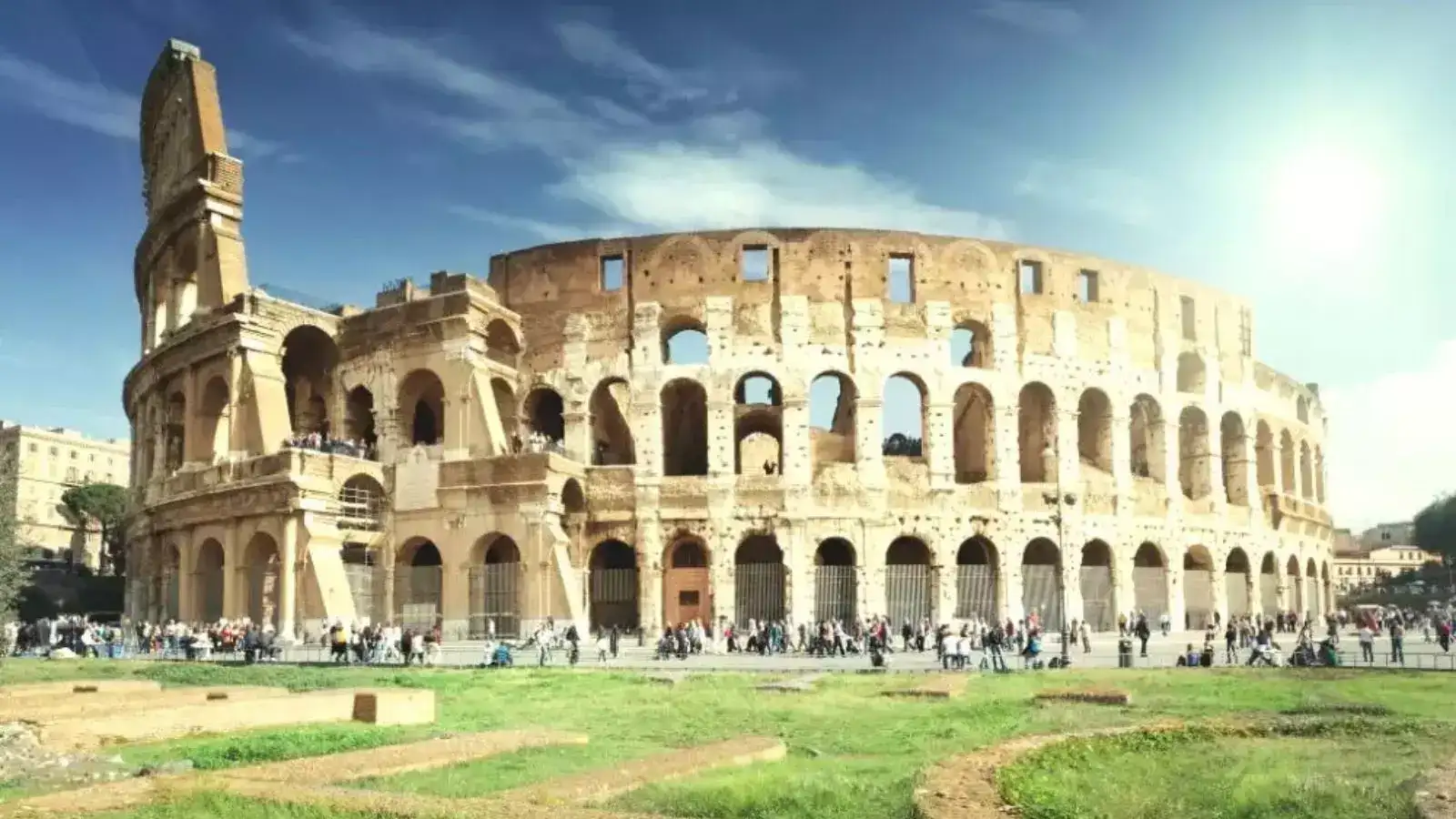
Romance flourishes amidst Rome's charming streets, picturesque piazzas, and enchanting fountains, making it a sought-after destination for couples. An artistic haven, the city houses numerous museums and galleries showcasing masterpieces by celebrated artists such as Michelangelo , Raphael, and Caravaggio. The Borghese Gallery and Galleria Doria Pamphilj stand out among the myriad cultural treasures.
At the heart of Rome lies Vatican City, the world's smallest independent state, a spiritual centre hosting St. Peter's Basilica, the Vatican Museums, and the famed Sistine Chapel adorned with Michelangelo's timeless frescoes. Attracting pilgrims worldwide, Rome stands as a beacon of Catholicism, inviting devotees to partake in religious events and immerse themselves in the sacred sites.
1. The Colosseum
Also known as the Flavian Amphitheatre, is a prominent oval amphitheatre situated at the heart of Rome. Positioned strategically near the Roman Forum, it stands as one of Italy's most popular attractions, drawing over 6 million visitors annually. A symbol of the Roman Empire, the Colosseum has a rich history, having hosted brutal battles and wild animal contests. Its trap doors and subterranean passages, once used for elaborate entertainment, remain accessible.
Regarded as one of the Seven Wonders of the World, the Colosseum is where the Pope participates in the Good Friday procession. Originally named the Flavian Amphitheatre, it was later renamed the Colosseum due to the placement of Nero's statue at the Domus Aurea entrance. Despite visitor restrictions, with only 3000 allowed at once, the Colosseum remains an essential destination for anyone exploring Rome.
2. Vatican Museum
The Vatican Museums, often hailed as the house of a myriad of arts, stand out as one of Italy's most renowned art museums. Attracting approximately 6 million visitors annually, this site holds a position among Rome's oldest. Spanning around 7 kilometres of corridors and halls, the Vatican Museums boast an extensive and exceptional art collection, making it a must-visit for those fascinated by Roman art. With its rich showcase of priceless masterpieces, this cultural treasure offers a captivating experience for art enthusiasts.
3. St. Peter's Square
At the heart of the ellipse stands a 25m obelisk, flanked by two exquisite fountains crafted by Bernini and Maderno. Bernini's colonnades, enclosing one side, feature 284 columns and 88 pillars adorned with statues of saints. With dimensions of 320 metres by 240 metres, the ellipse has a remarkable capacity for 300,000 people. Commissioned by Pope Alexander VII, Bernini built the square between 1656 and 1667, and his pupils added 140 statues. The Royal Staircase connected the square to the Vatican Palaces, designed for the Pope's announcements from St. Peter's Basilica's balcony. The simplicity of the colonnade draws attention to the grand entrance of the basilica.
4. Roman Forum
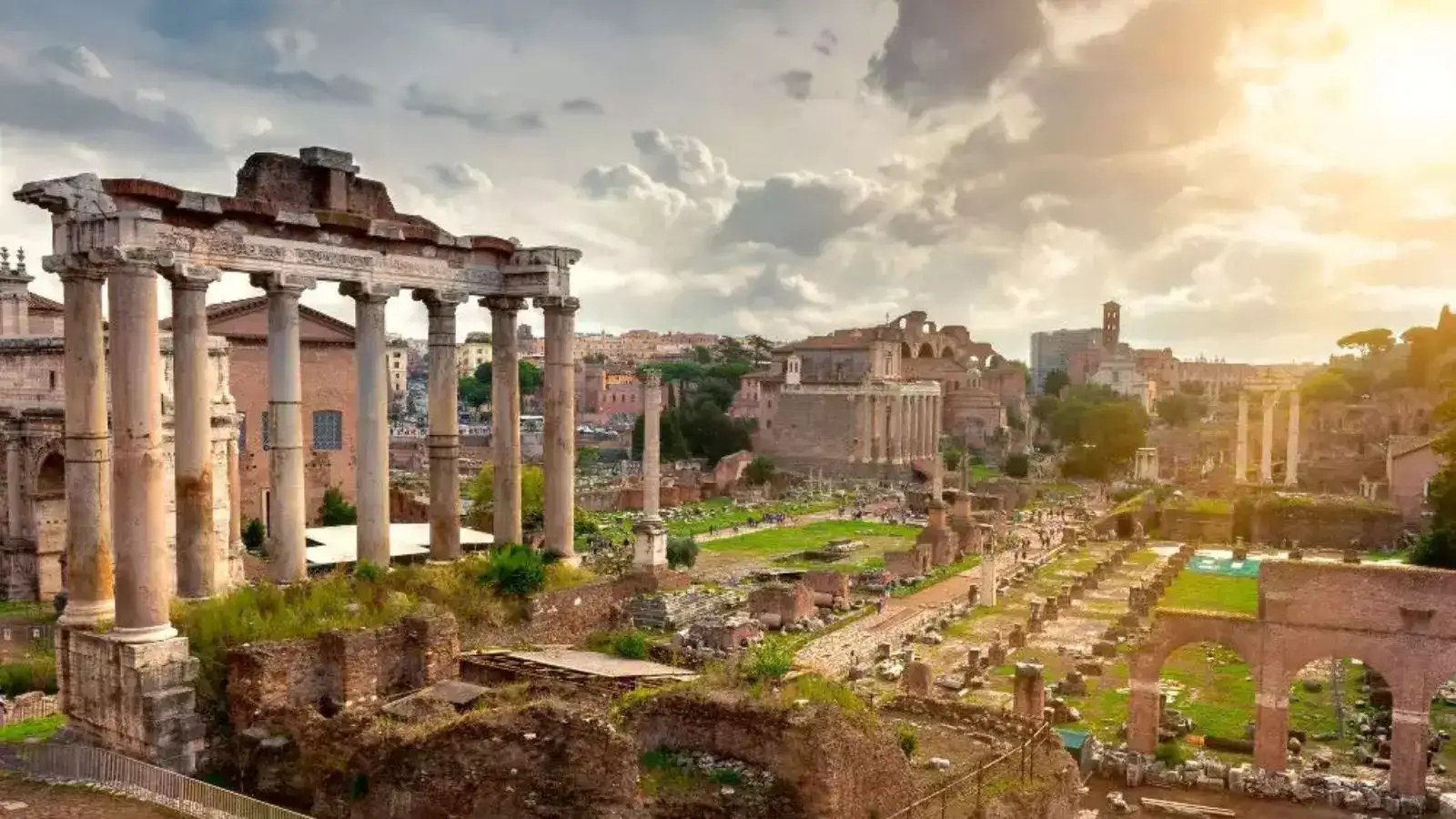
Stands as the remnants of a once-thriving shopping plaza encircled by vital government structures. It served as the hub for diverse public activities in ancient Rome, hosting meetings, concerts, law courts, and trials. Renowned for elections, rallies, and cultural events, the forum was a symbol of historical significance. Encircled by elite offices, it blended exclusivity with a vibrant recreational atmosphere, functioning as a pivotal social, political, and religious centre in the Roman Empire. Home to the Cloaca Maxima, an early sewage system, the Roman Forum stretches from the base of the Capitoline Hill to the Velian Hill.
5. Trevi Fountain
Built in 1762 by artist Nicola Salvi , the Trevi Fountain, or Fontana di Trevi, is a must-visit in Rome. The tradition of tossing coins into the fountain, dating back decades, is accompanied by a myth tied to the number of coins thrown. Renowned for its Baroque architecture, the Trevi Fountain features the 'Ace of Cups,' concealing a sign that a barber refused to relocate during construction. Despite the artist's death midway, the fountain stands as a testament to his vision. Visitors traditionally wish for a swift return to Rome by tossing a coin into its waters.
So, whether you're mesmerized by the architectural wonders, drawn to the cultural treasures, or simply captivated by the romantic ambiance, Rome promises an unforgettable journey through time and a feast for the senses. Pack your bags, toss a coin into the Trevi Fountain, and get ready to unveil the enchanting wonders of ' The City of Seven Hills .' Rome awaits with open arms and a promise of exploration and discovery!
Romance flourishes amidst Rome's charming streets, picturesque piazzas, and enchanting fountains, making it a sought-after destination for couples. An artistic haven, the city houses numerous museums and galleries showcasing masterpieces by celebrated artists such as Michelangelo , Raphael, and Caravaggio. The Borghese Gallery and Galleria Doria Pamphilj stand out among the myriad cultural treasures.
At the heart of Rome lies Vatican City, the world's smallest independent state, a spiritual centre hosting St. Peter's Basilica, the Vatican Museums, and the famed Sistine Chapel adorned with Michelangelo's timeless frescoes. Attracting pilgrims worldwide, Rome stands as a beacon of Catholicism, inviting devotees to partake in religious events and immerse themselves in the sacred sites.
1. The Colosseum
Also known as the Flavian Amphitheatre, is a prominent oval amphitheatre situated at the heart of Rome. Positioned strategically near the Roman Forum, it stands as one of Italy's most popular attractions, drawing over 6 million visitors annually. A symbol of the Roman Empire, the Colosseum has a rich history, having hosted brutal battles and wild animal contests. Its trap doors and subterranean passages, once used for elaborate entertainment, remain accessible.
Regarded as one of the Seven Wonders of the World, the Colosseum is where the Pope participates in the Good Friday procession. Originally named the Flavian Amphitheatre, it was later renamed the Colosseum due to the placement of Nero's statue at the Domus Aurea entrance. Despite visitor restrictions, with only 3000 allowed at once, the Colosseum remains an essential destination for anyone exploring Rome.
2. Vatican Museum
The Vatican Museums, often hailed as the house of a myriad of arts, stand out as one of Italy's most renowned art museums. Attracting approximately 6 million visitors annually, this site holds a position among Rome's oldest. Spanning around 7 kilometres of corridors and halls, the Vatican Museums boast an extensive and exceptional art collection, making it a must-visit for those fascinated by Roman art. With its rich showcase of priceless masterpieces, this cultural treasure offers a captivating experience for art enthusiasts.
3. St. Peter's Square
At the heart of the ellipse stands a 25m obelisk, flanked by two exquisite fountains crafted by Bernini and Maderno. Bernini's colonnades, enclosing one side, feature 284 columns and 88 pillars adorned with statues of saints. With dimensions of 320 metres by 240 metres, the ellipse has a remarkable capacity for 300,000 people. Commissioned by Pope Alexander VII, Bernini built the square between 1656 and 1667, and his pupils added 140 statues. The Royal Staircase connected the square to the Vatican Palaces, designed for the Pope's announcements from St. Peter's Basilica's balcony. The simplicity of the colonnade draws attention to the grand entrance of the basilica.
4. Roman Forum
Stands as the remnants of a once-thriving shopping plaza encircled by vital government structures. It served as the hub for diverse public activities in ancient Rome, hosting meetings, concerts, law courts, and trials. Renowned for elections, rallies, and cultural events, the forum was a symbol of historical significance. Encircled by elite offices, it blended exclusivity with a vibrant recreational atmosphere, functioning as a pivotal social, political, and religious centre in the Roman Empire. Home to the Cloaca Maxima, an early sewage system, the Roman Forum stretches from the base of the Capitoline Hill to the Velian Hill.
5. Trevi Fountain
Built in 1762 by artist Nicola Salvi , the Trevi Fountain, or Fontana di Trevi, is a must-visit in Rome. The tradition of tossing coins into the fountain, dating back decades, is accompanied by a myth tied to the number of coins thrown. Renowned for its Baroque architecture, the Trevi Fountain features the 'Ace of Cups,' concealing a sign that a barber refused to relocate during construction. Despite the artist's death midway, the fountain stands as a testament to his vision. Visitors traditionally wish for a swift return to Rome by tossing a coin into its waters.
So, whether you're mesmerized by the architectural wonders, drawn to the cultural treasures, or simply captivated by the romantic ambiance, Rome promises an unforgettable journey through time and a feast for the senses. Pack your bags, toss a coin into the Trevi Fountain, and get ready to unveil the enchanting wonders of ' The City of Seven Hills .' Rome awaits with open arms and a promise of exploration and discovery!
Next Story