
World Samosa Day: How Samosa Became India’s Favourite Snack

Few snacks can create an instant craving quite like a hot, crispy samosa . The sound of its crunchy pastry, the aroma of spices and the sight of a steaming plate served with chutney are enough to make many people reach for one. From roadside tea stalls and railway stations to office canteens, weddings and family gatherings, the samosa has found a place almost everywhere in India.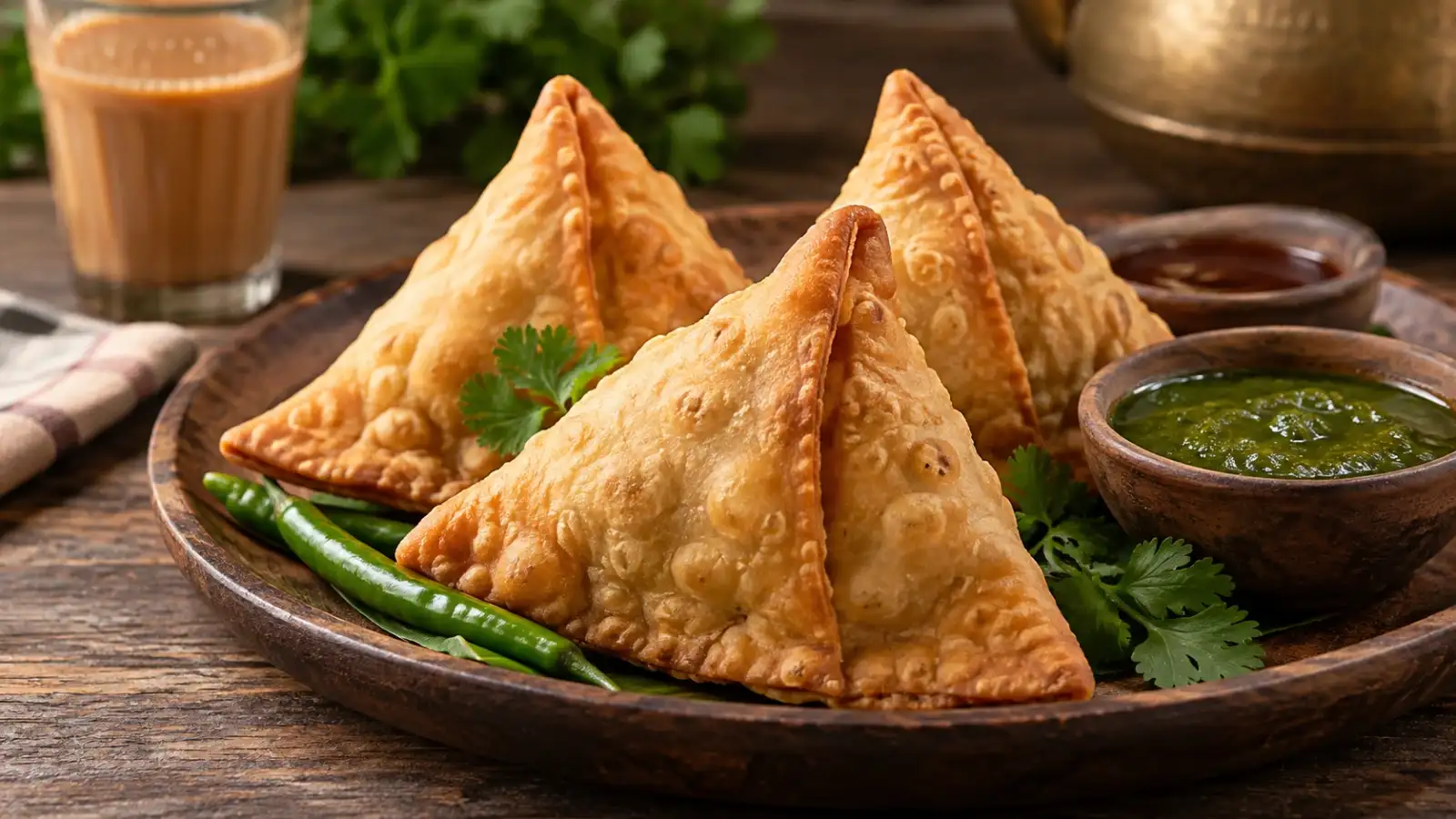
World Samosa Day is celebrated on 5 September, giving food lovers another reason to enjoy this much-loved snack. But behind the familiar triangular shape lies a fascinating story of travel, adaptation and changing tastes. Surprisingly, the samosa did not begin its journey in India. Its older relatives can be traced to parts of the Middle East, Persia and Central Asia, where stuffed pastries were prepared centuries ago.
As people travelled along trade routes between Central Asia, Persia, the Middle East and South Asia, the stuffed pastry travelled with them. By the time it reached the Indian subcontinent during the Delhi Sultanate period, it had already developed a long culinary history.
References from medieval India show that samosa-like dishes were enjoyed in royal settings. The Moroccan traveller Ibn Battuta described a similar stuffed pastry being served at the court of Sultan Muhammad bin Tughluq. Amir Khusrau also referred to a meat-filled samosa enjoyed by the nobility of Delhi.
What happened next is what makes the Indian samosa story particularly interesting. Instead of simply keeping the recipe unchanged, Indian cooks began adapting it to local ingredients and tastes.
Once potatoes became widely available, however, they proved to be an excellent filling. They were filling, relatively affordable and easy to combine with spices. Indian cooks mixed potatoes with green peas, chillies, coriander, cumin, ginger and other ingredients to create the spicy filling that became so popular.
This transformation helped turn the samosa into something distinctly Indian. The pastry had travelled across regions, but its flavours began reflecting Indian kitchens. The modern aloo samosa is therefore a good example of how food changes when it moves from one culture to another.
Its combination of crisp pastry and spicy filling also makes it different from many everyday snacks. One bite gives you the crunch of the outer layer followed by the soft, warm and heavily seasoned filling inside.
The samosa also fits easily into India's diverse food culture. Different regions have created their own versions, with changes in size, pastry, filling and cooking style. Bengal has the shingara, Hyderabad is known for the meat-filled lukhmi, while other parts of the country offer versions filled with lentils, minced meat, vegetables and even modern ingredients such as cheese.
This ability to change has probably been one of the samosa's greatest strengths. It can be traditional without being limited to one recipe.
The snack has also travelled beyond India. Indian communities around the world have helped introduce samosas to new audiences, while restaurants and food businesses have created their own interpretations. Academic research on the samosa has highlighted how successfully it has adapted across South Asian and diaspora communities.
That worldwide journey makes the story of the samosa even more fascinating. It started as a travelling stuffed pastry, crossed regions and cultures, entered royal kitchens and eventually became one of the most recognisable Indian street foods.
On World Samosa Day, the next time you pick up a crispy aloo samosa with green chutney and a cup of chai, there is much more to enjoy than its familiar taste. Inside that little triangle is a story that stretches across centuries, countries and cultures.
Perhaps that is why the samosa has remained so popular. It travelled a very long way, changed along the journey and eventually became a snack that millions of people happily call their own.
World Samosa Day is celebrated on 5 September, giving food lovers another reason to enjoy this much-loved snack. But behind the familiar triangular shape lies a fascinating story of travel, adaptation and changing tastes. Surprisingly, the samosa did not begin its journey in India. Its older relatives can be traced to parts of the Middle East, Persia and Central Asia, where stuffed pastries were prepared centuries ago.
The long journey of the samosa
The early versions of the samosa were not quite like the potato-filled snack found in India today. Historical food records mention pastries with names such as sanbusak, sanbusaq and sanbusaj. These were often filled with meat, onions, nuts and spices. Their compact size also made them useful food for travellers, traders and soldiers who needed something that could be carried on long journeys.As people travelled along trade routes between Central Asia, Persia, the Middle East and South Asia, the stuffed pastry travelled with them. By the time it reached the Indian subcontinent during the Delhi Sultanate period, it had already developed a long culinary history.
References from medieval India show that samosa-like dishes were enjoyed in royal settings. The Moroccan traveller Ibn Battuta described a similar stuffed pastry being served at the court of Sultan Muhammad bin Tughluq. Amir Khusrau also referred to a meat-filled samosa enjoyed by the nobility of Delhi.
What happened next is what makes the Indian samosa story particularly interesting. Instead of simply keeping the recipe unchanged, Indian cooks began adapting it to local ingredients and tastes.
How the potato changed the samosa
Today, it is difficult to imagine an Indian samosa without its familiar filling of potatoes, peas and spices. Yet potatoes were not part of the original samosa story. They arrived in India centuries after the snack itself had reached the subcontinent.Once potatoes became widely available, however, they proved to be an excellent filling. They were filling, relatively affordable and easy to combine with spices. Indian cooks mixed potatoes with green peas, chillies, coriander, cumin, ginger and other ingredients to create the spicy filling that became so popular.
This transformation helped turn the samosa into something distinctly Indian. The pastry had travelled across regions, but its flavours began reflecting Indian kitchens. The modern aloo samosa is therefore a good example of how food changes when it moves from one culture to another.
Why Indians love samosas so much
The popularity of the samosa is not based on taste alone. It is also convenient, affordable and remarkably versatile. A small samosa can be enjoyed with tea in the afternoon, served as a starter at a celebration or picked up as a quick snack while travelling.Its combination of crisp pastry and spicy filling also makes it different from many everyday snacks. One bite gives you the crunch of the outer layer followed by the soft, warm and heavily seasoned filling inside.
The samosa also fits easily into India's diverse food culture. Different regions have created their own versions, with changes in size, pastry, filling and cooking style. Bengal has the shingara, Hyderabad is known for the meat-filled lukhmi, while other parts of the country offer versions filled with lentils, minced meat, vegetables and even modern ingredients such as cheese.
This ability to change has probably been one of the samosa's greatest strengths. It can be traditional without being limited to one recipe.
More than just an evening snack
For many Indians, a samosa is connected with memories. It may remind someone of school canteen breaks, rainy evenings, railway journeys or conversations over a cup of chai. It is often bought in pairs because one somehow never seems enough.The snack has also travelled beyond India. Indian communities around the world have helped introduce samosas to new audiences, while restaurants and food businesses have created their own interpretations. Academic research on the samosa has highlighted how successfully it has adapted across South Asian and diaspora communities.
That worldwide journey makes the story of the samosa even more fascinating. It started as a travelling stuffed pastry, crossed regions and cultures, entered royal kitchens and eventually became one of the most recognisable Indian street foods.
A simple snack with a remarkable history
The story of the samosa shows that food does not always belong to just one place. Recipes travel with people, change with local ingredients and become part of new traditions. Although the samosa has roots outside India, generations of Indian cooks have transformed it into something deeply connected with everyday Indian life.On World Samosa Day, the next time you pick up a crispy aloo samosa with green chutney and a cup of chai, there is much more to enjoy than its familiar taste. Inside that little triangle is a story that stretches across centuries, countries and cultures.
Perhaps that is why the samosa has remained so popular. It travelled a very long way, changed along the journey and eventually became a snack that millions of people happily call their own.
Next Story