
Why Idli Batter Rises Overnight- The Science of Fermentation

The batter looks the same when you leave it on the counter. By morning it has swelled, turned slightly sour, and developed a smell that is hard to describe except as right. Something clearly happened. The something is fermentation, and it is more specific, more alive, and more elegant than the word usually suggests.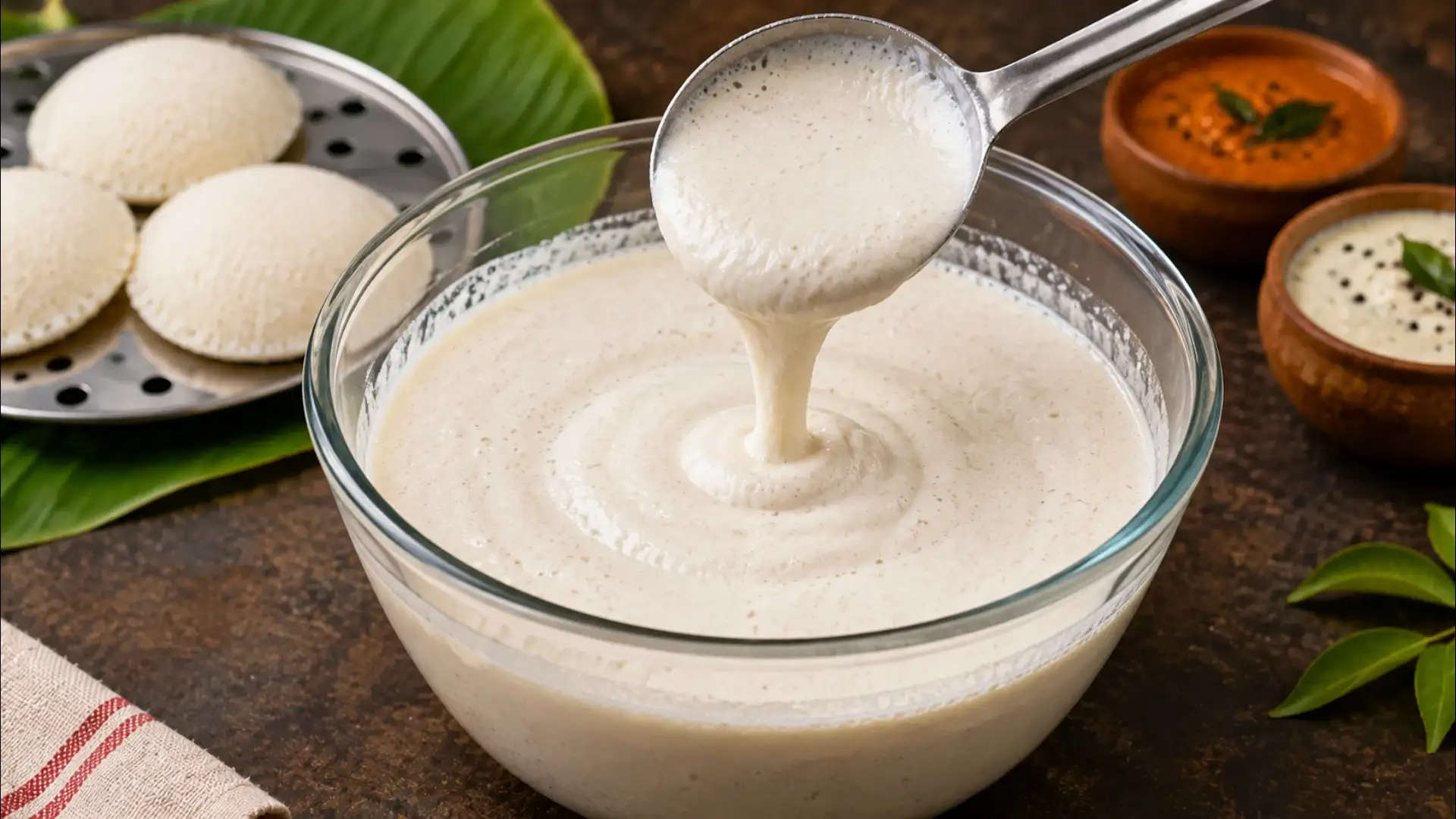
When you grind the soaked grains and leave the batter in a warm place, you create exactly those conditions, moisture, a little warmth, and the sugars the bacteria need to eat. They begin to multiply. As they consume the sugars, they release two things, lactic acid and carbon dioxide gas. The acid is what gives the batter its slight tang. The gas is what makes it rise.
The traditional ratio, roughly one part dal to three or four parts rice, has been arrived at through generations of adjustment, not through any written formula. It balances the bacterial load, the starch available for the bacteria to feed on, and the protein structure that holds the gas bubbles in place long enough to matter.
A mixer-grinder heats the batter slightly from blade friction and grinds it finer. The fermentation still works, but the texture of the final idli is often different, denser, less open. The bacteria are the same, the structure they have to work in is not.
This is why the old practice of leaving the batter inside a switched-off oven with just the light on works, the bulb produces a few degrees of warmth, enough to keep the bacteria active. The bacteria are not dying in the cold, they are simply slowing down. Warmth does not add new microbes. It speeds up the ones already there.
The sourness in the batter is not a flaw to be corrected. It is the record of what the bacteria did, a mild acidity that also makes the cooked idli shelf-stable for a few hours longer than an unfermented steamed cake would be.
The pot on the counter overnight is not waiting. It is working, a small, warm, busy ecosystem running the same process it has run in this part of the world for longer than any recipe has been written down.
Who Does the Work
The rise is not yeast, the way bread rises. Idli batter ferments through lactic acid bacteria, the same family of microbes that curdle milk into yoghurt and turn cabbage into kimchi. These bacteria are already present on the surface of raw rice and urad dal, sitting there invisibly, waiting for conditions to suit them.When you grind the soaked grains and leave the batter in a warm place, you create exactly those conditions, moisture, a little warmth, and the sugars the bacteria need to eat. They begin to multiply. As they consume the sugars, they release two things, lactic acid and carbon dioxide gas. The acid is what gives the batter its slight tang. The gas is what makes it rise.
Why the Ratio of Dal to Rice Matters
Urad dal is not in the batter only for texture. Its skin carries a higher concentration of the bacteria that drive fermentation. A batter with too little dal ferments slowly and unevenly. Too much dal and the batter becomes dense, trapping less gas.The traditional ratio, roughly one part dal to three or four parts rice, has been arrived at through generations of adjustment, not through any written formula. It balances the bacterial load, the starch available for the bacteria to feed on, and the protein structure that holds the gas bubbles in place long enough to matter.
You may also like
- Top Bridal Hairstyle Inspirations for 2026 Weddings
- Hiring an Elephant for a Baraat: What Indian Wildlife Law Actually Allows
- Coming of age in a polycrisis: Why young adults are faring worse than their parents in India
- Hot Water Without Waste: Geyser Timing, Tank Size and the Habit That Doubles Your Bill
- Spraying vinegar on your mattress: What this simple household cleaning trick does, how to apply it correctly and how often to use it to tackle mild odours and keep your mattress fresh
What Grinding Does to the Process
The way the batter is ground changes how well it ferments. A wet grinder, which works by rolling stone on stone, aerates the batter as it grinds. Air gets incorporated into the paste. That air gives the bacteria something to work with from the start and gives the gas bubbles more space to form and hold.A mixer-grinder heats the batter slightly from blade friction and grinds it finer. The fermentation still works, but the texture of the final idli is often different, denser, less open. The bacteria are the same, the structure they have to work in is not.
Why Temperature Changes Everything
Lactic acid bacteria are warm-weather organisms. In a South Indian kitchen in summer, fermentation can be complete in six to eight hours. In a cold northern winter, the same batter left on the same counter might take eighteen hours or more, or stall entirely.This is why the old practice of leaving the batter inside a switched-off oven with just the light on works, the bulb produces a few degrees of warmth, enough to keep the bacteria active. The bacteria are not dying in the cold, they are simply slowing down. Warmth does not add new microbes. It speeds up the ones already there.
What the Rise Actually Tells You
A well-fermented batter is lighter than it looks, full of tiny gas pockets distributed through the paste. When it hits the hot idli mould and steam passes through it, those pockets expand. The lactic acid has also partially broken down the proteins and starches, making the final idli easier to digest than plain cooked rice or dal would be on their own.The sourness in the batter is not a flaw to be corrected. It is the record of what the bacteria did, a mild acidity that also makes the cooked idli shelf-stable for a few hours longer than an unfermented steamed cake would be.
The pot on the counter overnight is not waiting. It is working, a small, warm, busy ecosystem running the same process it has run in this part of the world for longer than any recipe has been written down.






Loving Newspoint? Download the app now
