
Victoria Terminus History: The Story Behind Mumbai’s Magnificent Railway Landmark

Mumbai is home to several historic landmarks, but few are as recognisable as Victoria Terminus , the grand railway station now known as Chhatrapati Shivaji Maharaj Terminus (CSMT). With its towering stone dome, pointed arches, intricate carvings and impressive façade, the building looks more like a royal palace than a busy railway station. Yet, millions of passengers pass through it as part of their daily journeys. Beyond its role in Mumbai’s transport network, the station tells a fascinating story of colonial history, architectural innovation and the city’s transformation into one of India’s most important commercial centres.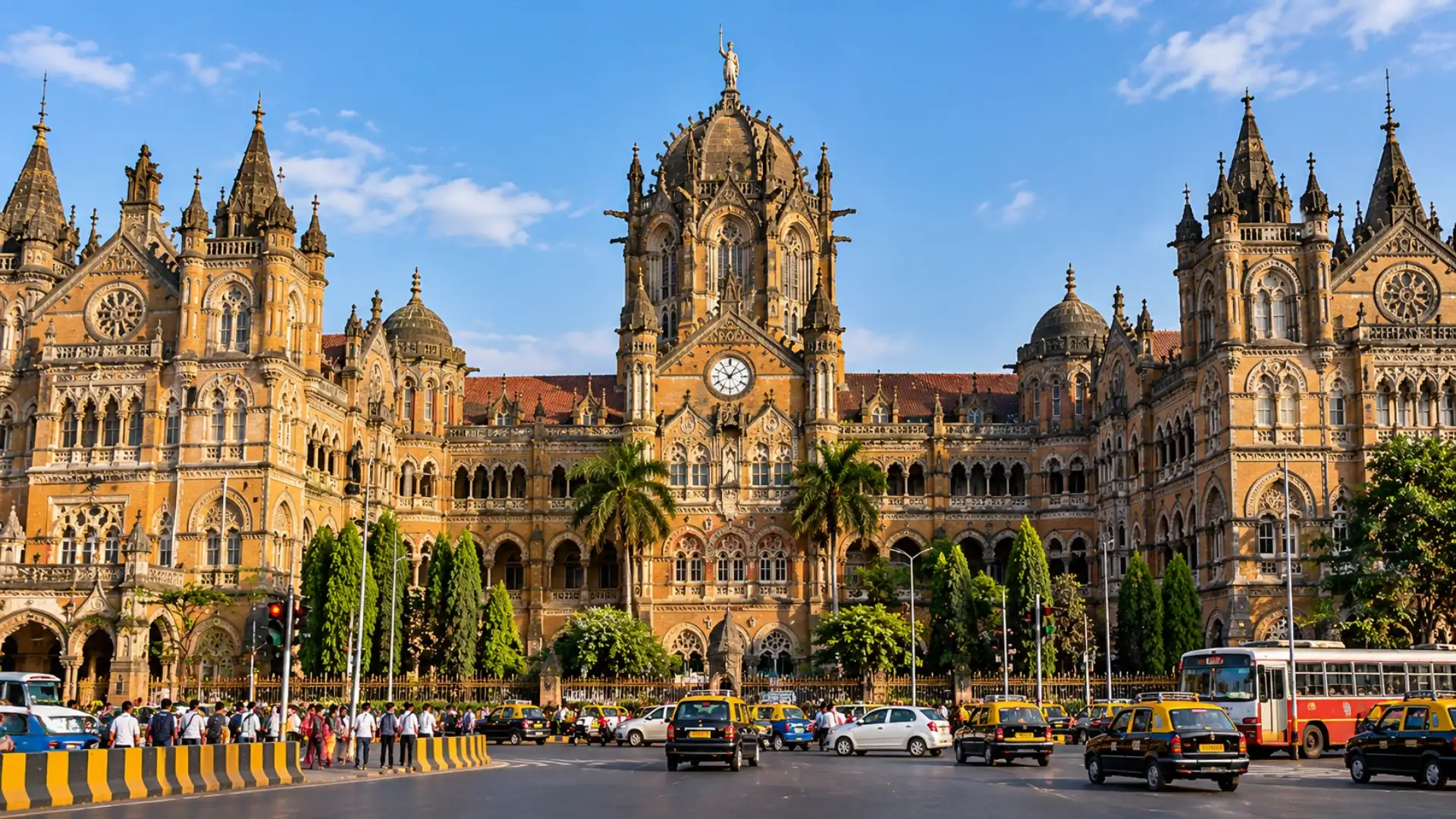
The project took approximately ten years to complete. The station was formally named Victoria Terminus in 1887, during Queen Victoria’s Golden Jubilee celebrations. Its construction reflected Bombay’s growing importance as a commercial port and railway hub during the nineteenth century. The original building was completed around 1888 and remains an important part of the city’s architectural heritage.
The central dome is one of its most striking features. The building also incorporates sculptures and symbolic figures, including a lion and a tiger at the entrance, traditionally representing Britain and India respectively.
The design reflects the collaboration between British architectural planning and the craftsmanship of Indian artisans. This fusion gives the station a distinctive character that sets it apart from many other railway buildings.
Despite these official changes, many people continue to refer to it as Victoria Terminus or simply VT, reflecting its long-standing place in Mumbai’s popular memory.
The building is also a living transport hub rather than a monument preserved solely for visitors. Suburban trains and long-distance railway services connect people to workplaces, markets and destinations across the region. This combination of heritage and everyday use makes the station particularly significant.
For travellers, architecture enthusiasts and history lovers, CSMT offers an opportunity to experience a remarkable chapter of India’s railway and urban heritage.
How Did Victoria Terminus Come Into Existence?
The construction of Victoria Terminus began in 1878, when the Great Indian Peninsula Railway planned a major station and administrative headquarters in Bombay, now Mumbai. British architect Frederick William Stevens designed the building, drawing inspiration from Victorian Gothic Revival architecture and traditional Indian architectural elements.The project took approximately ten years to complete. The station was formally named Victoria Terminus in 1887, during Queen Victoria’s Golden Jubilee celebrations. Its construction reflected Bombay’s growing importance as a commercial port and railway hub during the nineteenth century. The original building was completed around 1888 and remains an important part of the city’s architectural heritage.
What Makes Its Architecture So Special?
Victoria Terminus is celebrated for its distinctive combination of Victorian Gothic Revival and Indian architectural influences . Its stone façade features pointed arches, decorative turrets, carved figures, ornamental windows and elaborate details that reward a closer look.The central dome is one of its most striking features. The building also incorporates sculptures and symbolic figures, including a lion and a tiger at the entrance, traditionally representing Britain and India respectively.
You may also like
- Do your mornings begin with fatigue and lethargy? Even after getting enough sleep, these could be the reasons why..
- Parents do have a favourite child, and it may not be who you think, says new study
- After losing her son to an electric shock on the family farm, a Bihar woman invested in solar irrigation; now Ladli Khatoon supplies water to 35 to 38 farmers and has earned around Rs 1 lakh
- This book was printed in 868 AD and survived for over 1,100 years; how an ancient Chinese text became a landmark in printing history
- Understanding Sibling Rivalry: Key Parental Habits to Address
The design reflects the collaboration between British architectural planning and the craftsmanship of Indian artisans. This fusion gives the station a distinctive character that sets it apart from many other railway buildings.
From Victoria Terminus to CSMT
The station’s name has changed over time. It was originally called Victoria Terminus after Queen Victoria. In 1996, it was renamed Chhatrapati Shivaji Terminus in honour of the Maratha ruler Chhatrapati Shivaji Maharaj. In July 2017, the name was changed to Chhatrapati Shivaji Maharaj Terminus.Despite these official changes, many people continue to refer to it as Victoria Terminus or simply VT, reflecting its long-standing place in Mumbai’s popular memory.
Why Is Victoria Terminus a UNESCO World Heritage Site ?
In 2004, UNESCO included Chhatrapati Shivaji Terminus on its World Heritage List. The recognition highlights the station’s architectural importance and its role in the history of railway development.The building is also a living transport hub rather than a monument preserved solely for visitors. Suburban trains and long-distance railway services connect people to workplaces, markets and destinations across the region. This combination of heritage and everyday use makes the station particularly significant.
A Landmark That Continues to Define Mumbai
Victoria Terminus represents more than the history of a railway station. It reflects Mumbai’s growth, changing identity and architectural diversity. Its grand design stands alongside the rush of modern city life, reminding visitors that historic buildings can remain relevant long after their construction.For travellers, architecture enthusiasts and history lovers, CSMT offers an opportunity to experience a remarkable chapter of India’s railway and urban heritage.






Loving Newspoint? Download the app now
