
VIJAYA DASHAMI: When Victory Learns to Bow


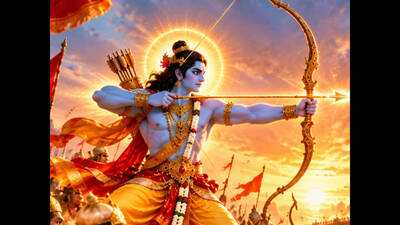
Ravana arrives in armour upon a magnificent chariot. Rama stands upon the earth with only his bow. Vibhishana asks the most human question on any battlefield: how can the apparently unequipped defeat the heavily armed?
In the Ramcharitmanas , Rama answers not with a military secret but with the anatomy of true victory . Courage and patience are the wheels of his chariot; truth and character its flag. Strength, discernment, self-restraint and concern for others are its horses. Forgiveness, compassion and equanimity are the reins; devotion is the charioteer, contentment the sword and wisdom the bow.
The chariot is not machinery outside the warrior. It is order within him.
Modern neuroendocrine physiology helps us read this ancient image afresh. Under threat, the brain’s alarm circuits recruit the sympathetic nervous system and the hypothalamic-pituitary-adrenal axis. Adrenaline quickens the heart and breathing; cortisol mobilises fuel. In an emergency, this response is lifesaving. When battle mode persists, however, blood pressure, glucose regulation, sleep, memory, immune regulation and judgment begin to pay the price. Medicine calls this accumulated burden allostatic load. Recovery requires the parasympathetic shift that settles the heart, breath and attention.
Rama’s invisible chariot is therefore also a lesson in regulated power. Courage without patience becomes impulsivity. Strength without discernment causes needless harm. Self-restraint is the brake that prevents arousal from choosing the target. Compassion and equanimity are the reins that return action to purpose. True victory is not the absence of force, but force remaining answerable to conscience.
Then comes the essential teaching for the day after victory. The Devi Aparadha Kshamapana Stotra does not present a perfect worshipper. The seeker admits not knowing the correct mantra, ritual or meditation; confesses negligence and repeated mistakes, yet trusts that the Mother does not abandon her flawed child.
This is not an escape from accountability. It is the beginning of repair. A mind drowning in shame defends, denies or attacks. A mind held by compassion can admit an error and change.
This is the Triple S of a new Bharat: Science, Skill and Spirituality.
Science reveals how life and nature work. Skill turns knowledge into medicine, technology, enterprise and service. Spirituality asks whether our power protects dignity and whether victory leaves the weakest person safe. Science without skill remains in the notebook. Skill without spirituality can become Ravana’s ten-headed brilliance—immense capability without moral integration. Spirituality without science and skill remains intention without impact.
New Bharat needs Rama’s chariot: research as the bow, competence as the horses, ethics as the reins and compassion as the destination. It also needs the humility to bow before the Mother after battle and seek forgiveness for harm done in the name of success.
On Vijaya Dashami , Ravana’s effigy will burn. The deeper test begins when the applause fades. Can we let the stress response settle, lower our pride, repair what battle damaged and turn victory into service?
The greatest triumph is not standing over a fallen enemy. It is ensuring that victory does not create another Ravana within the victor.
Authored by: Dr Shambo Samrat Samajdar and Dr Shashank R Joshi
In the Ramcharitmanas , Rama answers not with a military secret but with the anatomy of true victory . Courage and patience are the wheels of his chariot; truth and character its flag. Strength, discernment, self-restraint and concern for others are its horses. Forgiveness, compassion and equanimity are the reins; devotion is the charioteer, contentment the sword and wisdom the bow.
The chariot is not machinery outside the warrior. It is order within him.
Modern neuroendocrine physiology helps us read this ancient image afresh. Under threat, the brain’s alarm circuits recruit the sympathetic nervous system and the hypothalamic-pituitary-adrenal axis. Adrenaline quickens the heart and breathing; cortisol mobilises fuel. In an emergency, this response is lifesaving. When battle mode persists, however, blood pressure, glucose regulation, sleep, memory, immune regulation and judgment begin to pay the price. Medicine calls this accumulated burden allostatic load. Recovery requires the parasympathetic shift that settles the heart, breath and attention.
Rama’s invisible chariot is therefore also a lesson in regulated power. Courage without patience becomes impulsivity. Strength without discernment causes needless harm. Self-restraint is the brake that prevents arousal from choosing the target. Compassion and equanimity are the reins that return action to purpose. True victory is not the absence of force, but force remaining answerable to conscience.
Then comes the essential teaching for the day after victory. The Devi Aparadha Kshamapana Stotra does not present a perfect worshipper. The seeker admits not knowing the correct mantra, ritual or meditation; confesses negligence and repeated mistakes, yet trusts that the Mother does not abandon her flawed child.
This is not an escape from accountability. It is the beginning of repair. A mind drowning in shame defends, denies or attacks. A mind held by compassion can admit an error and change.
This is the Triple S of a new Bharat: Science, Skill and Spirituality.
Science reveals how life and nature work. Skill turns knowledge into medicine, technology, enterprise and service. Spirituality asks whether our power protects dignity and whether victory leaves the weakest person safe. Science without skill remains in the notebook. Skill without spirituality can become Ravana’s ten-headed brilliance—immense capability without moral integration. Spirituality without science and skill remains intention without impact.
New Bharat needs Rama’s chariot: research as the bow, competence as the horses, ethics as the reins and compassion as the destination. It also needs the humility to bow before the Mother after battle and seek forgiveness for harm done in the name of success.
On Vijaya Dashami , Ravana’s effigy will burn. The deeper test begins when the applause fades. Can we let the stress response settle, lower our pride, repair what battle damaged and turn victory into service?
The greatest triumph is not standing over a fallen enemy. It is ensuring that victory does not create another Ravana within the victor.
Authored by: Dr Shambo Samrat Samajdar and Dr Shashank R Joshi
Next Story