Timeless Rural Architecture: Villages Where Traditional Homes Still Define the Landscape

Across the globe, rapid urbanization and modern construction methods have transformed the human skyline. Glass towers, steel frames, and uniform concrete blocks have gradually replaced region-specific building techniques in most modern towns. Yet, tucked away in secluded valleys, high mountain ridges, coastal strips, and desert borders, remarkable rural settlements remain steadfast in preserving their ancestral building heritage. In these rural communities, local residents continue to construct and maintain dwellings built entirely from natural, locally sourced materials such as sun-dried mud bricks, local slate stones, bamboo stalks, coconut thatch, and heavy timber beams. These indigenous homes were engineered over centuries of trial and error to withstand harsh local weather conditions while keeping interiors comfortable. Exploring villages where traditional homes still define the landscape reveals how Kath Kuni mountain structures, Chettinad mansions, Kutch bhungas, and Khasi bamboo houses harmonize perfectly with natural surroundings.
Hero Image


Kath Kuni timber and stone craftsmanship in Himachal Pradesh

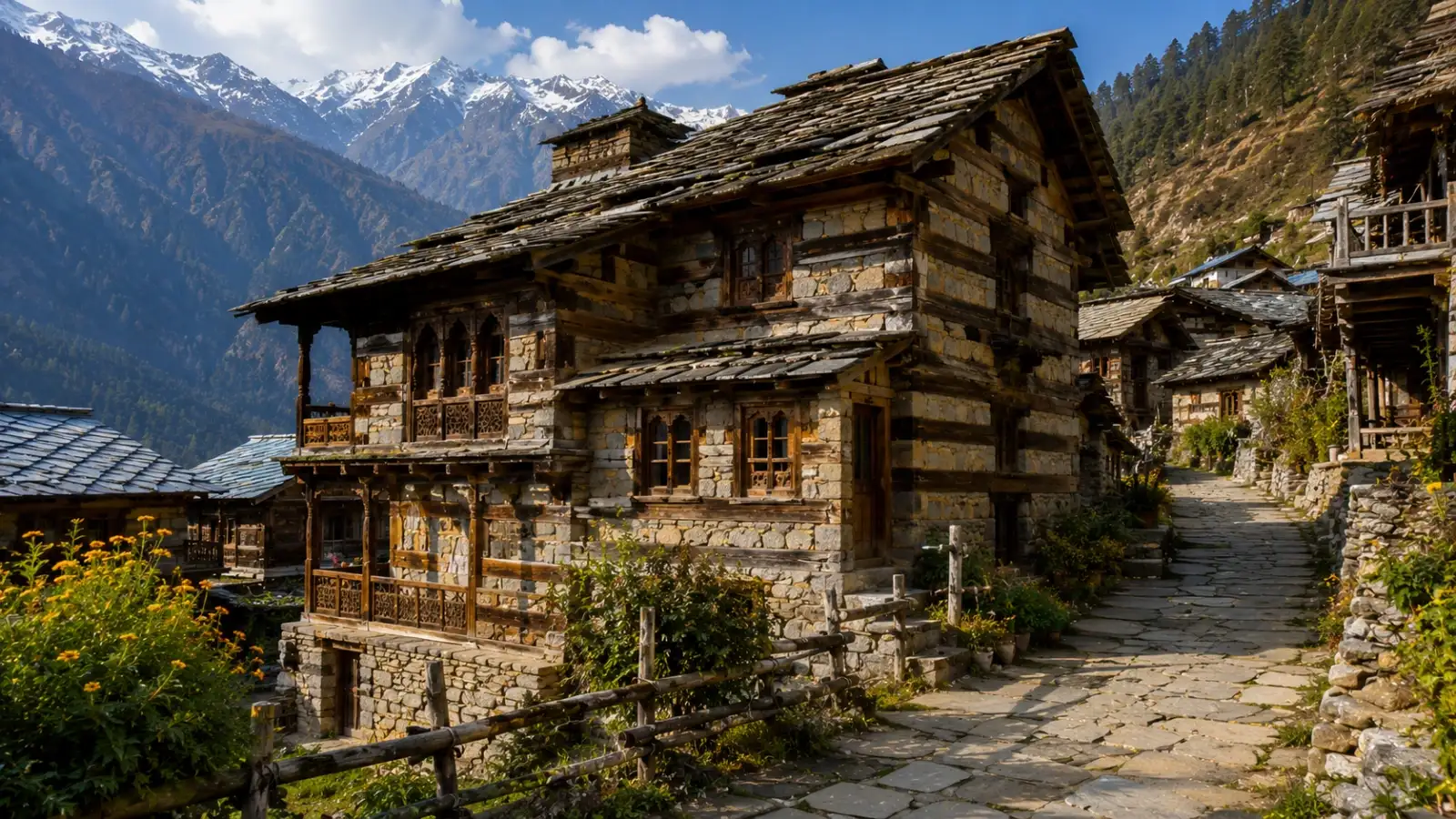
High in the western Himalayas of Himachal Pradesh, isolated mountain settlements like Naggar, Kalpa, and Chitkul showcase the ancient architectural style known as Kath Kuni. Meaning timber and corner, Kath Kuni is an ingenious dry-masonry construction technique designed specifically to resist severe earthquake tremors and freezing winters.

In these mountain villages, traditional homes feature alternating layers of heavy deodar wood logs and hand-chiseled local slate stones laid horizontally without using any cement mortar. The thick walls trap internal heat during freezing winter snows, while allowing subtle flexibility during tectonic earth tremors. Steep, pitched roofs covered in grey slate slabs shed heavy winter snow effortlessly. Walking through these high-altitude villages feels like stepping into a fairytale forest settlement, where every weathered wooden balcony and hand-carved window frame blends seamlessly into surrounding pine forests and snow peaks.


Mud and thatch round bhungas in the Great Rann of Kutch

Moving from frozen mountain peaks down to the scorching salt flats of the Thar Desert in Gujarat, the village of Hodka presents an architectural response to extreme heat and dust storms. Here, local pastoral communities live inside traditional circular homes known as bhungas.

Constructed using local clay, cow dung, and dry grass thatch, bhungas feature a distinctive round design that offers minimum resistance to ferocious desert winds, allowing dust storms to sweep smoothly around the walls without causing structural damage. The thick mud walls act as natural insulation, keeping interiors remarkably cool when outside temperatures soar past forty degrees Celsius. To enhance light and beauty, local women decorate internal mud walls with intricate lipan kaam, a mirror and clay relief artwork that reflects oil lamp light, creating cool, serene, and radiant living spaces amidst dry desert plains.


Palatial Chettinad mansions in rural Tamil Nadu

In the dry plains of southern Tamil Nadu, the historic Chettinad region, encompassing villages like Kanadukathan and Athangudi, displays a breathtaking scale of rural vernacular architecture. Built by wealthy merchant families during the late nineteenth and early twentieth centuries, these grand village homes redefine rural living.

Unlike simple mud cottages, Chettinad mansions are monumental residential compounds built with local red bricks, egg-white wall plaster, carved teakwood pillars, and colorful handmade clay floor tiles. The unique egg-white plaster finish keeps internal rooms cool during intense tropical heatwaves, while open central courtyards allow rainwater harvesting and natural cross ventilation. Walking down village streets lined with continuous rows of these grand carved doorways offers a mesmerizing glimpse into a rich, timeless architectural era.

Living bamboo and thatch dwellings in rural Meghalaya

In the rain-drenched hills of Meghalaya, tribal villages in the East Khasi Hills rely on abundant natural bamboo, wild grass, and timber to craft light, resilient homes. Built on elevated bamboo stilts to protect living spaces from heavy monsoon water flow, these traditional dwellings allow cool air to circulate beneath floorboards.

Thick thatched roofs absorb the deafening sound of heavy tropical downpours, keeping indoor spaces dry and quiet. Because bamboo is flexible and quickly renewable, local villagers rebuild and repair structural elements using sustainable forest materials, keeping their ancestral building heritage alive generation after generation.


Preserving indigenous wisdom for future generations

Visiting villages where traditional homes still define the landscape reminds us that sustainable, climate-smart design has existed for centuries. Preserving these living vernacular wonders protects vital cultural identities and teaches us how to live in harmony with nature.