
What Actually Eats Chhath Offerings Left in the River


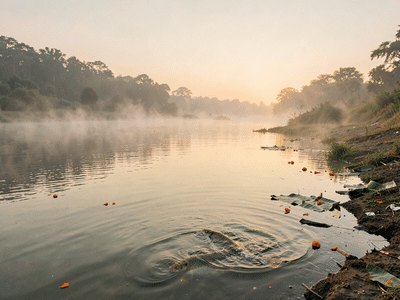
The moment an offering touches the water, it stops being ritual and becomes food. Within minutes of Chhath devotees stepping back from the ghat, the surface is already being read by creatures that have no interest in the occasion but a precise interest in what has arrived.
The First Responders: Fish and TurtlesRohu, catla and common carp are the dominant large fish in most north Indian river systems, and they are opportunistic omnivores. Rohu in particular feeds heavily on plant material, algae and submerged organic matter. A piece of thekua, made from wheat flour, jaggery and ghee, sinks slowly and releases a plume of dissolved sugar and fat that fish detect through chemoreception, the same mechanism that draws sharks to blood. In rivers with a healthy fish population, a submerged offering can be picked apart within twenty to forty minutes. Fruits such as banana and sugarcane break down more slowly on the surface, but once waterlogged they sink and are taken by bottom feeders including catfish species like Mystus seenghala, which are active at dusk and night, exactly when the evening arghya is offered. Indian softshell turtles and Indian flap-shelled turtles, both common in the Ganga and its tributaries, are scavengers and will take fruit, bread-like material and anything soft that reaches the bottom. Turtles have historically been considered sacred in river ghats, and their role as cleanup organisms is one reason temple tanks that maintained turtle populations stayed relatively clear of organic buildup.
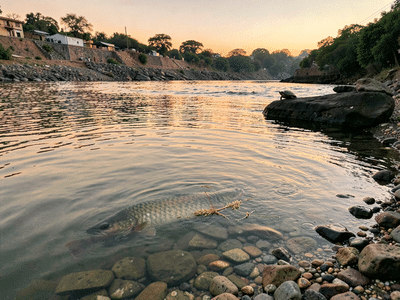 I see a rohu fish near submerged bread at a river ghat, a scene reminiscent of Chhath Puja river offerings.
The Surface Layer: Birds, Insects and What You See FirstHouse crows and jungle crows work the ghat edges immediately. They are bold enough to take offerings directly from the shallow water while people are still present. Black kites circle and descend to snatch floating fruit from the surface. Spot-billed ducks and cotton teals, where present, dabble at floating flowers and soft fruit pulp. The marigold and lotus flowers left during Chhath are not simply decorative debris. Marigold petals contain lutein and zeaxanthin, carotenoid compounds that some fish and birds actively seek out. Bees and wasps work exposed fruit on the bank for hours after the crowd thins. Water striders and backswimmers are on the surface within minutes of any organic material arriving, not eating the offering directly but feeding on the microorganisms that begin colonising it almost immediately.
What the Microorganisms Do and Why It MattersThe decomposition of organic offerings in a river is carried out primarily by bacteria and fungi, and the process is well understood in freshwater ecology. Aerobic bacteria break down the sugars and starches in thekua and fruit pulp, consuming dissolved oxygen in the water column as they do. In a river with strong flow and adequate dissolved oxygen, this is unremarkable. In a slow-moving or partially stagnant stretch, common in urban ghats during the dry season, a large mass of offerings concentrated in one area can cause a localised dissolved oxygen drop, which stresses fish. This is not unique to Chhath; the same effect occurs after any mass organic input, including flower immersion during Durga Puja or the discharge of organic effluent. The scale of Chhath offerings in dense urban ghats is the relevant variable, not the materials themselves, most of which are biodegradable. Jaggery dissolves quickly and is metabolised rapidly. Wheat flour breaks down within days. Sugarcane takes longer but is largely cellulose and lignin, which specialist bacteria and fungi handle over weeks.
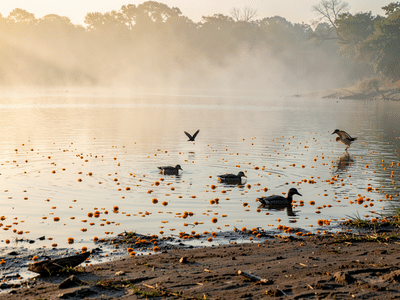 I observe a black kite's descent near spot-billed ducks, surrounded by marigold petals and morning mist. Chhath Puja river offerings are often seen here.
What the River Keeps LongestThe items that persist are not the food. Synthetic dye in the red and yellow fabric used to wrap offerings, plastic bags used to carry fruit to the ghat, and the synthetic thread used to bind flower garlands are what remain after the organic material is gone. Natural fibres, cotton, jute, banana leaf, break down within weeks. A polyester thread on a marigold garland will still be in the sediment a decade later. The river's cleanup crew is highly effective on everything that was part of a living system and largely helpless against anything that was not. The distinction the river draws is not between sacred and ordinary. It is between organic and synthetic.
The First Responders: Fish and TurtlesRohu, catla and common carp are the dominant large fish in most north Indian river systems, and they are opportunistic omnivores. Rohu in particular feeds heavily on plant material, algae and submerged organic matter. A piece of thekua, made from wheat flour, jaggery and ghee, sinks slowly and releases a plume of dissolved sugar and fat that fish detect through chemoreception, the same mechanism that draws sharks to blood. In rivers with a healthy fish population, a submerged offering can be picked apart within twenty to forty minutes. Fruits such as banana and sugarcane break down more slowly on the surface, but once waterlogged they sink and are taken by bottom feeders including catfish species like Mystus seenghala, which are active at dusk and night, exactly when the evening arghya is offered. Indian softshell turtles and Indian flap-shelled turtles, both common in the Ganga and its tributaries, are scavengers and will take fruit, bread-like material and anything soft that reaches the bottom. Turtles have historically been considered sacred in river ghats, and their role as cleanup organisms is one reason temple tanks that maintained turtle populations stayed relatively clear of organic buildup.
The Surface Layer: Birds, Insects and What You See FirstHouse crows and jungle crows work the ghat edges immediately. They are bold enough to take offerings directly from the shallow water while people are still present. Black kites circle and descend to snatch floating fruit from the surface. Spot-billed ducks and cotton teals, where present, dabble at floating flowers and soft fruit pulp. The marigold and lotus flowers left during Chhath are not simply decorative debris. Marigold petals contain lutein and zeaxanthin, carotenoid compounds that some fish and birds actively seek out. Bees and wasps work exposed fruit on the bank for hours after the crowd thins. Water striders and backswimmers are on the surface within minutes of any organic material arriving, not eating the offering directly but feeding on the microorganisms that begin colonising it almost immediately.
What the Microorganisms Do and Why It MattersThe decomposition of organic offerings in a river is carried out primarily by bacteria and fungi, and the process is well understood in freshwater ecology. Aerobic bacteria break down the sugars and starches in thekua and fruit pulp, consuming dissolved oxygen in the water column as they do. In a river with strong flow and adequate dissolved oxygen, this is unremarkable. In a slow-moving or partially stagnant stretch, common in urban ghats during the dry season, a large mass of offerings concentrated in one area can cause a localised dissolved oxygen drop, which stresses fish. This is not unique to Chhath; the same effect occurs after any mass organic input, including flower immersion during Durga Puja or the discharge of organic effluent. The scale of Chhath offerings in dense urban ghats is the relevant variable, not the materials themselves, most of which are biodegradable. Jaggery dissolves quickly and is metabolised rapidly. Wheat flour breaks down within days. Sugarcane takes longer but is largely cellulose and lignin, which specialist bacteria and fungi handle over weeks.
What the River Keeps LongestThe items that persist are not the food. Synthetic dye in the red and yellow fabric used to wrap offerings, plastic bags used to carry fruit to the ghat, and the synthetic thread used to bind flower garlands are what remain after the organic material is gone. Natural fibres, cotton, jute, banana leaf, break down within weeks. A polyester thread on a marigold garland will still be in the sediment a decade later. The river's cleanup crew is highly effective on everything that was part of a living system and largely helpless against anything that was not. The distinction the river draws is not between sacred and ordinary. It is between organic and synthetic.
Next Story