
What If Earth Stopped Spinning? Here's What Could Happen

We’ve all learned that Earth rotates on its axis as it revolves around the sun, creating the cycle of day and night. But have you ever wondered what would happen if Earth stopped spinning? Let’s explore this fascinating hypothetical scenario.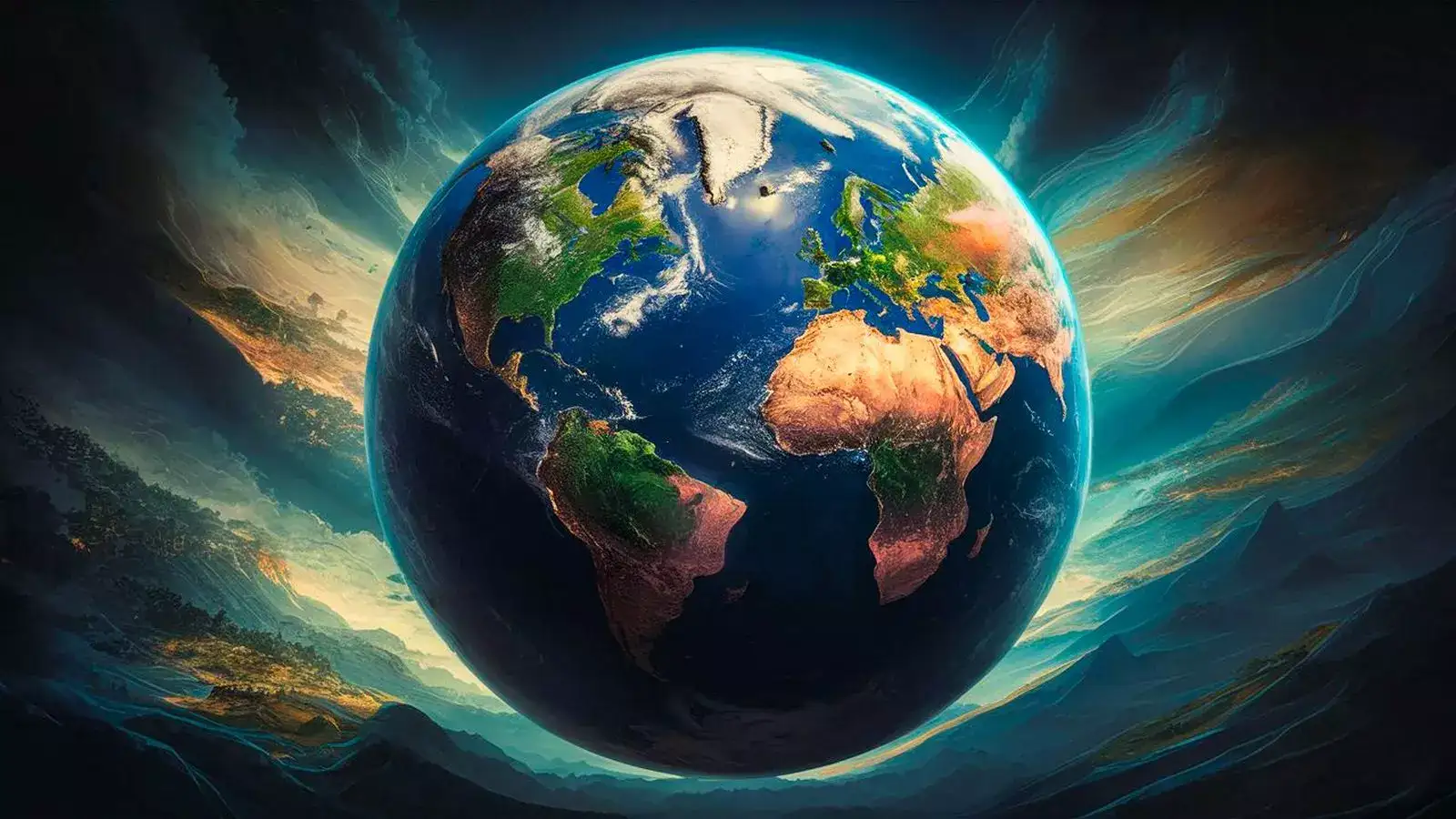
Why Does Earth Spin ?
Earth’s rotation traces back to its formation, about 4.6 billion years ago, from the collapse of a giant cloud of gas and dust. Once something in space starts spinning, it doesn’t stop because there’s no air friction to slow it down, unlike objects on Earth. Think of a spinning top that never loses speed. Without the resistance of air or other forces, Earth has continued rotating for billions of years.
Can Earth Actually Stop Spinning ?
It’s extremely unlikely that Earth will ever stop spinning completely unless an enormous external force acts against it. Although Earth’s rotation has been slowing down gradually, it won’t stop any time soon. But imagining what would happen if it did come to a halt reveals some fascinating possibilities.
Six Months of Daylight and Night
If Earth stopped spinning, the 24-hour day and night cycle would be disrupted. One side of the planet would face the sun for six months straight, creating a half-year of continuous daylight. Meanwhile, the other side would experience six months of darkness. Daytime temperatures would soar, while nights would become frigid, creating massive and unpredictable weather patterns.
Your Body’s Internal Clock Would Be Thrown Off
Our bodies rely on the regular day-night cycle to regulate sleep patterns and other essential functions. If Earth stopped spinning, your internal body clock would lose its rhythm, much like severe jet lag. This could lead to long-term disruptions in sleep, hormone levels, energy regulation, and body temperature.
The Earth’s Magnetic Field Would Disappear
Earth’s spinning core of molten iron generates a magnetic field that shields us from harmful solar and cosmic radiation. If the planet stopped spinning, this magnetic field would vanish, exposing Earth to dangerous rays from the sun and outer space. Over time, this could harm human health and disrupt ecosystems.
The Stars Would Stay the Same
On a rotating Earth, the stars and constellations appear to move across the night sky. If Earth stopped spinning, the sky would remain fixed, showing the same stars and constellations every night. The seasonal shifts we enjoy would cease, making the night sky a permanent picture.
Water Would Shift Toward the Poles
Currently, Earth’s rotation causes water to bulge slightly around the equator. Without the centrifugal force from spinning, water would migrate toward the poles. As a result, the equator could become a dry landmass, and the polar regions would be covered by vast oceans.
Everything Would Be Thrown Eastward
If Earth came to an abrupt stop, everything not fixed to the ground would be flung eastward due to the momentum of the planet’s rotation. This would cause massive destruction, triggering earthquakes and changing landscapes across the globe.
Though it’s fun to speculate, the Earth isn’t going to stop spinning any time soon. What we can focus on is addressing real-world concerns like climate change, a genuine threat to Earth’s future stability. Rather than worrying about an impossible scenario, let’s concentrate on changes we can make to preserve our planet.
Why Does Earth Spin ?
Earth’s rotation traces back to its formation, about 4.6 billion years ago, from the collapse of a giant cloud of gas and dust. Once something in space starts spinning, it doesn’t stop because there’s no air friction to slow it down, unlike objects on Earth. Think of a spinning top that never loses speed. Without the resistance of air or other forces, Earth has continued rotating for billions of years.
Can Earth Actually Stop Spinning ?
It’s extremely unlikely that Earth will ever stop spinning completely unless an enormous external force acts against it. Although Earth’s rotation has been slowing down gradually, it won’t stop any time soon. But imagining what would happen if it did come to a halt reveals some fascinating possibilities.
Six Months of Daylight and Night
If Earth stopped spinning, the 24-hour day and night cycle would be disrupted. One side of the planet would face the sun for six months straight, creating a half-year of continuous daylight. Meanwhile, the other side would experience six months of darkness. Daytime temperatures would soar, while nights would become frigid, creating massive and unpredictable weather patterns.
Your Body’s Internal Clock Would Be Thrown Off
Our bodies rely on the regular day-night cycle to regulate sleep patterns and other essential functions. If Earth stopped spinning, your internal body clock would lose its rhythm, much like severe jet lag. This could lead to long-term disruptions in sleep, hormone levels, energy regulation, and body temperature.
You may also like
- 7 Signs Your Dieting Is Burning Muscle Instead of Fat and How to Stop Catabolism
- Before chocolates took over, these 5 old-school toffees ruled Indian childhood in the 1980s
- 7 Injuries and Heat Emergencies Hospitals See Most During Visarjan Processions
- 5 Reasons Hanuman Puja Can Feel Difficult at First
- How to use AI to plan your next holiday: Tell ChatGPT your budget, travel dates, interests and preferred weather, and discover destinations, hotels, hidden gems and personalised itineraries you may have missed
The Earth’s Magnetic Field Would Disappear
Earth’s spinning core of molten iron generates a magnetic field that shields us from harmful solar and cosmic radiation. If the planet stopped spinning, this magnetic field would vanish, exposing Earth to dangerous rays from the sun and outer space. Over time, this could harm human health and disrupt ecosystems.
The Stars Would Stay the Same
On a rotating Earth, the stars and constellations appear to move across the night sky. If Earth stopped spinning, the sky would remain fixed, showing the same stars and constellations every night. The seasonal shifts we enjoy would cease, making the night sky a permanent picture.
Water Would Shift Toward the Poles
Currently, Earth’s rotation causes water to bulge slightly around the equator. Without the centrifugal force from spinning, water would migrate toward the poles. As a result, the equator could become a dry landmass, and the polar regions would be covered by vast oceans.
Everything Would Be Thrown Eastward
If Earth came to an abrupt stop, everything not fixed to the ground would be flung eastward due to the momentum of the planet’s rotation. This would cause massive destruction, triggering earthquakes and changing landscapes across the globe.
Though it’s fun to speculate, the Earth isn’t going to stop spinning any time soon. What we can focus on is addressing real-world concerns like climate change, a genuine threat to Earth’s future stability. Rather than worrying about an impossible scenario, let’s concentrate on changes we can make to preserve our planet.






Loving Newspoint? Download the app now
