
What Is Biophilic Design? How Homes Are Using Nature to Create Calmer Spaces

A home can look modern and beautifully furnished yet still feel disconnected from the natural world. Biophilic design approaches this problem by bringing elements of nature into everyday spaces through sunlight, greenery, natural materials and views of the outdoors. Rather than treating plants as decorative accessories, it considers how the relationship between people and nature can influence the experience of the places where they live and work.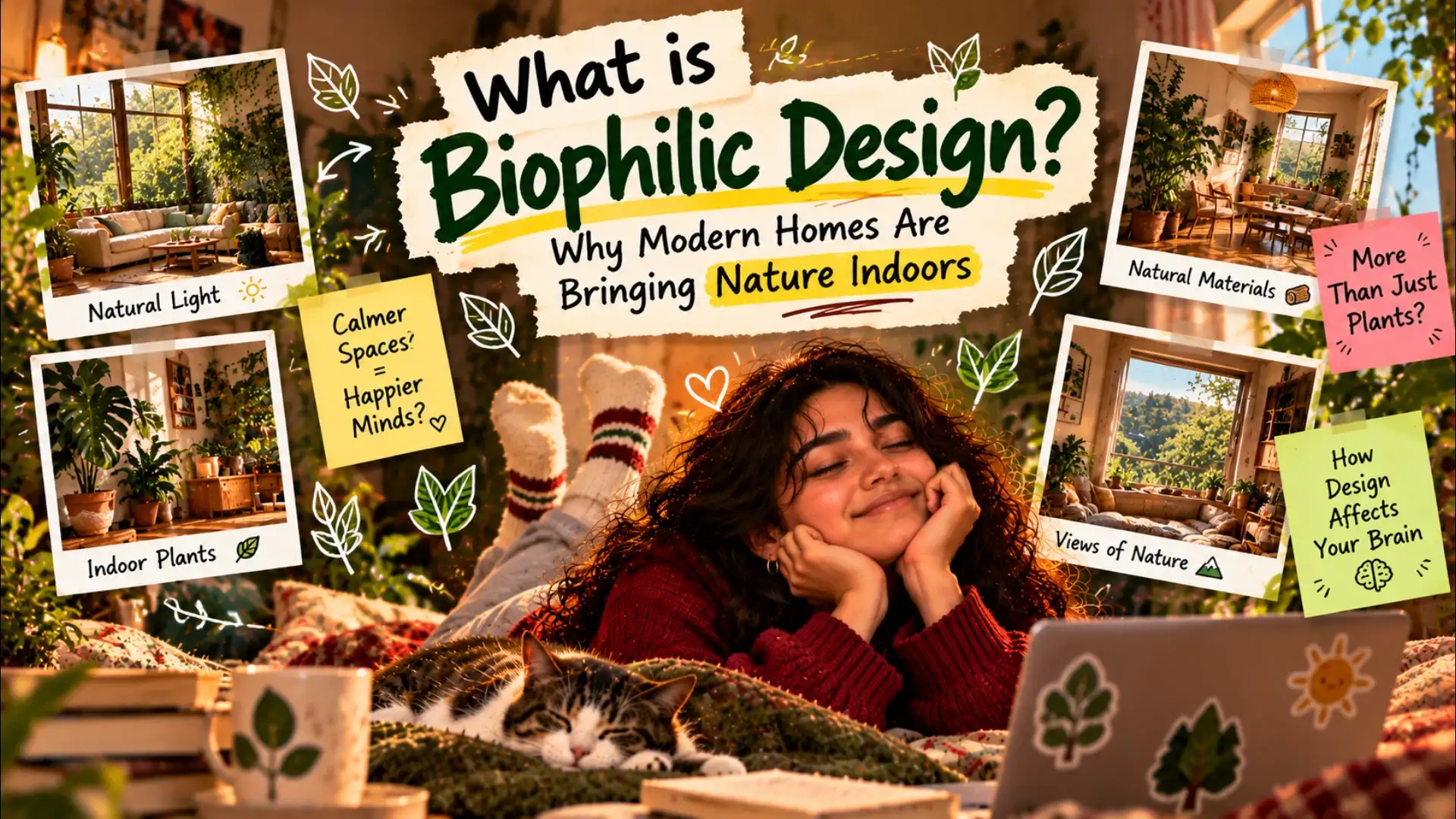
In practice, the approach can include indoor plants , daylight, natural materials, views of trees or gardens and design features that echo natural shapes and patterns. Some buildings also incorporate courtyards, water elements and outdoor spaces that allow people to experience nature without leaving the property.
However, biophilic design is not simply the act of placing a few potted plants in a room. It involves thinking about how the entire environment connects people with natural elements.
For an apartment with limited outdoor space, this might mean making better use of daylight, adding suitable greenery and choosing materials that introduce natural textures. In a larger building, it could involve landscaped courtyards or shared garden areas.
Bringing natural elements indoors offers one way to make everyday environments feel more connected to the outdoors. Plants introduce living greenery, while sunlight and views of trees can change the experience of a room throughout the day.
Natural materials such as wood and stone can add texture and visual variation. Patterns inspired by leaves, branches or flowing water may also create a visual connection with the natural world. The appeal is not purely decorative. Nature-inspired spaces are often designed with comfort, sensory experience and the needs of occupants in mind. However, the effect depends on the individual and the environment, rather than on any single design feature.
Plants and greenery can introduce colour and life into interiors. The right choices depend on available light, humidity, maintenance requirements and whether pets or children could come into contact with the plants. Natural materials and textures are another feature. Wood, stone, bamboo and other suitable materials can bring variation to a room without relying entirely on artificial finishes.
Views and patterns inspired by nature can also contribute. A window overlooking trees, a small balcony garden or artwork based on natural forms may create a visual connection with the outdoors. These elements can be combined in different ways. Biophilic design does not require every room to resemble a greenhouse or use expensive natural materials.
You can also introduce natural textures through wooden furniture, woven materials, stone finishes or fabrics in colours inspired by the outdoors. If you have a balcony, consider making it a comfortable place to spend time rather than using it only for storage.
Biophilic design should work with the realities of a home. Ventilation, safety, accessibility, cleaning and maintenance remain important, and not every natural material is suitable for every environment. The goal is not to create a perfect nature-inspired interior. It is to make everyday spaces feel more connected to the natural world in ways that are practical, comfortable and suited to the people living in them.
What is biophilic design?
Biophilic design is an approach to architecture and interior design that aims to strengthen people's connection with nature. The term 'biophilic' refers to an affinity for living systems and the natural world.In practice, the approach can include indoor plants , daylight, natural materials, views of trees or gardens and design features that echo natural shapes and patterns. Some buildings also incorporate courtyards, water elements and outdoor spaces that allow people to experience nature without leaving the property.
However, biophilic design is not simply the act of placing a few potted plants in a room. It involves thinking about how the entire environment connects people with natural elements.
For an apartment with limited outdoor space, this might mean making better use of daylight, adding suitable greenery and choosing materials that introduce natural textures. In a larger building, it could involve landscaped courtyards or shared garden areas.
Why are modern homes bringing nature indoors?
Urban living often means spending substantial amounts of time inside buildings, surrounded by artificial lighting, screens and manufactured materials. Access to parks, gardens or open landscapes can also vary considerably between neighbourhoods.Bringing natural elements indoors offers one way to make everyday environments feel more connected to the outdoors. Plants introduce living greenery, while sunlight and views of trees can change the experience of a room throughout the day.
Natural materials such as wood and stone can add texture and visual variation. Patterns inspired by leaves, branches or flowing water may also create a visual connection with the natural world. The appeal is not purely decorative. Nature-inspired spaces are often designed with comfort, sensory experience and the needs of occupants in mind. However, the effect depends on the individual and the environment, rather than on any single design feature.
What are the main elements of biophilic design?
Natural light is an important starting point. Window placement, suitable curtains and layouts that allow daylight to reach occupied areas can help make a room feel more open. Glare and excessive heat still need to be managed.Plants and greenery can introduce colour and life into interiors. The right choices depend on available light, humidity, maintenance requirements and whether pets or children could come into contact with the plants. Natural materials and textures are another feature. Wood, stone, bamboo and other suitable materials can bring variation to a room without relying entirely on artificial finishes.
Views and patterns inspired by nature can also contribute. A window overlooking trees, a small balcony garden or artwork based on natural forms may create a visual connection with the outdoors. These elements can be combined in different ways. Biophilic design does not require every room to resemble a greenhouse or use expensive natural materials.
How can you use biophilic design at home?
Start by looking at the features your home already has. If natural light is available, avoid blocking it unnecessarily and arrange frequently used spaces to make better use of it. Choose plants that suit your home's conditions rather than buying greenery that requires more care than you can provide. A few well-maintained plants may be more practical than a crowded collection that struggles to survive.You can also introduce natural textures through wooden furniture, woven materials, stone finishes or fabrics in colours inspired by the outdoors. If you have a balcony, consider making it a comfortable place to spend time rather than using it only for storage.
Biophilic design should work with the realities of a home. Ventilation, safety, accessibility, cleaning and maintenance remain important, and not every natural material is suitable for every environment. The goal is not to create a perfect nature-inspired interior. It is to make everyday spaces feel more connected to the natural world in ways that are practical, comfortable and suited to the people living in them.
Next Story