
What Is Companion Planting, and Which Combinations Are Worth Trying?

Growing vegetables, herbs and flowers together can make a garden more interesting and productive. This gardening method, known as companion planting , involves placing different plants near one another to make better use of space, attract beneficial insects or support healthier growing conditions. Some combinations are particularly useful because they bring together plants with different growth habits, flowering periods or nutrient requirements.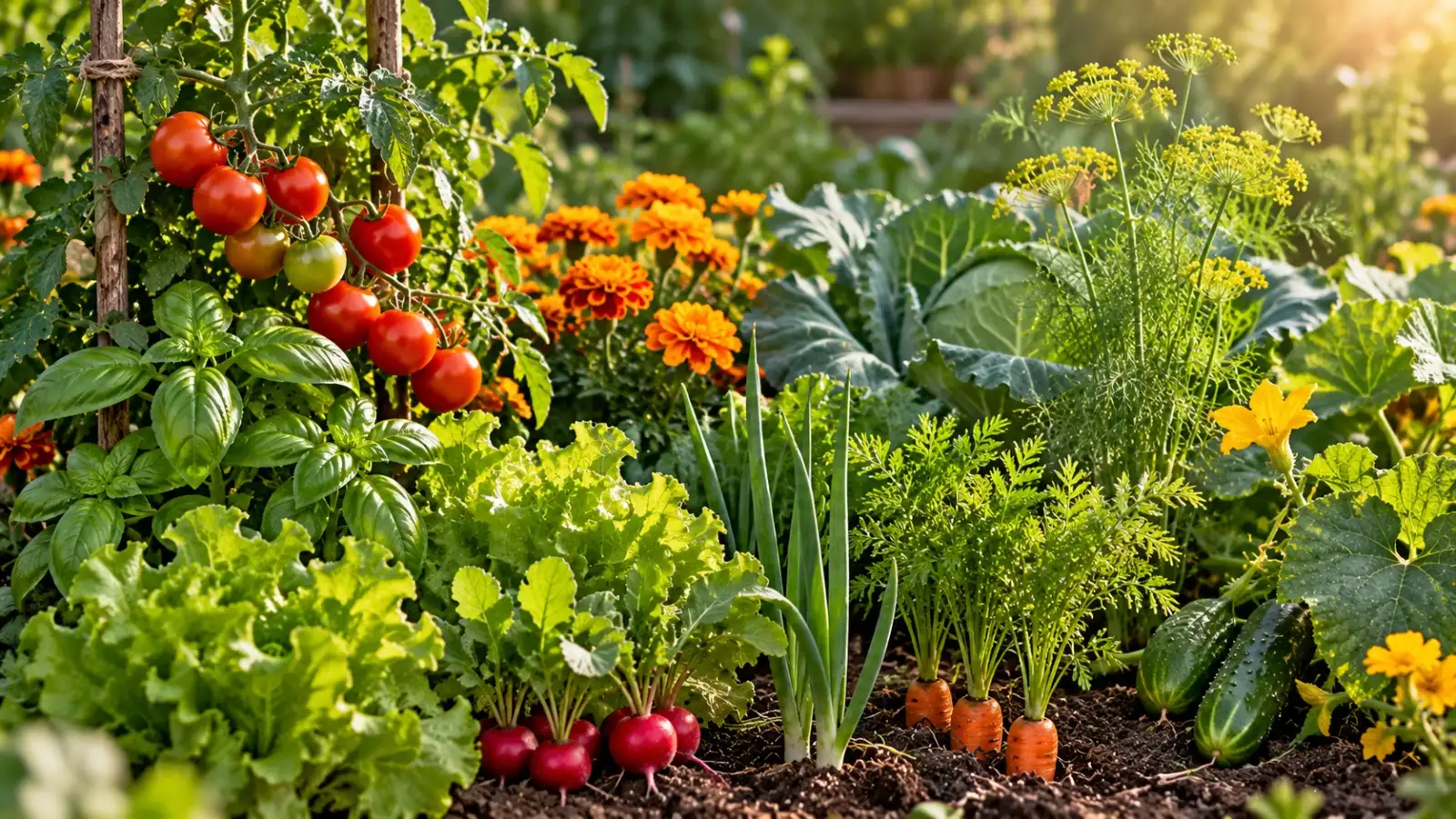
However, companion planting is not a guaranteed solution to every gardening problem. A suitable combination depends on sunlight, soil, water availability and the needs of individual plants. With a little planning, gardeners can experiment with combinations that make a vegetable patch, raised bed or collection of pots more diverse and easier to manage.
In a vegetable garden, this approach can help gardeners combine crops, herbs and flowers rather than growing every plant in a separate section.
Some benefits are well established in particular growing systems, while others depend on local conditions. For example, flowering plants can provide food for pollinators and beneficial insects, and combining plants with different growth habits can help use garden space efficiently. Claims that a particular pairing automatically prevents pests or improves the flavour of vegetables should be treated with caution.
Basil can fit into the spaces between young tomato plants, helping gardeners make efficient use of a vegetable bed. Its flowers can also attract pollinators and other insects if the plant is allowed to bloom.
Although tomatoes and basil are often grown together, basil should not be expected to prevent all tomato pests or diseases. Adequate spacing, good airflow and regular monitoring remain important for keeping tomato plants healthy.
For container gardening, choose a pot large enough to accommodate the root systems of both plants without overcrowding them.
This combination can help gardeners use a small bed efficiently, provided both crops receive sufficient light and water.
Spring onions are sometimes recommended as a way to deter carrot pests because members of the onion family produce strong-smelling compounds. However, the effectiveness of this approach varies, and it should not replace crop rotation, appropriate netting or other pest-management methods where needed.
Sow carrots in loose, stone-free soil so their roots can develop without becoming distorted. Keep the soil evenly moist during germination.
Sweetcorn grows upright and can provide some structural support for climbing beans. In traditional planting systems, beans and other crops are sometimes grown together to make better use of land.
However, not every sweetcorn variety is sturdy enough to support vigorous climbing beans. Heavy vines and windy conditions can cause plants to lean or fall. Using a separate trellis is often the safer option in a small garden.
Bush beans may be easier to combine with sweetcorn than tall climbing varieties. Avoid overcrowding, and remember that sweetcorn generally performs best when planted in a block rather than a single narrow row, because wind pollination is important for good cob development.
Dill produces small flowers that can attract beneficial insects, including some pollinators and predatory insects. These visitors may help support a more diverse garden environment.
Cucumbers need plenty of sunlight, regular watering and room for their vines to spread or climb. Dill can grow tall and may shade nearby plants if left unchecked, so place it where it will not block light from the cucumber leaves.
Allowing some dill flowers to open can make the plant more useful to visiting insects. If you prefer to harvest the leaves for cooking, grow a few extra plants so some can be left to flower.
Radishes usually mature faster than many other vegetables, while lettuce can continue producing leaves over a longer period, depending on the variety and weather. Their different growth rates allow gardeners to harvest radishes before the lettuce reaches full size.
This pairing is particularly useful in cool weather, when both crops can grow well with suitable light and moisture.
Keep the soil consistently moist and avoid excessive heat, which can cause lettuce to become bitter or bolt and can affect radish quality. Sow small batches at intervals rather than planting everything at once for a more continuous harvest.
Some marigold species and varieties have also been studied for their role in suppressing certain soil-dwelling plant-parasitic nematodes. The effect depends on the marigold species, the nematode involved and how the plants are grown. Simply planting a few marigolds around vegetables does not guarantee protection from pests.
Marigolds can be placed along the edges of a vegetable bed or grown in containers near tomatoes, beans and other sun-loving crops.
Choose varieties suited to your climate and give them enough room to grow. They need sunlight and reasonably well-drained soil, and removing faded flowers can encourage further blooming.
Garlic has a strong aroma, leading to claims that it repels various garden pests. However, planting garlic beside roses should not be treated as a reliable way to prevent aphids or fungal diseases.
The more practical advantage is that garlic can make use of space around established rose bushes when planted without disturbing their roots. It also offers a useful edible harvest from an ornamental garden.
Avoid planting garlic too close to the base of a rose, where digging could damage the shrub's roots. Give both plants adequate sunlight and avoid waterlogged soil.
Basil can occupy gaps around pepper plants when they are young, helping to make efficient use of the available bed or container.
Flowering basil may attract beneficial insects, but it does not automatically protect peppers from pests. Check the undersides of leaves regularly for aphids, mites and other common problems.
If growing both in pots, use a sufficiently large container or separate pots placed close together. This makes it easier to manage watering and prevents the plants from competing excessively for root space.
Herbs such as thyme can provide flowers for insects when allowed to bloom, while their compact growth makes them suitable for bed edges. Strong-smelling herbs are sometimes planted near brassicas in an attempt to confuse pests, but evidence for consistent protection is limited.
For reliable cabbage protection, use insect-proof netting where appropriate, inspect leaves for eggs and caterpillars, and rotate crops between growing seasons.
Plant herbs where they will receive adequate light without crowding the cabbage. Good spacing also improves airflow and makes it easier to inspect plants.
Nasturtiums are also sometimes used as trap crops because aphids may colonise them. However, a trap crop only works as intended if gardeners monitor it and manage pests before they spread to nearby vegetables.
Squash plants need plenty of room, sunlight and regular moisture. Nasturtiums should be positioned so their trailing stems do not overwhelm young squash plants or block access to the crop.
This pairing can be particularly attractive in a larger garden bed, where flowers and vegetables can grow together without competing excessively for space.
Check the planting season for your region, choose suitable varieties and leave enough room for mature plants. In hot parts of India, many leafy vegetables perform better during cooler months, while tomatoes, peppers and other warm-season crops need conditions suited to their variety.
Observe the results over several weeks. Note how much sunlight the plants receive, whether the soil stays moist, which insects visit the flowers and whether any crops become crowded.
The aim is not to follow a rigid list of perfect pairings. It is to develop a garden where plants can grow well together because their needs are compatible.
The results are not guaranteed, and popular claims about pest control often need more careful interpretation. Healthy soil, appropriate watering, good spacing, crop rotation and regular observation remain the foundation of successful gardening.
Start with a few suitable combinations, watch how they perform and adjust your planting plan as you learn what works in your garden.
However, companion planting is not a guaranteed solution to every gardening problem. A suitable combination depends on sunlight, soil, water availability and the needs of individual plants. With a little planning, gardeners can experiment with combinations that make a vegetable patch, raised bed or collection of pots more diverse and easier to manage.
What Is Companion Planting?
Companion planting is the practice of growing two or more plant species close together because they may offer complementary benefits. One plant might attract pollinators, another may provide ground cover, while a third could grow vertically and make better use of limited space.In a vegetable garden, this approach can help gardeners combine crops, herbs and flowers rather than growing every plant in a separate section.
Some benefits are well established in particular growing systems, while others depend on local conditions. For example, flowering plants can provide food for pollinators and beneficial insects, and combining plants with different growth habits can help use garden space efficiently. Claims that a particular pairing automatically prevents pests or improves the flavour of vegetables should be treated with caution.
1. Tomatoes and Basil
Tomatoes and basil are a popular pairing in kitchen gardens. Both enjoy warm conditions and generally grow well in a sunny location with fertile, well-drained soil.Basil can fit into the spaces between young tomato plants, helping gardeners make efficient use of a vegetable bed. Its flowers can also attract pollinators and other insects if the plant is allowed to bloom.
Although tomatoes and basil are often grown together, basil should not be expected to prevent all tomato pests or diseases. Adequate spacing, good airflow and regular monitoring remain important for keeping tomato plants healthy.
For container gardening, choose a pot large enough to accommodate the root systems of both plants without overcrowding them.
2. Carrots and Spring Onions
Carrots and spring onions can be useful companions because their foliage and root systems occupy space differently. Carrots develop edible roots underground, while spring onions grow narrow, upright leaves above the soil.This combination can help gardeners use a small bed efficiently, provided both crops receive sufficient light and water.
Spring onions are sometimes recommended as a way to deter carrot pests because members of the onion family produce strong-smelling compounds. However, the effectiveness of this approach varies, and it should not replace crop rotation, appropriate netting or other pest-management methods where needed.
Sow carrots in loose, stone-free soil so their roots can develop without becoming distorted. Keep the soil evenly moist during germination.
3. Beans and Sweetcorn
Beans and sweetcorn can work well together when their growing requirements and available space are considered.Sweetcorn grows upright and can provide some structural support for climbing beans. In traditional planting systems, beans and other crops are sometimes grown together to make better use of land.
However, not every sweetcorn variety is sturdy enough to support vigorous climbing beans. Heavy vines and windy conditions can cause plants to lean or fall. Using a separate trellis is often the safer option in a small garden.
Bush beans may be easier to combine with sweetcorn than tall climbing varieties. Avoid overcrowding, and remember that sweetcorn generally performs best when planted in a block rather than a single narrow row, because wind pollination is important for good cob development.
4. Cucumbers and Dill
Cucumbers and dill can be grown in the same garden, especially when space is planned carefully.Dill produces small flowers that can attract beneficial insects, including some pollinators and predatory insects. These visitors may help support a more diverse garden environment.
Cucumbers need plenty of sunlight, regular watering and room for their vines to spread or climb. Dill can grow tall and may shade nearby plants if left unchecked, so place it where it will not block light from the cucumber leaves.
Allowing some dill flowers to open can make the plant more useful to visiting insects. If you prefer to harvest the leaves for cooking, grow a few extra plants so some can be left to flower.
5. Lettuce and Radishes
Lettuce and radishes are practical companions for gardeners who want quick results from a small space.Radishes usually mature faster than many other vegetables, while lettuce can continue producing leaves over a longer period, depending on the variety and weather. Their different growth rates allow gardeners to harvest radishes before the lettuce reaches full size.
This pairing is particularly useful in cool weather, when both crops can grow well with suitable light and moisture.
Keep the soil consistently moist and avoid excessive heat, which can cause lettuce to become bitter or bolt and can affect radish quality. Sow small batches at intervals rather than planting everything at once for a more continuous harvest.
6. Marigolds and Vegetables
Marigolds are widely used in vegetable gardens because their bright flowers add colour and attract insect visitors.Some marigold species and varieties have also been studied for their role in suppressing certain soil-dwelling plant-parasitic nematodes. The effect depends on the marigold species, the nematode involved and how the plants are grown. Simply planting a few marigolds around vegetables does not guarantee protection from pests.
Marigolds can be placed along the edges of a vegetable bed or grown in containers near tomatoes, beans and other sun-loving crops.
Choose varieties suited to your climate and give them enough room to grow. They need sunlight and reasonably well-drained soil, and removing faded flowers can encourage further blooming.
7. Garlic and Roses
Garlic and roses are sometimes grown near one another because both can thrive in sunny locations with well-drained soil.Garlic has a strong aroma, leading to claims that it repels various garden pests. However, planting garlic beside roses should not be treated as a reliable way to prevent aphids or fungal diseases.
The more practical advantage is that garlic can make use of space around established rose bushes when planted without disturbing their roots. It also offers a useful edible harvest from an ornamental garden.
Avoid planting garlic too close to the base of a rose, where digging could damage the shrub's roots. Give both plants adequate sunlight and avoid waterlogged soil.
8. Peppers and Basil
Peppers and basil can be a good choice for warm-weather gardens. Both generally prefer a sunny position, warmth and soil that drains well while retaining enough moisture for steady growth.Basil can occupy gaps around pepper plants when they are young, helping to make efficient use of the available bed or container.
Flowering basil may attract beneficial insects, but it does not automatically protect peppers from pests. Check the undersides of leaves regularly for aphids, mites and other common problems.
If growing both in pots, use a sufficiently large container or separate pots placed close together. This makes it easier to manage watering and prevents the plants from competing excessively for root space.
9. Cabbage and Aromatic Herbs
Cabbage and other members of the brassica family are vulnerable to several insect pests, including caterpillars and aphids. Some aromatic herbs are believed to influence pest behaviour, although results vary between combinations and growing conditions.Herbs such as thyme can provide flowers for insects when allowed to bloom, while their compact growth makes them suitable for bed edges. Strong-smelling herbs are sometimes planted near brassicas in an attempt to confuse pests, but evidence for consistent protection is limited.
For reliable cabbage protection, use insect-proof netting where appropriate, inspect leaves for eggs and caterpillars, and rotate crops between growing seasons.
Plant herbs where they will receive adequate light without crowding the cabbage. Good spacing also improves airflow and makes it easier to inspect plants.
10. Nasturtiums and Squash
Nasturtiums are colourful flowering plants that can be grown near squash and other vegetables. Their trailing growth can cover bare soil, while their flowers attract insect visitors.Nasturtiums are also sometimes used as trap crops because aphids may colonise them. However, a trap crop only works as intended if gardeners monitor it and manage pests before they spread to nearby vegetables.
Squash plants need plenty of room, sunlight and regular moisture. Nasturtiums should be positioned so their trailing stems do not overwhelm young squash plants or block access to the crop.
You may also like
- “In Indian families, parents won't go for medical tests because…”: Ekta Kapoor on the mindset of many Indian parents and her father Jeetendra's money lesson
- 'My son': Indian pilot Smit Machchhar recalls the thought that kept him fighting during the terrifying mid-air attack
- When his mother fell seriously ill, Bihar's Monu Meturbala prayed for her recovery and made a promise to Lord Shiva; today, the 19-year-old is running thousands of kilometres to visit 12 Jyotirlingas
- 10 Amazing Benefits of Reetha for Hair
- 5 Daily Habits To Help You Prevent Hair Loss
This pairing can be particularly attractive in a larger garden bed, where flowers and vegetables can grow together without competing excessively for space.
Companion Planting Mistakes to Avoid
Companion planting works best when the needs of each plant come first. Before choosing combinations, consider these common mistakes:- Overcrowding plants: Closely packed foliage can restrict airflow, reduce sunlight and encourage disease.
- Ignoring water requirements: Plants that prefer dry soil may struggle beside crops that need consistently moist conditions.
- Expecting plants to eliminate pests: Companion plants can support biodiversity, but they are not a substitute for monitoring and appropriate pest control.
- Combining incompatible growth habits: Tall plants may shade shorter crops, while vigorous vines can overwhelm neighbouring plants.
- Forgetting crop rotation: Repeatedly growing related vegetables in the same soil can encourage the build-up of certain pests and diseases.
How to Start Companion Planting at Home
Begin with two or three combinations rather than redesigning your entire garden. Tomatoes with basil, lettuce with radishes, or peppers with basil are practical starting points for many home gardeners.Check the planting season for your region, choose suitable varieties and leave enough room for mature plants. In hot parts of India, many leafy vegetables perform better during cooler months, while tomatoes, peppers and other warm-season crops need conditions suited to their variety.
Observe the results over several weeks. Note how much sunlight the plants receive, whether the soil stays moist, which insects visit the flowers and whether any crops become crowded.
The aim is not to follow a rigid list of perfect pairings. It is to develop a garden where plants can grow well together because their needs are compatible.
Why Companion Planting Is Worth Trying
Companion planting offers a practical way to make a garden more diverse and use space thoughtfully. Some combinations help gardeners fit crops with different growth habits into the same bed, while flowering companions can provide resources for pollinators and beneficial insects.The results are not guaranteed, and popular claims about pest control often need more careful interpretation. Healthy soil, appropriate watering, good spacing, crop rotation and regular observation remain the foundation of successful gardening.
Start with a few suitable combinations, watch how they perform and adjust your planting plan as you learn what works in your garden.






Loving Newspoint? Download the app now
