
What Is Digital Clutter And How Does It Affect Your Everyday Life?

Your phone has plenty of storage left, the battery is fine and nothing appears to be broken. Yet opening it can still feel strangely overwhelming. There are hundreds of unread emails, screenshots you cannot remember taking, apps you have not used in months and browser tabs you keep promising to revisit.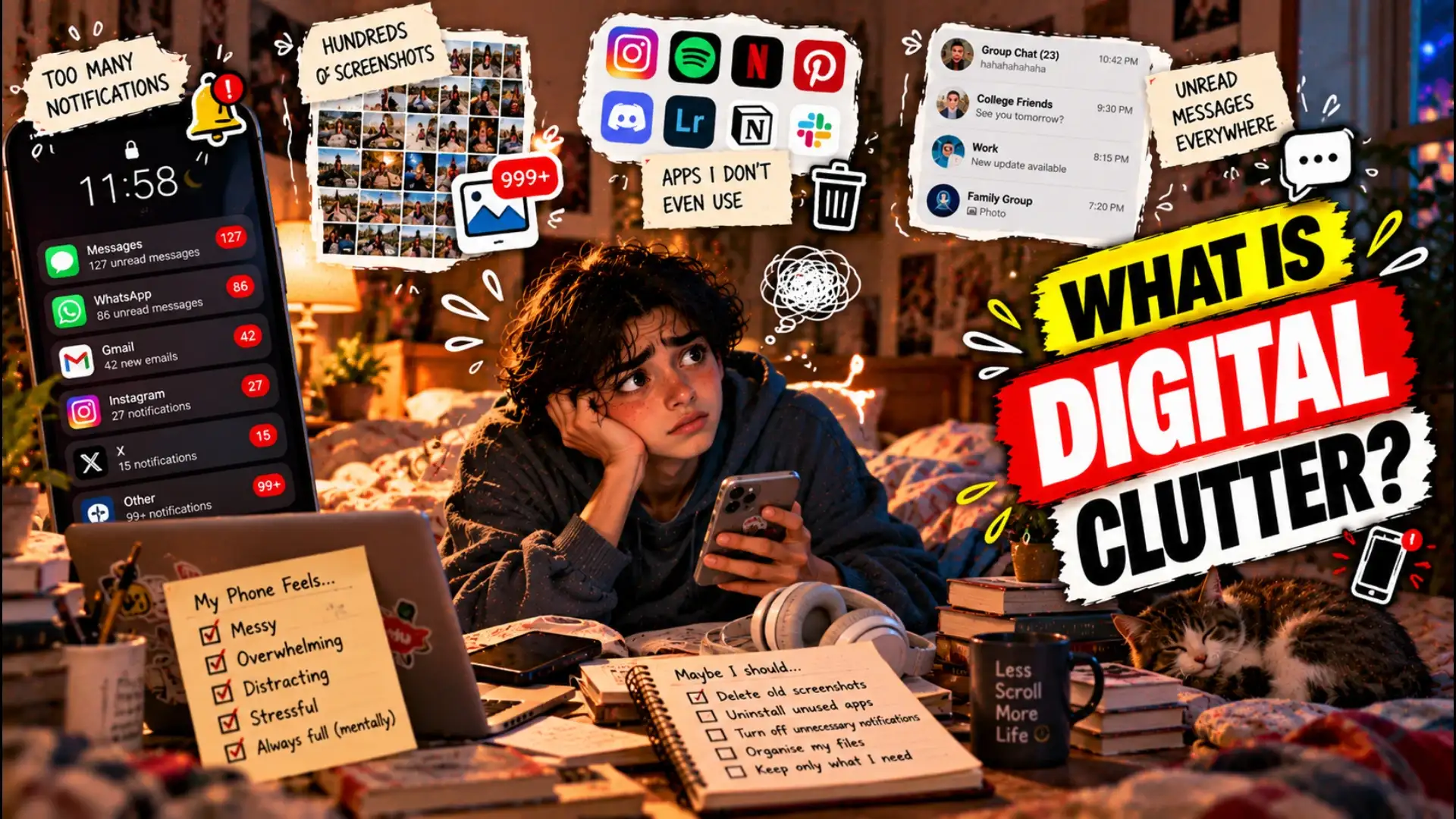
Technically, everything is working. But finding what you need feels like a task in itself. This is digital clutter : the accumulation of digital information, files, notifications and unfinished online tasks that can make your digital life feel disorganised.
Think about your gallery. It might include duplicate photographs, screenshots of restaurant recommendations, pictures of receipts and dozens of nearly identical selfies. None of these necessarily causes a problem on its own. But finding one specific photograph can become surprisingly difficult when everything is mixed together. The issue is organisation rather than storage capacity.
You may not consciously think about every item throughout the day, but seeing them repeatedly can make your phone feel like a collection of unfinished tasks. This can be particularly frustrating when you open your phone for one simple reason and end up navigating several unrelated notifications before doing what you intended.
The result is that your phone becomes a place where information constantly arrives, rather than a tool you use for a specific purpose. Turning off unnecessary notifications can help reduce these interruptions without requiring you to delete every app.
Saving something feels useful because it keeps the possibility open. But when you save far more than you can realistically revisit, the collection becomes difficult to use. Instead of helping you find information, it creates another place to search. A useful approach is to save items in clearly labelled folders or delete them once they are no longer relevant.
You can also create a simple rule for saved information: if you cannot remember why you saved something, ask whether you still need it. The goal is not to have a perfectly empty phone.
It is to make your digital space easier to navigate, so using it feels less like sorting through a pile of unfinished tasks. Because sometimes, the thing making your phone exhausting is not a lack of storage. It is the sheer amount of stuff competing for your attention every time you unlock it.
Technically, everything is working. But finding what you need feels like a task in itself. This is digital clutter : the accumulation of digital information, files, notifications and unfinished online tasks that can make your digital life feel disorganised.
It Is Not Just About Storage Space
When people hear the word clutter, they usually imagine an overflowing wardrobe or a desk covered in papers. Digital clutter works differently. A phone can have plenty of free storage and still contain an overwhelming amount of information.Think about your gallery. It might include duplicate photographs, screenshots of restaurant recommendations, pictures of receipts and dozens of nearly identical selfies. None of these necessarily causes a problem on its own. But finding one specific photograph can become surprisingly difficult when everything is mixed together. The issue is organisation rather than storage capacity.
Every Unfinished Digital Task Takes Attention
Some digital clutter consists of things you intend to deal with later. An unread message needs a reply. A saved article needs reading. A screenshot contains information you might need. An open tab reminds you of something you have not finished.You may not consciously think about every item throughout the day, but seeing them repeatedly can make your phone feel like a collection of unfinished tasks. This can be particularly frustrating when you open your phone for one simple reason and end up navigating several unrelated notifications before doing what you intended.
Notifications Make It Harder To Focus
Digital clutter is not limited to things stored on your device. Notifications from shopping apps, social media, games, email and messaging platforms can compete for your attention. Even when you ignore them, the repeated alerts can interrupt what you are doing.The result is that your phone becomes a place where information constantly arrives, rather than a tool you use for a specific purpose. Turning off unnecessary notifications can help reduce these interruptions without requiring you to delete every app.
Why We Keep Saving Things We Never Use
Screenshots and saved posts often represent future intentions. You save a recipe because you plan to cook it, a workout because you want to try it or a travel recommendation because you hope to visit one day.Saving something feels useful because it keeps the possibility open. But when you save far more than you can realistically revisit, the collection becomes difficult to use. Instead of helping you find information, it creates another place to search. A useful approach is to save items in clearly labelled folders or delete them once they are no longer relevant.
How To Make Your Phone Feel Less Overwhelming
You do not need to organise every file in one afternoon. Start with the areas that cause the most friction. Delete duplicate screenshots, remove apps you no longer use and unsubscribe from notifications that add little value.You can also create a simple rule for saved information: if you cannot remember why you saved something, ask whether you still need it. The goal is not to have a perfectly empty phone.
It is to make your digital space easier to navigate, so using it feels less like sorting through a pile of unfinished tasks. Because sometimes, the thing making your phone exhausting is not a lack of storage. It is the sheer amount of stuff competing for your attention every time you unlock it.
Next Story